Meet Cubie: The Tiny Robot That Doesn’t Need the Internet to Be Smart

✍️ By Wangdoo · May 2026
A quirky, expressive little sci-fi companion doing something most desk robots haven’t bothered to figure out — running AI locally, offline, and without anyone’s server.
What Is Cubie?
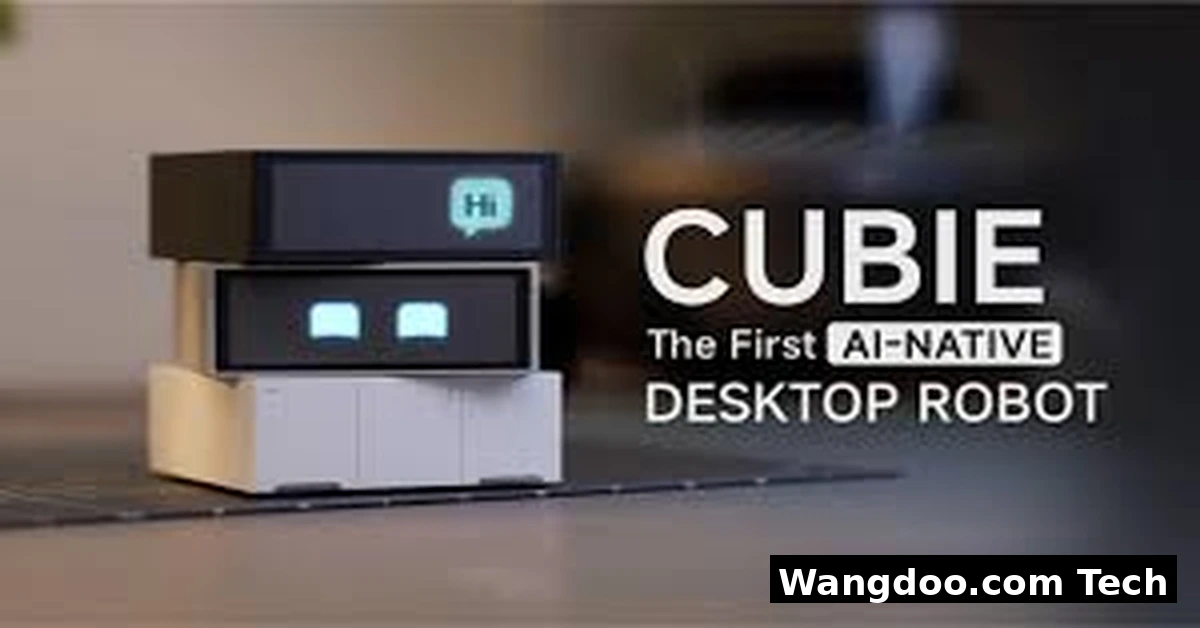
Cubie is a desktop pet robot from EgoScience that brings movement, expression, and personality to your desk — turning everyday moments into small interactions. It’s currently live on Kickstarter and has already blown past expectations in a big way.
The campaign raised over $309,000 against a $10,000 goal, with 1,353 backers and an average pledge of around $229. For context, that’s over 30 times funded — and it hit its target in just 12 minutes.
EgoScience is a consumer robotics team with over six years of experience across embedded systems, industrial design, robot control, and firmware development. This is their first Kickstarter campaign, but the hardware was already well into engineering validation before the campaign even launched — which is a stronger starting position than most crowdfunded gadgets.
The Big Idea: No Cloud, No Problem
Most AI-powered gadgets have a dirty secret: they stop working the moment the company’s servers go down or the subscription lapses. Cubie is built differently.
Cubie runs on-device AI with a local Agent system and switches to offline mode when disconnected. Core voice commands, conversations, and expressions all function without internet. External LLMs like ChatGPT and Gemini extend capabilities when online, but aren’t required for basic operation.
That’s a genuinely different approach. You’re not renting access to intelligence — the intelligence lives in the device.
Key Features
🖥️ Expressive Dual Screens
Cubie uses screens as its primary emotional output — you can read its mood at a glance without it needing to say a word.
🎙️ Sound-Based Awareness
No camera by design. Cubie detects voice commands, keyboard sounds, laughter, and ambient noise to infer context. A deliberate privacy-first decision.
🤖 Multi-LLM Support
Integrates with ChatGPT, Gemini, and other leading AI models — alongside its own local Agent system. No single ecosystem lock-in.
✊ Multi-Cubie Interaction
Two Cubies in proximity can fist bump, sync expressions, and hold “conferences” via audio cues. No competitor offers this at this price point.
Who Is It For?
Cubie is aimed squarely at people who spend long hours at a desk and want something that adds a bit of life to their workspace without demanding constant attention. Remote workers, students, and developers who are already surrounded by screens will feel right at home with it. It’s also a natural fit for early adopters who’ve grown tired of AI products that stop working the moment a company changes its pricing model or shuts down a server.
If you’re expecting a mobile robot that follows you around, Cubie isn’t that. It’s a desk-fixed companion — think of it less like a pet and more like a very expressive, very smart desk ornament that actually responds to what’s happening around it. Budget buyers should also note that at $179 it sits well above a smart speaker, so it needs to justify that gap through personality and utility — and based on what we’ve seen, it does.
Kickstarter Pricing
| Tier | Price | What’s Included |
|---|---|---|
| ⭐ Super Early Bird | $179 | Cubie + Dock + 3 Top Hats + Keycaps + Keychain/Plush + 3 Character Packs. 40% off $299 MSRP. |
| Special Finish | $249 | Metal or Transparent Edition + Standard Dock. 29% off $349 MSRP. |
| 2-Pack Bundle | $399 | Two Cubies + two Docks. 33% off $599 combined MSRP. |
⚠️ Shipping (~$15 for US/UK/EU/Asia) collected separately after the campaign ends.
How Does It Compare?
Eilik is a cute expression-only toy at $60–80 with no voice or AI integration. Cubie is an entirely different category — it’s an AI companion platform, not a desktop toy.
Vector by Digital Dream Labs relies on cloud connectivity to function — when the servers go down, Vector’s intelligence goes with it. Cubie’s on-device AI runs independently of any server. It’s the answer to the problem Vector backers lived through after Anki shut down.
Loona is mobile, camera-equipped, and follows you around. Cubie stays on your desk. Different use cases — not a direct fight. For a dedicated workspace, Cubie is the better fit.
Things to Be Aware Of
- Launches in English only — French, Spanish, Japanese targeted for July 2026
- No built-in camera — optional external accessory is in development but not yet available
- First Kickstarter campaign for EgoScience — always carries some delivery timeline risk
- Shipping (~$15) is not included in the pledge price
Wangdoo Verdict
A Desk Robot That Earns Its Place
Cubie isn’t trying to be a smart speaker in a robot shell. It’s a genuinely considered product that solves the biggest problem in the desktop companion space — cloud dependency — by building real on-device AI from the ground up. The expressive screens, multi-LLM flexibility, and offline-first architecture put it well ahead of anything else in this price range.
The desktop robot category has been full of products that work brilliantly in demo videos and collect dust after the first week. Cubie has a serious technical answer to the main reason that happens — it doesn’t go silent when the server goes down, and it doesn’t stay the same device forever. The customisation platform, character packs, and community creation tools give it a real reason to stay on your desk past day seven.
Early backers can secure Cubie at the $179 early-bird price, with first deliveries estimated for July–August 2026. If you’ve ever been burned by a smart device that went dumb when a server shut down, Cubie makes the strongest case right now for why that doesn’t have to be the norm.
👉 Back Cubie on Kickstarter