Meta’s Smart Glasses Privacy Fix Isn’t New — It’s From 2021

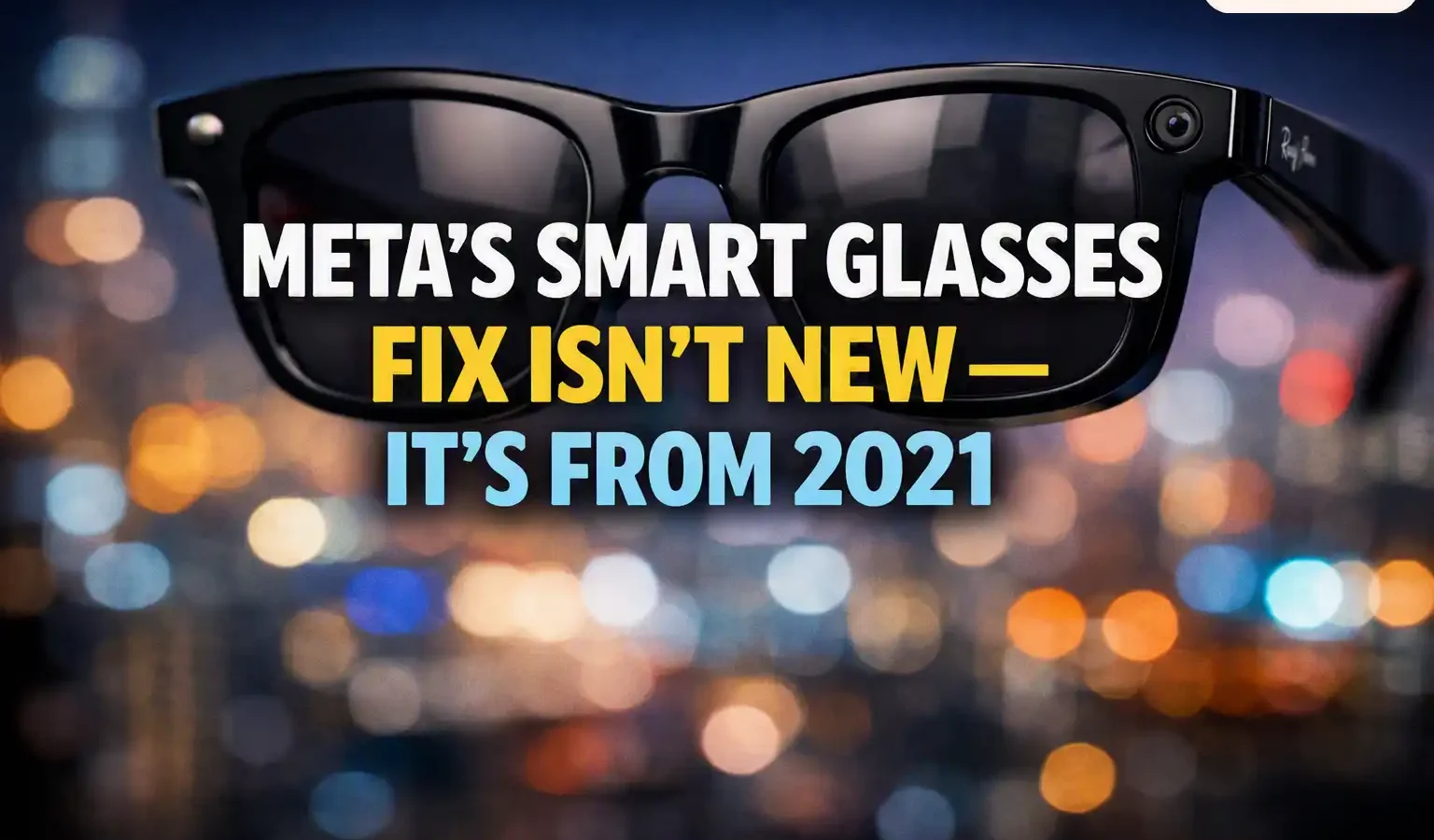
In short: Meta closed a technical loophole this week that let people keep recording on AI glasses after covering the indicator light mid-recording, and separately launched a public billboard campaign explaining what that light means. That second part isn’t new — Ireland’s data regulator forced Meta to run a nearly identical campaign back in 2021, after finding no evidence the light alone was enough to notify bystanders. Meta ran ads then too. Five years and one product generation later, the same regulator’s original objection — a tiny light isn’t a reliable way to tell people they’re on camera — still hasn’t actually been resolved, just re-explained.
What actually changed in the software this week
On 27 August, Meta shipped an update for its Ray-Ban Meta, Oakley Meta, and Meta AI glasses lines that stops an active recording the instant someone covers the capture LED — closing a specific workaround where a person could start filming, then hide the light while recording continued. Meta’s VP of Wearables, Alex Himel, confirmed the change was aimed at tightening tamper detection, framing it as an incremental step in an ongoing effort rather than a final fix.
It’s worth being precise about what this update does and doesn’t solve. A separate, cheaper workaround — small stick-on covers sold for the light, marketed toward exactly this use — reportedly still functions by letting through just enough light to avoid tripping Meta’s tamper detection while still obscuring it from anyone nearby. Whether the August update addresses that specific method hadn’t been confirmed at the time of writing.
The billboard campaign, and the sentence that gives it away
Alongside the software fix, Meta began running billboard ads in Los Angeles explaining the recording light in plain terms: the camera captures the moment, and the light is what lets the people around the wearer know it’s happening. One line from the campaign frames the entire purpose bluntly — the glasses are “designed for everyone, not just the people wearing them.”
Read that line as an admission, not a slogan. A company doesn’t spend billboard budget explaining a light to strangers on the street if it’s confident the light already works. The campaign’s actual function is to do, through advertising, what the tamper-proofing update couldn’t: get bystanders — who never opted into using these glasses, never saw a setup screen, and have no reason to know what a small LED signifies — to actually notice and understand it. That’s a real acknowledgment that the technical fix, however well it now works, was never going to be sufficient on its own.
This isn’t the first time Meta has had to say this
In September 2021, when Meta’s first camera glasses — then called Ray-Ban Stories — launched, Ireland’s Data Protection Commission and Italy’s Garante jointly pushed back. In their own published statement, the regulators said Meta had not demonstrated that “comprehensive testing in the field” had confirmed the LED was an effective way to notify people they were being recorded. Their remedy was direct: prove the light works, or run a public information campaign to make up the gap.
Meta chose the campaign. Ads ran in Irish and Italian newspapers and on the radio through 2021 and 2022, specifically to explain the recording light to a public that regulators had already found didn’t understand it. That’s the same basic move Meta is making again this week — just aimed at a US audience, for a newer generation of glasses, with a much larger install base.
| 2021 | Ray-Ban Stories launches. Irish and Italian regulators find no evidence the LED reliably notifies bystanders and demand a public campaign. |
| 2021–2022 | Meta runs newspaper and radio ads in Ireland and Italy explaining the recording light, in direct response to that regulatory demand. |
| 2026 | Meta ships AI-powered glasses with expanded capability, reportedly reaching a dominant share of the AI glasses market. The same core bystander-notice question resurfaces. |
| August 2026 | Meta closes a specific recording-light tamper workaround and launches a new billboard campaign, again explaining what the light means. |
What independent researchers say about LED indicators specifically
This isn’t only a regulatory objection — it has some technical grounding too. Research evaluating privacy indicator design on wearable and extended-reality devices has found that small LED status lights are, as a category, an unreliable way to communicate that recording is happening: they’re easy to miss, easy to misread, and easy to ignore in a way a visible camera or phone typically isn’t. The same body of research has found people consistently prefer a different kind of signal entirely — a physical shutter that mechanically blocks the lens — because it removes ambiguity by removing the camera from view, rather than asking a bystander to correctly interpret a light.
Meta’s glasses don’t have that option. The camera is a small lens built into the frame, with no physical cover, which is precisely why the LED carries the entire weight of notifying anyone nearby — and why a billboard campaign explaining the light is Meta working around a design choice it hasn’t revisited, rather than fixing the underlying problem the design creates.
What would actually resolve this, versus what’s being tried again. A mandatory physical shutter would remove the ambiguity a light inherently carries. A billboard campaign, however well-intentioned, only works on the people who happen to see the billboard, and says nothing to anyone standing near the wearer in a city Meta didn’t advertise in. Explaining the signal better is not the same as making the signal itself more legible — and that’s the distinction the 2021 regulatory demand was making, one that a second awareness campaign doesn’t resolve any more than the first one did.
My Take — Mr Wangdoo
What makes this worth writing about isn’t that Meta ran an ad campaign — companies explain their products constantly. It’s that this specific campaign is a rerun of a fix a regulator already told Meta wasn’t sufficient once before, on a product now doing considerably more than its 2021 predecessor could. Ray-Ban Stories could record video. The current generation can run live AI processing on what it sees, and Meta has separately faced scrutiny over backend handling of footage from these devices. The stakes attached to “does a bystander know they’re being recorded” have gone up since 2021, while the actual notification mechanism — a small light, now explained by billboard instead of newspaper ad — has stayed exactly the same. That’s not evidence Meta is ignoring the problem. It’s evidence the problem was never really about explaining the light better. It was, and still is, about whether a light is the right mechanism at all — and that’s a design question a marketing campaign can’t answer.
Common questions
What did Meta actually change this week?
Meta shipped a software update on 27 August 2026 that stops an active recording immediately if the wearer covers the glasses’ capture LED, closing a workaround where someone could start filming and then hide the light while recording continued.
Is the billboard campaign new?
The specific campaign launched in August 2026 is new, but the underlying idea isn’t. Ireland’s Data Protection Commission demanded Meta run a public awareness campaign about the recording light back in 2021, and Meta ran newspaper and radio ads in Ireland and Italy in response at the time.
Why did regulators object to the recording light in the first place?
Ireland’s DPC and Italy’s data protection authority found in 2021 that Meta had not demonstrated the LED indicator was an effective way to notify bystanders they were being recorded, unlike a smartphone camera, which is generally visible as the recording device itself.
Does closing this workaround fully solve the privacy concern?
Not according to independent research on privacy indicators, which has found LED status lights unreliable as a bystander-notice mechanism generally, with users preferring physical shutters that remove the camera from view entirely. A separate sticker-based workaround for the light also reportedly remains unaddressed.
What would actually fix the underlying issue?
Independent research points to physical camera shutters as a more reliable mechanism than any LED-based signal, since they remove ambiguity rather than relying on a bystander correctly noticing and interpreting a small light. Meta’s current glasses design doesn’t include this option.
Sources
- Data Protection Commission (Ireland) — official 2021 statement on Facebook View glasses and the recording indicator demand. dataprotection.ie
- Silicon Republic — on Meta’s 2021–2022 newspaper and radio campaign run in response to the DPC demand. siliconrepublic.com
- GB News — on the August 2026 billboard campaign and its specific messaging. gbnews.com
- Tech Times — on the LED sticker workaround and independent research on privacy indicators. techtimes.com