OpenAI & Jony Ive’s Secret AI Device: Everything We Know Ahead of the 2027 Launch

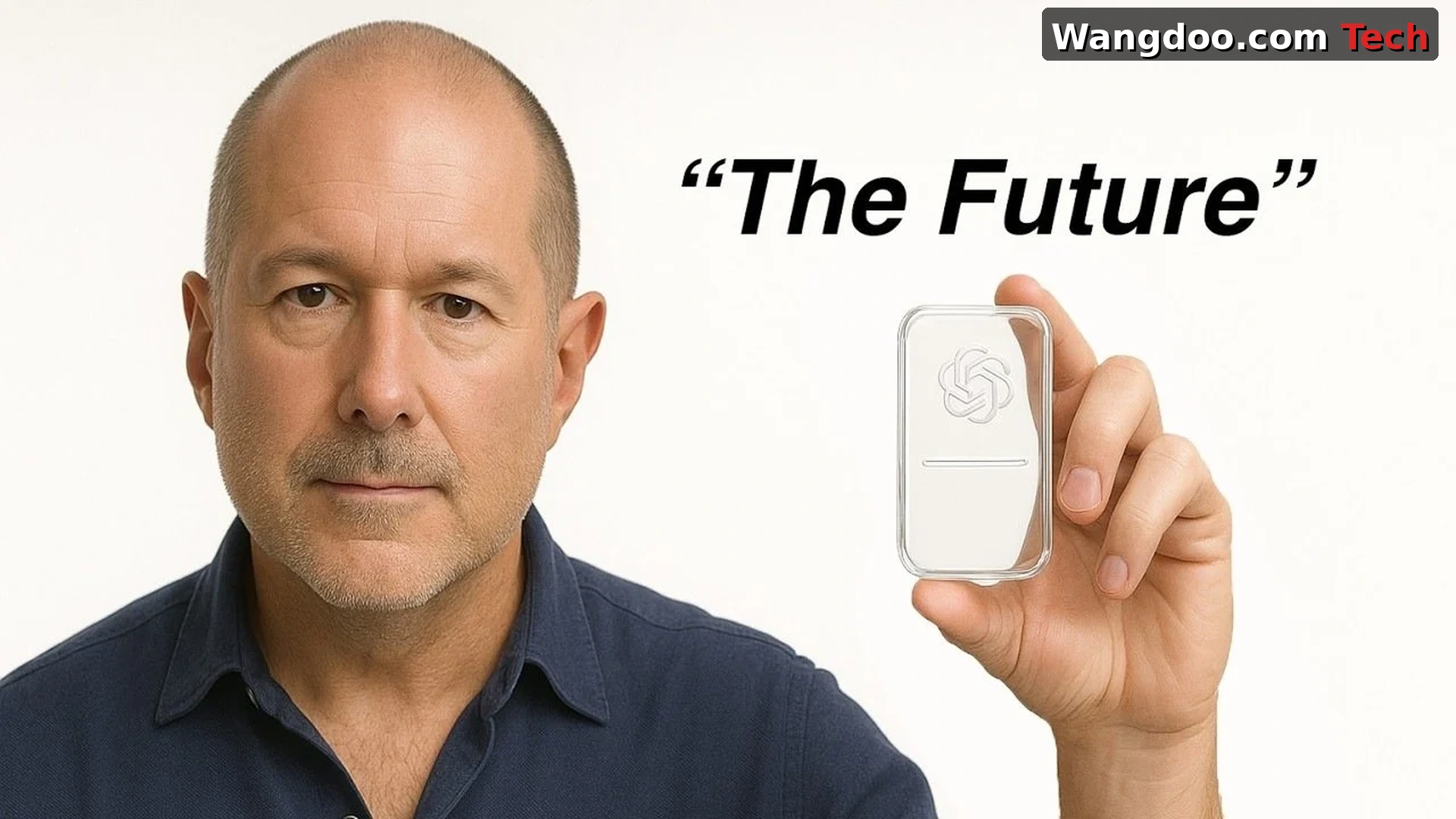
OpenAI’s Jony Ive AI Device — Everything We Know Before the 2027 Launch
Sam Altman called it “the coolest piece of technology that the world will have ever seen.” Jony Ive — the man who designed the iPhone, iPod, iMac and Apple Watch — called current devices “decades old” and said it was “common sense to think surely there’s something beyond these legacy products.” What they built together, after a $6.5 billion acquisition and two years of secrecy, is a device so different from everything currently on the market that OpenAI has refused to show it publicly. No screen. No apps. No notifications. Just AI — listening, watching, and thinking. This is everything we know about the most anticipated consumer tech product since the original iPhone.
📋 In This Guide
What Is the OpenAI Device?
The OpenAI device — officially unnamed as of May 2026 after a trademark dispute forced the abandonment of the “io” name — is a consumer AI hardware product being developed by OpenAI in partnership with the design team led by former Apple design chief Sir Jony Ive. It is designed from first principles to be a fundamentally new kind of computing device: no screen, no traditional app interface, and no notifications competing for your attention.
The core concept, as described by Sam Altman in November 2025, is a device that is “more peaceful than a smartphone” — one that users will be “shocked at how simple it is.” Rather than being a pocket computer that does everything a phone does without a screen, it is designed to be an ambient AI companion that observes, listens, learns, and acts on your behalf — without requiring constant input from you.
📹 Everything we know about OpenAI and Jony Ive’s screenless AI device — the most anticipated consumer tech product since the iPhone. Published November 2025.
Who Is Jony Ive — And Why Does It Matter?
To understand why the tech world is paying attention to this device before a single photo has been released, you need to understand who Jony Ive is. He is not a typical tech executive or a Silicon Valley founder. He is, by the assessment of most people in the industry, the most influential product designer of the past 30 years.
The iPhone (2007)
Ive led the design of the device that created the smartphone era. The glass front, the single home button, the aluminium unibody — all Ive’s team. The iPhone did not invent the touchscreen phone; it made one that people actually wanted to use.
AppleThe iPod (2001)
Before the iPhone, the iPod. The white earphones, the scroll wheel, the minimal aesthetic. It did not invent the digital music player — it replaced every one that came before it.
AppleThe iMac G3 (1998)
When Apple was weeks from bankruptcy, Ive designed the translucent colourful iMac that saved the company. It was Jobs’ first major product after returning to Apple — and Ive’s design made it iconic.
AppleThe Apple Watch (2015)
The first entirely new product category Apple launched after Jobs’ death. Ive led the design of a device that has since become the world’s best-selling watch and the dominant health monitoring wearable.
AppleIve left Apple in 2019 after 27 years to found his own independent design firm, LoveFrom. His collaboration with Sam Altman reportedly began in 2023 — quietly, before any public announcement — built on a shared belief that the next major computing platform needed to be designed from scratch, not evolved from existing smartphones and computers.
“The products that we’re using to deliver and connect us to unimaginable technology, they’re decades old. And so it’s just common sense to at least think — surely there’s something beyond these legacy products.”
— Jony Ive. OpenAI acquisition announcement video, May 2025 (video subsequently pulled due to trademark dispute)The $6.5 Billion Deal — What OpenAI Actually Bought
OpenAI announced the acquisition of io Products — the hardware startup founded by Jony Ive — in an all-equity deal valued at approximately $6.5 billion. This is OpenAI’s largest acquisition to date by a significant margin and represents a fundamental strategic bet: that the future of AI is not just software running on other companies’ hardware, but a new category of device designed specifically around AI interaction.
The strategic logic is clear. OpenAI currently runs its AI models entirely through other companies’ hardware — iPhones, Android phones, Windows PCs, Macs. Every interaction with ChatGPT goes through a platform owned by Apple, Google, or Microsoft. By building its own device, OpenAI would own the full stack: model, software, and hardware. The same move Apple made when it switched from Intel chips to its own Apple Silicon — controlling the whole product end to end.
What Will the OpenAI Device Actually Do?
This is the question with the fewest confirmed answers — deliberately. OpenAI has provided no official feature list. What we know comes from three sources: statements by Sam Altman and Jony Ive, reporting from The Information and Financial Times based on sources inside the company, and leaks from supply chain contacts.
Environmental Awareness
According to The Information’s reporting corroborated by MacRumors, the smart speaker variant includes an integrated camera designed to learn about who is using it and what is around them. It will observe its environment and build a contextual understanding of the user’s life — their habits, preferences, schedule, and surroundings — without being asked.
Proactive Suggestions and Purchases
MacRumors reported that OpenAI employees were told the device would “observe users and suggest actions to help them achieve goals” — examples cited include suggesting an early bedtime ahead of a morning meeting, and enabling purchases through a facial recognition feature similar to Apple’s Face ID.
Voice-First Interaction
OpenAI has unified its engineering, product, and research teams to overhaul its audio models in preparation for this device. The new audio model features more natural-sounding speech, better handling of interruptions, and the ability to speak simultaneously with the user — all designed for a device where voice is the primary interface, not a secondary one.
Integration With Existing Devices
Rather than replacing your phone entirely, early reporting suggests the device will integrate with existing phones and computers — acting as an AI layer on top of your existing tech ecosystem rather than requiring you to abandon it. Think less “iPhone replacement” and more “AI co-pilot that runs alongside everything you already own.”
Personality and Joy
In a conversation with Laurene Powell Jobs at Emerson Collective’s Demo Day in November 2025, Ive and Altman said they wanted the device to “make people feel joy” and described it as an “active participant” that is “not annoying.” A Financial Times source described the goal as building “a friend who’s a computer who isn’t your weird AI girlfriend” — a deliberate rejection of the parasocial AI companion trend.
What Will It Look Like? The Three Devices
One of the most striking facts about this project is that OpenAI is not building one device — it is building a family of devices. The Information reported three separate form factors currently in development, each targeting a different use case and context.
🔊 Smart Speaker — Codename Unknown
First to Launch — Early 2027A home-based smart speaker with an integrated camera for environmental awareness. Facial recognition similar to Face ID. Designed to observe the room it lives in and build a contextual model of its users’ lives. Estimated price $200–$300. Manufacturing via Foxconn, planned in US or Vietnam. The most confirmed of the three devices.
Home AI🎧 Earbuds — Codenamed “Sweetpea”
Timeline UnconfirmedDescribed by TechCrunch as a “unique design compared to existing earbuds.” Metallic finish with a custom 2nm chip according to leaker Smart Pikachu. Audio-first interaction — designed to be worn throughout the day as an always-on AI companion. Potentially the most disruptive form factor for smartphone replacement.
Wearable AI✒️ AI Pen — Codenamed “Gumdrop”
Timeline UnconfirmedA pen-shaped device described as “unlike anything in the market today.” Designed to be held, carried, and used in contexts where a speaker is impractical. The least confirmed of the three — details come primarily from leakers rather than named publication sourcing.
Portable AIThe Delays — What Went Wrong and Why
OpenAI originally suggested the device could launch in the second half of 2026. Court filings reported in early 2026 confirmed it will not ship before February 2027. Three separate challenges have caused the delay — and understanding them explains why this product is harder to build than it sounds.
1. The Personality Problem
The Financial Times reported that OpenAI and Ive are still struggling to define the AI device’s “voice and mannerisms” — what kind of entity it presents itself as to users. This is not a trivial UX detail. For a device with no screen whose only interface is conversation, the personality IS the product. Getting it wrong means users find it creepy, annoying, or useless. Altman and Ive have said publicly they want it to feel like “a friend who’s a computer” — achieveing that in practice requires extensive testing and refinement that cannot be rushed.
2. The Privacy Challenge
A device that watches, listens, and builds a model of your life raises serious privacy questions that have no easy answers. Who owns the data the device collects about your home and your habits? What happens when you sell it or give it to someone else? What data is processed on-device versus sent to OpenAI’s servers? These are not just ethical questions — they are commercial ones. Get the privacy architecture wrong and the device will be banned from sale in the EU before it ships.
3. The Compute Problem
Sam Altman acknowledged openly that the company was struggling to get enough computing power for ChatGPT itself — let alone a new always-on device that needs to process environmental data continuously. Building enough AI infrastructure to run a device that never sleeps, in millions of homes simultaneously, requires data centre capacity that OpenAI is still building.
The io Trademark Lawsuit — Why the Name Changed
In May 2025, OpenAI released a promotional video featuring Sam Altman and Jony Ive discussing their partnership and the acquisition of Ive’s hardware startup, then called “io.” The video was pulled weeks later.
“The deal is on track and has NOT dissolved or anything of the sort.”
— Mark Gurman, Bloomberg. Clarifying the reason the io video was pulled, June 2025The reason for the pull: a startup called iyO — a voice-controlled audio computer originally spun out of Alphabet’s moonshot lab in 2021 — sued OpenAI for trademark infringement over the “io” name and obtained a court-ordered temporary restraining order. OpenAI was required to remove all materials referencing the io name.
The device will no longer carry the “io” name. What it will be called at launch is unknown. OpenAI has not announced a replacement name and has made no public comment on the lawsuit’s resolution as of May 2026.
How It Compares to What’s Already on the Market
| Feature | OpenAI Device | Amazon Echo | Apple HomePod 2 | Humane AI Pin | Meta Ray-Ban |
|---|---|---|---|---|---|
| Screen | ✕ None | ✕ None | ✕ None | Small display | ✕ None |
| Camera | ✓ Confirmed | Some models | ✕ | ✓ | ✓ |
| AI Model | ChatGPT / OpenAI | Alexa / Claude | Apple Intelligence | Proprietary | Meta AI / Llama |
| Facial Recognition | ✓ Reported | Some models | ✕ | ✕ | ✕ |
| Proactive AI | ✓ Core feature | Limited | Limited | ✕ | Limited |
| Designed by | Jony Ive | Amazon | Apple | Humane | Ray-Ban + Meta |
| Price | ~$200–300 (est.) | $99–$229 | $299 | $699 (discontinued) | From $299 |
| Available | Feb 2027 earliest | Now ✅ | Now ✅ | Failed ❌ | Now ✅ |
| Market verdict | Unknown | Established | Niche | Flopped | 7M sold in 2025 |
Price & Release Date — What’s Confirmed
Should You Wait for It?
Wait for It If:
You are genuinely frustrated with smartphone screen addiction and want an AI that works around your life rather than demanding attention. You are an early adopter comfortable with first-generation products that will improve over time. You trust OpenAI’s AI capabilities and believe Jony Ive’s design track record means this will actually be usable rather than another overhyped AI gadget. You can wait until at least spring 2027.
Don’t Wait If:
You need something now — Amazon Echo, Apple HomePod, or Meta Ray-Ban glasses are all proven, available today, and cover most use cases this device targets. You are sceptical of first-generation AI hardware after the Humane AI Pin experience. You want a device with a screen. You are in the EU and concerned about privacy implications of an always-watching, always-listening home device before European regulatory clarity exists.
🤖 Wangdoo Verdict — The Most Important Unreleased Product in Tech
The OpenAI Jony Ive device is the most consequential unreleased product in consumer technology right now. Not because it is guaranteed to succeed — it faces massive challenges around personality, privacy, and simply justifying its existence when everyone already has a supercomputer in their pocket. But because if it works — truly works — it could be the first convincing answer to a question the tech industry has been asking since the iPhone: what comes next? That answer is now coming, designed by the person who shaped everything we’ve used for the past 25 years. That alone makes it worth watching very closely.
Frequently Asked Questions
What is the OpenAI Jony Ive device?
When will the OpenAI device launch?
How much will the OpenAI device cost?
Why did OpenAI pull the Jony Ive announcement video?
What will the OpenAI device do that a phone can’t?
Is Jony Ive working for OpenAI full time?
Could the OpenAI device replace the iPhone?
Sources & References
- Axios — “Exclusive: OpenAI aims to debut first device in 2026,” January 19, 2026
- MacRumors — “Jony Ive’s First OpenAI Device Will Be Smart Speaker With Camera,” February 20, 2026
- TechCrunch — “OpenAI aims to ship its first device in 2026, and it could be earbuds,” January 21, 2026
- QuantoSei News — Court filing: device won’t ship before February 2027, February 2026
- Windows Central — Jony Ive and Sam Altman confirm prototype exists, November 2025
- TechCrunch — “OpenAI pulls promotional materials around Jony Ive deal due to court order,” June 2025
- TechRepublic — “OpenAI Pulls Jony Ive Promo Video,” June 2025
- Business Standard — OpenAI Jony Ive AI gadget features and timeline, January 2026
- Introl Blog — OpenAI consumer device analysis including Foxconn and production data, January 2026
- Dataconomy — OpenAI audio device and model development, January 2026
- MacDailyNews — OpenAI Sweetpea codename and custom chip details, January 2026