Why Answer Engine Optimization Will Outshine SEO in 2026

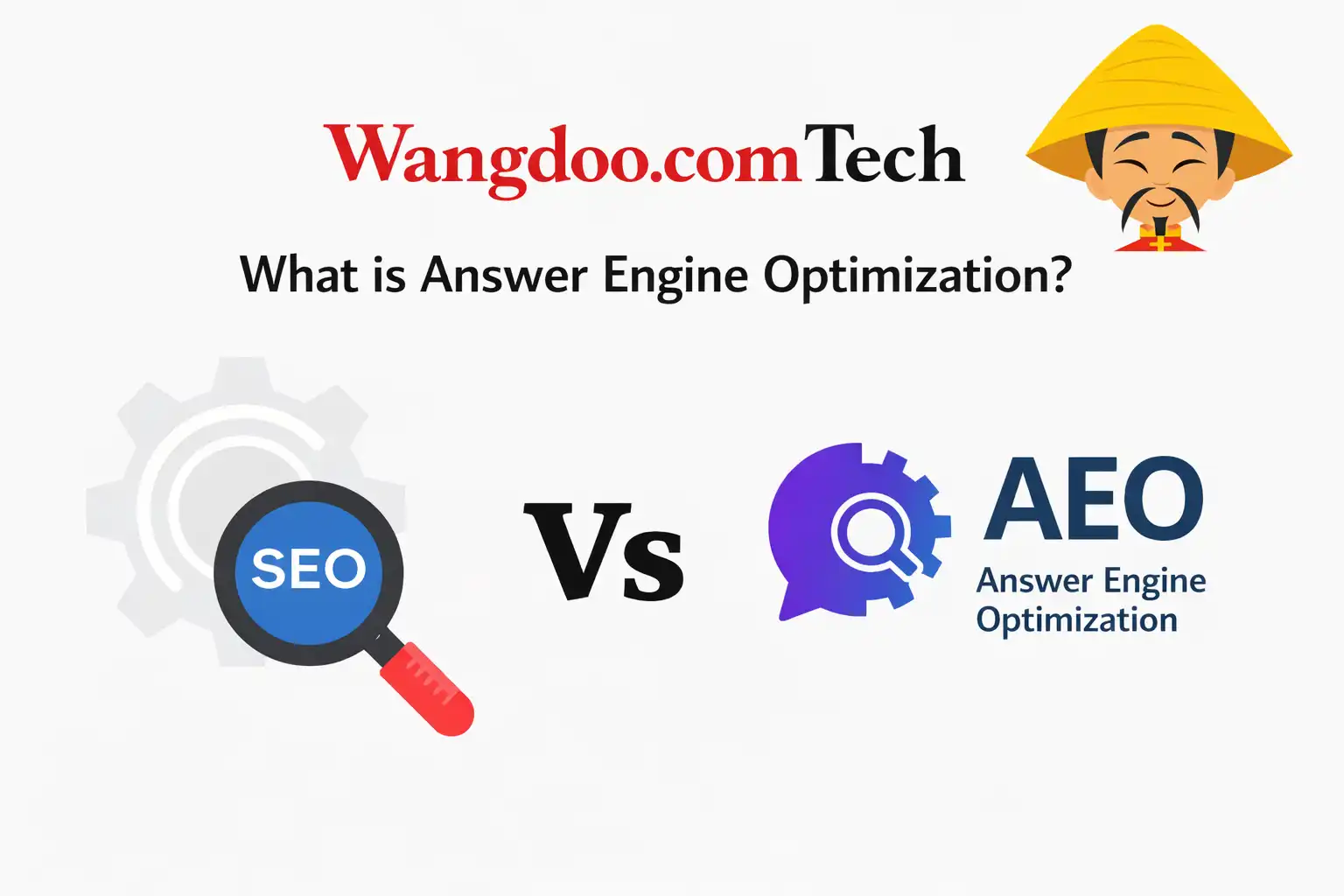
Forget SEO — Answer Engine Optimisation Is What Actually Matters in 2026
Google rankings still matter. But if your website isn’t showing up in ChatGPT, Perplexity, and Google AI Overviews, you’re invisible to the fastest-growing audience on the internet — and most website owners have no idea.
Your website either gets cited in AI search — or it doesn’t exist. That is the new reality in 2026, and most website owners have no idea it’s already happening to them. A growing number of people — especially younger, tech-savvy readers — are now skipping Google entirely and going straight to ChatGPT, Perplexity, or Google’s own AI Overview to get answers. When they do, they don’t see a list of ten blue links. They get a single, direct answer with one or two cited sources. If your site isn’t one of them, you’re invisible to that entire audience.
For twenty years, getting found online meant one thing: ranking on Google. You optimised your keywords, built your backlinks, and hoped to land on page one. That playbook still works — but it is no longer the whole game. The shift from search engines to answer engines has a name: Answer Engine Optimisation — AEO. And understanding it in 2026 is no longer optional for anyone who runs a website, a blog, a small business, or an online store.
What is AEO and how does it work in 2026? A plain-English explanation of the biggest shift in online search. Via YouTube.
What Is Answer Engine Optimisation (AEO)?
Answer Engine Optimisation is the practice of structuring your content so that AI-powered platforms — ChatGPT, Perplexity, Google AI Overviews, Microsoft Copilot, and Gemini — select your website as a cited source when generating answers to user questions.
When someone asks ChatGPT “What is the best air quality monitor for home use?” — the AI doesn’t show ten links. It gives a direct answer and cites one or two sources. AEO is the discipline of making sure your website is the source it cites.
“Your content no longer just needs to rank. It needs to get cited.”
— Frase.io, AEO Complete Guide 2026The Numbers That Should Worry Every Website Owner
This isn’t a future trend — it’s already happening at scale right now in 2026:
The impact is already measurable. Over 65% of searches now end without a single click to a website — users get their answer directly from the AI and never visit the source. For website owners relying on Google traffic, that number should be alarming.
AEO vs SEO — What’s the Difference?
| Traditional SEO | Answer Engine Optimisation (AEO) |
|---|---|
| Rank your page on Google’s results list | Get cited inside the AI’s direct answer |
| Keywords and backlinks are the currency | Clarity, authority, and structure are the currency |
| Users see your link and decide to click | AI reads your content and quotes it for the user |
| Optimise for crawlers and algorithms | Optimise for AI comprehension and citation |
| Traffic comes from page rankings | Traffic comes from being the cited source |
| One platform — Google | Multiple platforms — ChatGPT, Perplexity, Gemini, Copilot |
| Measured in rankings and clicks | Measured in citations, mentions, and AI referrals |
The important point: AEO does not replace SEO. Strong SEO foundations — good content, fast pages, authoritative backlinks — directly accelerate AEO performance. AI engines favour content from authoritative, well-structured, frequently cited sources. If your SEO is weak, your AEO will be too. Think of AEO as a second layer built on top of your existing SEO work.
How AI Engines Decide What to Cite
Understanding how ChatGPT and Perplexity choose their sources is the key to optimising for them. They are not running keyword matching. They are evaluating content for a combination of factors:
1. Clarity of Answer
AI engines look for content that directly and clearly answers a specific question — ideally in the first few sentences of a section. Buried answers, vague language, and padding are ignored. If your article about CO₂ monitors spends three paragraphs on background before telling the reader which one to buy, the AI skips you and cites someone who leads with the answer.
2. Topical Authority
AI models trust sites that consistently publish accurate, well-structured content on a specific topic. A gadget review site that has published ten well-sourced articles on smart home devices will be cited more often than a general blog that published one. Consistent publishing on your core topics builds topical authority that AI engines recognise.
3. Structured Content
Clear headings, FAQ sections, definition paragraphs, comparison tables, and numbered lists are all structures that AI engines can parse easily. Unstructured walls of text are difficult for AI to extract answers from — so they often aren’t. Every FAQ block, every comparison table, every “What is X” section you write is a potential citation point.
4. EEAT Signals
Google’s EEAT framework — Experience, Expertise, Authoritativeness, Trustworthiness — is increasingly used by AI engines as a trust signal. Author boxes, editorial transparency notices, cited sources, publication dates, and factual accuracy all contribute. Content that looks credible to a human editor also looks credible to an AI model.
5. Being Referenced Elsewhere
When other websites, forums, Reddit threads, or social media posts mention your site — even without a link — AI models trained on that data learn to associate your brand with authority on a topic. Getting discussed builds AEO credibility independently of traditional link-building.
7 Practical Steps to Optimise Your Website for AEO
SEO vs AEO — Do You Need Both?
- Publishing regularly on core topics
- Building internal links between articles
- Getting backlinks from credible sites
- Fast page load speed
- Mobile-friendly design
- Keyword research for article topics
- Submitting sitemap to Search Console
- Answer-first paragraph at top of every article
- FAQ sections with real user question phrasing
- Schema markup via Yoast (FAQ + Article)
- Named, linked sources for every factual claim
- Author box and editorial transparency notice
- Clear H2/H3 heading structure throughout
- Brand mentions encouraged on Reddit and forums
The Traffic Quality Argument for AEO
Here is what makes AEO especially compelling for website owners beyond raw traffic numbers: the visitors who arrive via AI citations convert at significantly higher rates than standard organic search visitors.
According to the 2026 HubSpot State of Marketing report, 58% of marketers say visitors referred by AI tools convert at higher rates than traditional organic traffic. The reason is straightforward — when ChatGPT recommends your site to answer a user’s specific question, the AI has already pre-qualified that visitor. They arrive knowing exactly what you offer and already primed to trust you. That is a fundamentally different quality of visitor than someone who clicked your link from a list of ten results.
Real-World AEO Results — What the Data Shows
AEO is not theoretical. Brands that have implemented structured, citation-ready content are already seeing measurable results in AI search visibility. According to HubSpot’s 2026 AEO case study research, one SaaS brand increased its AI visibility to 68% across ChatGPT, Perplexity, and Claude after restructuring its content for answer-first formatting — without rebuilding its website or changing its CMS. Another brand, Apollo, saw a 7x increase in demo requests from AI search after focusing on Reddit presence and structured FAQ content, generating over 2,600 LLM mentions from a single article in one month.
The pattern across successful AEO implementations is consistent: brands that win in AI search are not spending more money — they are writing more clearly, structuring more deliberately, and publishing more consistently on their core topics. The investment is editorial discipline, not budget.
Is AEO Worth It for Small Sites and Blogs?
Yes — and arguably more so than for large brands. Big companies are already investing heavily in AEO through dedicated teams and expensive tools. Small sites and blogs can implement the core AEO principles — answer-first writing, FAQ sections, clear structure, cited sources — with zero additional budget. The only investment is time and intention.
The earlier you build these habits into your publishing workflow, the more content you will have in AI engines’ citation pools when they pull answers. Early movers in AEO are building citation advantages that become increasingly difficult for later entrants to overcome — exactly what happened with early SEO adopters in the 2010s.
AEO is not a replacement for SEO — it’s the next layer every website needs to add right now
The shift from search engines to answer engines is already well underway. 900 million+ weekly active ChatGPT users, 55% of Google searches showing AI Overviews, and a Gartner-predicted 25% drop in traditional search traffic — the numbers tell a clear story. Websites that only optimise for Google rankings are leaving an enormous and fast-growing audience completely unreached.
The good news is that the foundations of good AEO are the same as good writing: be clear, be specific, answer the question directly, cite your sources, and publish consistently. If you are already doing those things — you are already ahead of most of your competitors.
Free · No account required · Ask “What is [your site topic]?” and see if you appear · Takes 30 seconds
Frequently Asked Questions
What is Answer Engine Optimisation (AEO)?
Is AEO the same as SEO?
How do I get my website cited by ChatGPT?
Does AEO work for small websites and blogs?
What is the difference between AEO and GEO?
How do I measure AEO performance?
What tools help with AEO?
📚 Sources & References
- Frase.io — Answer Engine Optimization Complete Guide 2026 — frase.io
- HubSpot — 2026 State of Marketing Report — blog.hubspot.com
- HubSpot — AEO Case Studies and ROI data — blog.hubspot.com
- O8 Agency — AEO Guide and Gartner data — o8.agency
- Salespeak — AEO Hype vs Data 2026 — salespeak.ai
- Gartner — Prediction: AI chatbots to reduce traditional search volume 25% by 2026
- ALM Corp — AEO Practical Playbook 2026 — almcorp.com
- Cubitrek — AEO 101 Definitive Guide 2026 — cubitrek.com