AI Glasses Are Here – And Google Just Changed Everything

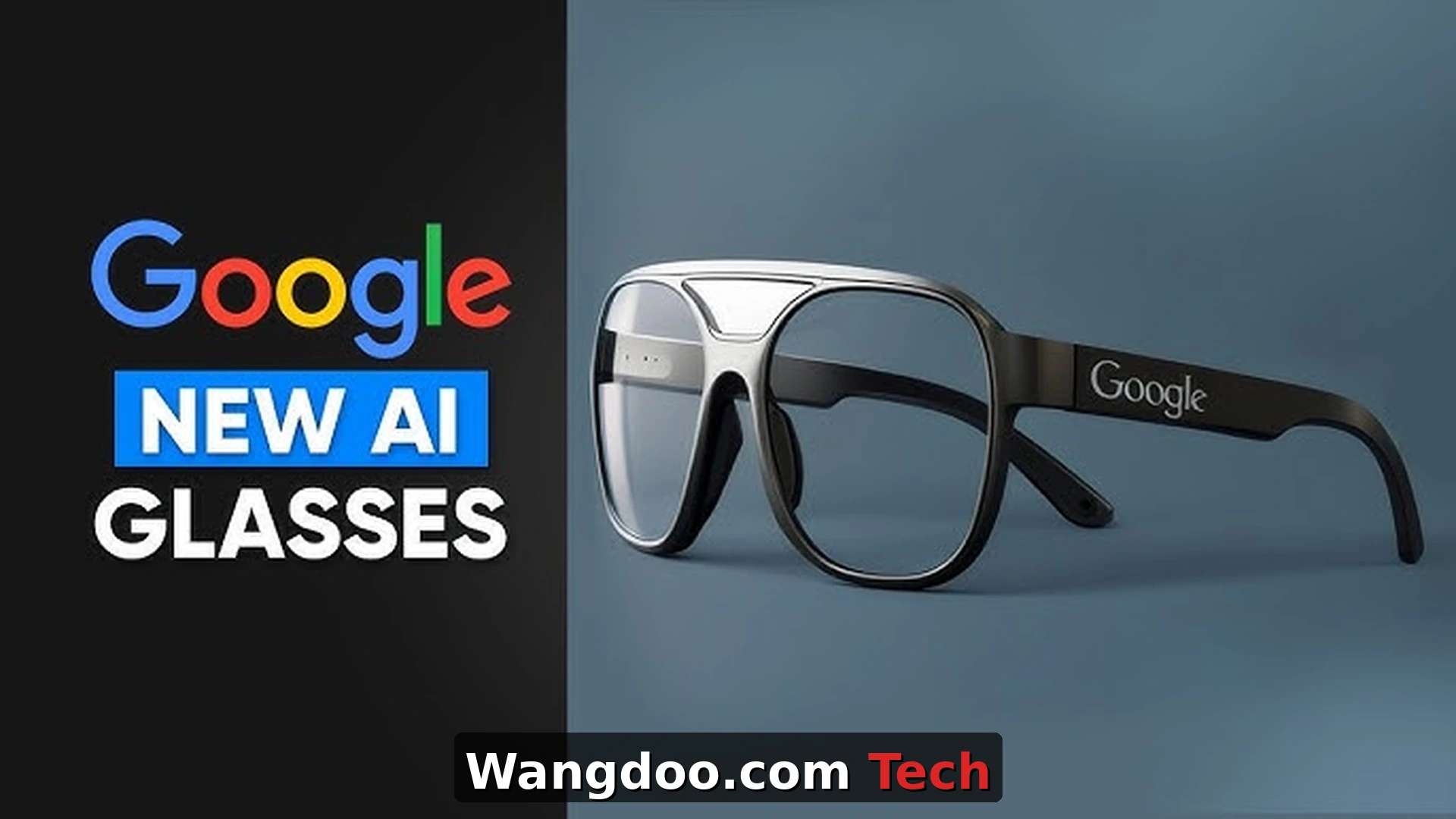
The race to put AI on your face just entered its most serious phase. On May 19, 2026 — today — Google stood on stage at its annual developer conference and showed the world what AI glasses actually look like when a major tech company commits to them properly. Not a prototype. Not a concept video. Two real, designed-by-fashion-brands pairs of glasses, built with Samsung and Qualcomm, powered by Gemini, and confirmed for release this autumn. Meanwhile Apple is testing four frame styles in its labs with a 2027 launch on the horizon. And Meta is already selling millions. The question for everyone watching is no longer whether AI glasses will happen — it’s which ones will be worth buying, and what they will actually change about daily life.
📹 Google I/O 2026 smart glasses coverage — the three reveals that defined the future of AI eyewear. Published May 2026.
📋 In This Guide
Why 2026 Is the AI Glasses Turning Point
The idea of computers on your face has been around since Google Glass in 2013 — and everyone remembers how that went. The technology was impressive enough, the execution was clumsy enough, and the social dynamics were uncomfortable enough that Google quietly shelved the consumer version and retreated to enterprise applications. The question ever since has been: when does the technology become good enough, and the design become normal enough, that people will actually wear AI glasses in public?
The answer, based on everything announced at Google I/O 2026 and confirmed across the industry today, is: now. Three forces have converged simultaneously. AI language models are now capable enough to answer genuinely useful questions in real time. Battery and chip miniaturisation has progressed to the point where meaningful compute power fits in a normal-looking frame. And fashion credibility — the factor that killed Google Glass — is now being addressed by partnering with actual eyewear brands who know how to make glasses people want to wear.
Google Android XR
Audio glasses with Gemini AI, Warby Parker & Gentle Monster designs. Announced May 19, 2026 at Google I/O. Works with Android and iPhone.
Apple AI Glasses (N50)
Camera, mics, speakers, Apple Intelligence. Four frame styles tested. Production target: December 2026. Bloomberg-confirmed codename N50.
Snap Spectacles Gen 5
AR display glasses for developers. Not a consumer product yet. Snapchat integration. Serves as a proof-of-concept for future consumer release.
Google Android XR Intelligent Eyewear — Announced Today
This is the biggest news in the AI glasses category since Meta’s Ray-Ban launch. Google used the main stage at Google I/O 2026 to officially confirm — not hint, not tease, but confirm — that its first AI audio glasses will ship to consumers in autumn 2026.
The glasses are built on Android XR, Google’s extended reality platform developed with Samsung and Qualcomm. Two eyewear brands are creating the first designs: Gentle Monster, the cult South Korean fashion label known for avant-garde aesthetics, and Warby Parker, the American brand synonymous with accessible premium eyewear. Both brands have launched dedicated “Intelligent Eyewear” pages on their websites where interested buyers can register for updates ahead of launch.
“These are the first two designs of a bigger collection coming this fall.”
— Shahram Izadi, Vice President and General Manager of Android XR, Google. Google I/O 2026 keynote, May 19, 2026“Intelligent eyewear should feel as emotionally expressive as it is technologically advanced. Our vision was to merge fashion and technology in a way that feels bold, beautiful and human.”
— Hankook Kim, Founder and CEO of Gentle Monster. Samsung official press release, May 19, 2026The hardware is built around a Snapdragon processor (specific chip not yet confirmed at time of writing), with a camera, speakers, and microphones built into the frame. The design philosophy, as described by Samsung and Google, is a companion device for your phone — not a standalone computer. Processing happens on your paired smartphone, keeping the glasses themselves slim enough to look normal.
What Google’s AI Glasses Can Actually Do
Based on the official Google I/O 2026 demo and confirmed by Android Authority’s hands-on preview, here is what the glasses are designed to do — sourced directly from Google’s confirmed feature list, not speculation.
Natural Turn-by-Turn Navigation
Because the glasses know exactly where you are standing and which direction you are facing, navigation instructions feel genuinely natural — not the robotic commands a phone GPS gives. Gemini says “turn left at the red building” rather than “turn left in 50 metres.”
Ask About What You See
Point at a restaurant and Gemini tells you the reviews, cuisine type, and whether there’s a table available. Look at a confusing parking sign and get an instant explanation. Identify a plant, cloud formation, landmark, or product — all by looking at it.
Real-Time Translation
The glasses can translate both written text (menus, signs, documents) and spoken conversation in real time. Audio translation is designed to match the tone and pitch of the original speaker’s voice — making the experience less robotic than current translation apps.
Hands-Free App Control
Confirmed integrations at launch include Uber (order a ride by voice), Mondly (language learning), DoorDash (order food), and Google Maps. Works by using your voice to control apps on your paired phone — the glasses are the interface, the phone does the processing.
Calls, Messages & Summaries
Make and receive calls, send messages, and ask Gemini to summarise missed notifications — all without taking out your phone. Responses are spoken privately into your ear, not broadcast to those around you.
Hands-Free Photography
Take photos using a voice command or tap on the frame. Tom’s Guide’s hands-on demo included an AI image transformation feature — “take a picture and put everyone in funny hats” — powered by Google’s Nano Banana image generator.
Apple AI Glasses (Codename N50) — What We Know
Apple has not officially announced any smart glasses product. Everything in this section comes from reporting by Bloomberg’s Mark Gurman — the most reliable source of pre-announcement Apple product information — plus analysis from analyst Ming-Chi Kuo, both cited by MacRumors and The Gadgeteer.
Bloomberg Reports Four Frame Designs Being Tested
Apple is testing at least four frame styles: a large Wayfarer-style rectangular frame, a slimmer rectangular style similar to Tim Cook’s own glasses, a larger oval/circular frame, and a smaller oval variant. Frames use acetate rather than standard plastic. Reported by Mark Gurman, Bloomberg, April 12, 2026.
Target: Production Start
Apple is targeting the start of mass production in December 2026, with a public launch expected in spring or summer 2027, according to The Next Web’s summary of Gurman’s Bloomberg report, April 13, 2026.
Consumer Launch
Analyst Ming-Chi Kuo separately forecasts mass production beginning Q2 2027, with 3–5 million or more units shipping in 2027. Both Gurman and Kuo now agree on a 2027 release window, per The Gadgeteer’s May 15, 2026 analysis.
Apple AR Glasses (Second Generation)
True augmented reality with see-through colour displays is planned for a second generation product around 2028, according to CNET. The 2027 glasses have no display — audio and AI only.
What Apple’s Glasses Are Expected to Include
Based on Bloomberg’s reporting: two cameras (one for photo/video capture, one for computer vision) · custom N401 chip based on Apple Watch S-series architecture · speakers and microphones · Apple Intelligence integration with an upgraded Siri · no display in the first version · Apple Watch-like pairing dependency with iPhone · prescription lens compatibility expected · pricing rumoured to be competitive with Meta at $299–$499 though nothing is confirmed.
Meta Ray-Ban AI Glasses — Already Here, Already Selling
While Google and Apple are still months or years from launch, Meta is already on shelves and outselling everyone. 7 million pairs of Meta AI glasses were sold in 2025 — more than triple 2024’s figure — and Meta currently holds approximately 82% of the global smart glasses market. The company is so supply-constrained that it paused planned international expansion to the UK, France, Italy, and Canada due to “unprecedented demand and limited inventory.”
The current Meta Ray-Ban glasses (available in Ray-Ban and Oakley frames) include a 12-megapixel camera, open-ear speakers, Meta AI assistant, and support for live video streaming to Instagram. A newer Ray-Ban Display model with a heads-up interface launched in late 2025 at $799. Standard audio models start from approximately $299.
Other Players — Xreal, Snap & More
Xreal Project Aura
Xreal is Google’s fourth hardware partner for Android XR, building display-equipped glasses (as opposed to Warby Parker and Gentle Monster’s audio-only designs). Project Aura features a display puck with a Qualcomm Snapdragon chip that enables more demanding features. It was a CES 2026 Innovation Awards honoree and is targeting 2026 availability for developers and enterprise users. It is not designed as a mass consumer product at launch.
Snap Spectacles Gen 5
Snap’s fifth-generation Spectacles are AR display glasses designed primarily for developers and creators. They are not currently available for general consumer purchase and should not be confused with Snap’s earlier camera Spectacles (which are consumer products). The Gen 5 uses waveguide displays and runs Snapchat’s Lens Studio OS. Snap has not confirmed when or whether a consumer version will follow.
Full Comparison: Every Major AI Glasses Player in 2026
| Feature | Google Android XR | Apple N50 | Meta Ray-Ban | Xreal Project Aura |
|---|---|---|---|---|
| Launch | Fall 2026 ✅ | 2027 (rumoured) | Available now ✅ | 2026 (developer) |
| Price | Not confirmed | ~$299–$499 (rumoured) | From $299 · Display $799 | Not confirmed |
| AI Assistant | Gemini 2.5 Pro | Apple Intelligence / Siri | Meta AI | Gemini |
| Camera | ✓ | ✓ (2 cameras) | ✓ 12MP | ✓ |
| Display in lens | ✕ (audio only) | ✕ Gen 1 | ✓ (Ray-Ban Display) | ✓ |
| Works with iPhone | ✓ Confirmed | ✓ iPhone only | ✓ | Likely |
| Works with Android | ✓ | ✕ | ✓ | ✓ |
| Live translation | ✓ Confirmed | Likely | ✓ | ✓ |
| Navigation | ✓ Confirmed | Expected | ✓ | ✓ |
| Fashion brands | Warby Parker, Gentle Monster | TBC (4 styles) | Ray-Ban, Oakley | Xreal own design |
| Prescription lenses | Not confirmed | Expected | ✓ | ✕ |
| Consumer product? | ✓ | 2027 | ✓ | Developer only |
The Privacy Question Nobody Is Answering Clearly
Every AI glasses product announced or already on sale has one thing in common: a camera that can capture photos and video of the world around the wearer, often without anyone nearby knowing it is happening. This is the defining social and ethical question of the AI glasses category — and it is one that manufacturers have so far addressed inconsistently.
⚠️ Legitimate Concerns
- Bystanders cannot tell if they’re being filmed
- Facial recognition risk via AI image analysis
- Always-on microphones raise surveillance concerns
- Google has not confirmed its privacy terms for the glasses
- Data processing location (on-device vs cloud) not yet detailed
- What happens to camera footage sent to AI for analysis?
✅ Transparency Measures
- Meta Ray-Bans include a visible LED that lights when recording
- Google says audio responses are spoken privately — not broadcast
- On-device processing for some features reduces data transmission
- Tap-to-activate model means glasses are not always recording
- Growing regulatory pressure forcing clearer disclosure standards
Who Are AI Glasses Actually For in 2026?
🧭 People Who Travel or Commute in Unfamiliar Places
The navigation and real-time translation features are genuinely useful for people who travel frequently — whether internationally or simply commuting through an unfamiliar city. Hands-free navigation that knows which direction you’re facing is a meaningfully better experience than looking down at a phone map while walking.
♿ People With Accessibility Needs
Real-time text-to-speech translation of written information, the ability to ask what you’re looking at, and hands-free operation of phone functions represent genuinely life-changing capabilities for people with visual impairments or motor difficulties. This is an underreported use case that deserves more attention than fashion partnerships.
🏃 Active, Hands-Free Lifestyle Seekers
Cyclists, runners, parents with pushchairs, delivery workers — anyone who needs information or communication while their hands are occupied. The promise of AI glasses is that your phone stays in your pocket while your glasses handle the interface layer.
Who Should Probably Wait
If you want a display — information overlaid on your actual vision — wait for Google’s display glasses (not confirmed for 2026) or Apple’s second generation (2028 target). The current generation, including Google’s autumn 2026 launch, is audio only. If you’re primarily an Apple user who wants deep iOS integration, wait for Apple’s N50 in 2027. And if you’re sceptical about privacy implications, waiting for the regulatory and industry standards to mature is the most sensible position — these are first-generation products in a category that is still figuring out its own norms.
🕶️ Wangdoo Verdict — The AI Glasses Era Starts This Autumn
Based on today’s verified announcements from Google I/O 2026, the AI glasses category has crossed from “interesting concept” to “confirmed consumer product.” Google’s autumn 2026 launch with Warby Parker and Gentle Monster designs is real, confirmed, and aimed at normal people — not early adopters with a high pain threshold. Apple is a year behind but brings an incomparable distribution advantage. Meta is already in millions of faces. The technology works. The design is catching up. The privacy framework is still being written. Buy with eyes open — and with a clear sense of which features you actually need.
Frequently Asked Questions
When are Google’s AI glasses coming out?
Do Google’s AI glasses work with iPhone?
What is Apple’s AI glasses release date?
What can AI glasses actually do?
Are AI glasses a privacy risk?
How much do AI glasses cost?
Do Google’s AI glasses have a display?
Sources & References
- Google Official Blog — “Intelligent eyewear with Gemini is coming this fall,” May 19, 2026
- Samsung Official Press Release — “Samsung and Google Give First Look at New Intelligent Eyewear,” May 19, 2026
- CNBC — “Google gives first glimpse of new AI glasses ahead of fall launch,” May 19, 2026
- Android Authority — Samsung & Google Android XR glasses hands-on, Google I/O 2026
- MacRumors — “Google’s First AI Smart Glasses Launching This Fall With iPhone Support,” May 19, 2026
- Business Standard — Google I/O 2026 Android XR audio glasses coverage, May 19, 2026
- The Next Web — Apple testing four frame designs, Bloomberg report summary, April 13, 2026
- AppleInsider — Apple N50 codename, production target, February 17, 2026
- The Gadgeteer — Apple smart glasses tracking, Gurman & Kuo analysis, May 15, 2026
- The Gadgeteer — Google Android XR glasses overview with market data, April 27, 2026
- Tom’s Guide — Google I/O 2026 live coverage including Xreal hands-on, May 19, 2026
- Gadget Bridge — Google Android XR feature analysis, May 19, 2026