Zettlab’s AI NAS Sparks a Local Storage Revolution- Until RAMageddon Strikes

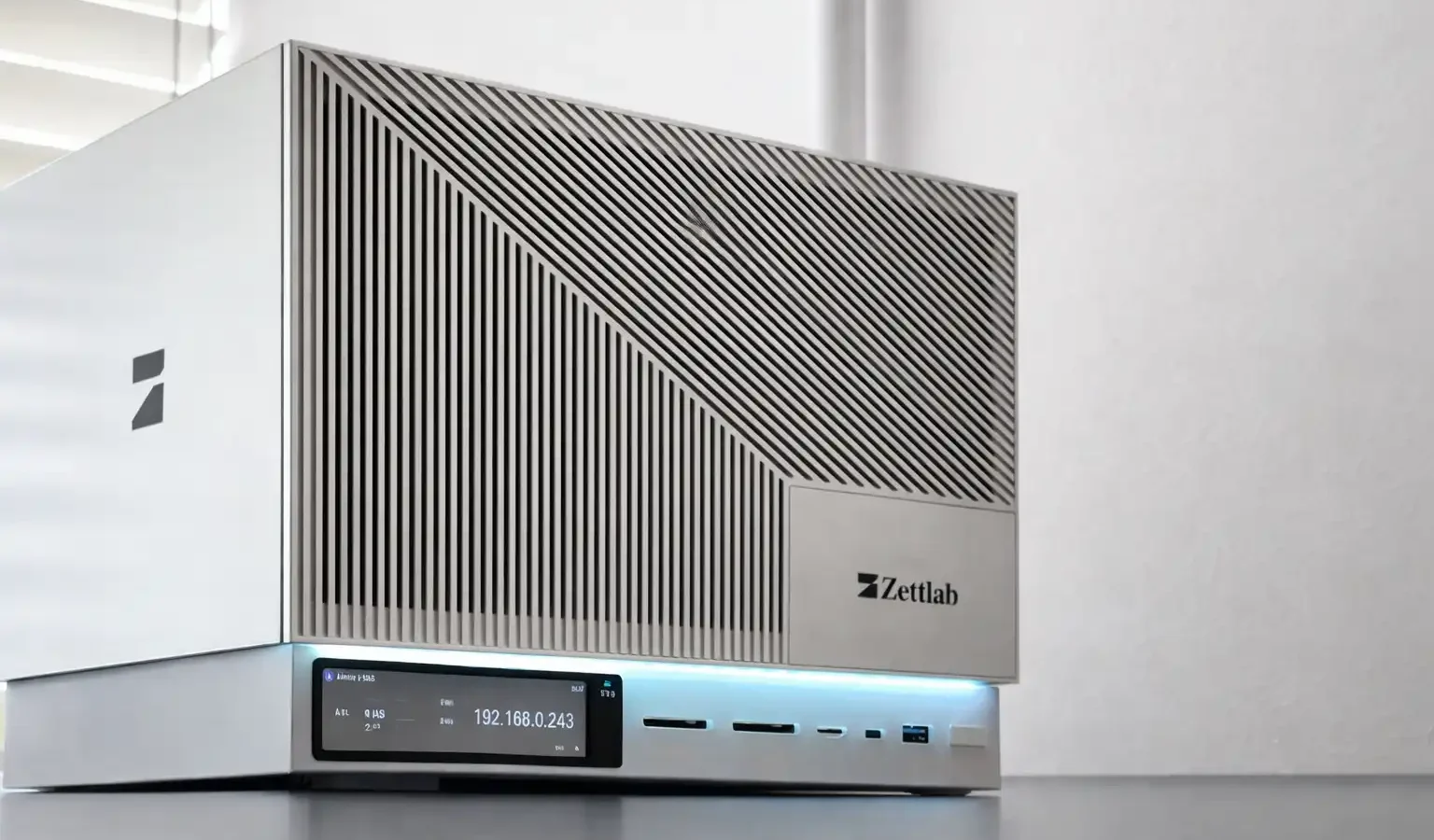
Gadgets · Crowdfunding · ExplainerZettlab Raised $1.5 Million to Build a Private AI Storage Box — Then RAMageddon Hit
1,820 backers funded Zettlab’s AI NAS to escape cloud subscriptions and keep their data private. The base models shipped — six months late. The high-end Ultra models are still delayed. The reason: the same memory crisis making your MacBook more expensive is hitting crowdfunded hardware too.
How this was researched: funding figures come directly from the Zettlab Kickstarter campaign page. Hardware specifications come from Zettlab’s official product pages. Delay information comes from TechPowerUp’s CES 2026 coverage. DRAM price figures come from VersaLogic’s June 2026 supply chain brief. This article is not sponsored by or affiliated with Zettlab.
The pitch was straightforward: pay once, own your data, never pay a cloud subscription again. Zettlab’s AI NAS is a home network storage device that runs AI features — semantic search, media transcription, OCR, document summarisation — entirely on its own hardware, without an internet connection, without a monthly fee, and without any third party having access to your files. For 1,820 backers on Kickstarter, that pitch was compelling enough to pledge a combined HK$11.59 million — approximately $1.48 million USD — making it one of the most successful NAS crowdfunding campaigns in recent memory.
Then the memory crisis hit. The same shortage that pushed MacBook prices up by $200 and Xbox consoles into development delays has reached into Zettlab’s supply chain. The Ultra models — the high-end devices that attracted a significant portion of the campaign’s most serious backers — are delayed, partly because the DDR5 memory they require has become dramatically more expensive and harder to source. The base D4 and D6 models did ship, though six months behind schedule. The D6 Ultra and D8 Ultra are still waiting.
An independent software review of the Zettlab Ultra AI NAS from NASCompares, published February 2026 — directly relevant to the delayed Ultra models discussed in this article. Not a Wangdoo production.
What Zettlab Is — and Why It Attracted $1.5 Million
Zettlab is a Shenzhen-based startup founded by former engineers from DJI, Huawei, and ByteDance — a team with genuine hardware credentials rather than a software company experimenting with physical products. The company built its own NAS operating system — ZettOS, based on Debian Linux — with AI processing built into the core rather than bolted on as an add-on. The specific appeal: every AI feature runs locally on the device itself. Semantic file search, automatic video transcription, image tagging, OCR on documents, and an onboard chatbot for querying your files — all of it works without an internet connection.
That’s a meaningful distinction in 2026. The major cloud storage providers — Google Drive, iCloud, Dropbox, OneDrive — all process their AI features on remote servers, which means your files travel to those servers. Zettlab’s architecture keeps everything on hardware you own, in your home. No data leaves the device unless you explicitly send it somewhere.
1,820Kickstarter backers who funded the campaign$1.48MTotal raised — against a HK$70,000 ($9K) goal6 mo.How late the D4/D6 base models arrivedThe campaign launched in 2025, raised over 165 times its funding goal, won a CES 2026 Best of Innovation award, and drew reviews from NASCompares and Neowin — one of whom described it as “highly recommended” even in its alpha software state. At CES 2026 in January, Zettlab was demoing working hardware. The D4 is priced at $429.99 pre-order (retail $699.99), the D6 Ultra at approximately $1,000, and the D8 Ultra at $1,319.99 without memory.
The Models That Shipped — and the Ones That Haven’t
Zettlab produces four models across two tiers. The base tier — D4 (four drive bays) and D6 (six drive bays) — runs on a Rockchip RK3588 ARM processor with a 6 TOPS neural processing unit and 16GB of LPDDR4x memory. These models use 2.5GbE networking and are designed for home users, photographers, and small media libraries. They shipped to backers in late 2025, approximately six months behind the original Kickstarter timeline.
The Ultra tier — D6 Ultra and D8 Ultra — is a different class of device. These run Intel Core Ultra 5 125H processors with a 34 TOPS NPU, 32GB of DDR5 RAM expandable to 96GB, dual 10GbE networking ports, and USB4 connectivity. They are positioned as workstation-grade storage for video editors, developers, and home lab enthusiasts who need to process large datasets locally at speed. These models have not shipped. According to TechPowerUp’s January 2026 CES coverage, they are “stuck in development hell, partially due to increased DRAM prices.”
Why DDR5 is the specific problem
The Ultra models require DDR5 — the most recent generation of memory, which the AI data centre buildout is consuming at extraordinary scale. Samsung, SK Hynix, and Micron have all prioritised DDR5 production for high-bandwidth memory (HBM) used in AI chips, where margins are three to five times higher than consumer DDR5. A supply chain brief published this month by VersaLogic, citing industry sources, warned customers to plan for DRAM price increases of 10-20% per month through end of 2026, with “meaningful new output for mainstream DRAM products” not expected until 2027 at the earliest.
For a small startup building hardware on a fixed crowdfunding budget, that environment is genuinely difficult to navigate. The D6 Ultra’s component cost structure changed materially between when the campaign priced the device and when it needed to source parts at volume.
The Broader Pattern — Crowdfunding Hardware and the Memory Crisis
Zettlab is not the only crowdfunded hardware project affected. The same supply dynamics — AI data centres absorbing memory capacity, leaving consumer and SME hardware makers competing for allocation at elevated prices — are hitting the crowdfunding hardware space broadly. It is a structural problem, not a Zettlab-specific execution failure, and it connects directly to the same memory crisis that pushed Apple, Microsoft, and Meta to raise consumer product prices this week.
The irony for Zettlab backers is direct: they backed the device specifically to avoid the subscription costs of cloud AI services, in part because those cloud services are run by the same AI infrastructure companies whose data centre buildout is now making the hardware they’re waiting for more expensive to produce.
What Zettlab backers should know right now
The D4 and D6 base models are shipping and have been reviewed by independent hardware sites. If you backed one of these models, your device should have arrived or be in transit — check the Kickstarter updates tab for the latest status from Zettlab directly.
The D6 Ultra and D8 Ultra status has not been officially confirmed by Zettlab with a revised shipping date as of publication. If you backed an Ultra model, the Kickstarter campaign page (63 updates as of May 27, 2026) is the best source for current information. Wangdoo reached out to Zettlab for comment but had not received a response at time of publication.
Is the Device Worth It — Even in Alpha?
The Neowin review of the D4, published January 2026, described the hardware as “highly recommended” despite the software being in alpha state, noting that the AI search functionality worked well and the hardware build quality was solid. TechRadar’s February 2026 review of the D6 Ultra was more measured — noting that the ZettOS is “reasonably sophisticated” for an early-stage platform but raising questions about whether the on-device AI processing, while genuine, is fast enough for large datasets on this class of hardware. Both reviewers agreed the concept is credible and the execution is improving with each software update.
For a device in this category — a first-generation product from a new company, running proprietary software still in alpha, with Ultra models not yet shipping — the honest risk profile is what you’d expect from any crowdfunding hardware project: real potential, some delivery uncertainty, and an early-adopter experience that requires patience with software that will improve significantly over the next 12 months.
Frequently Asked Questions
What is a NAS and why would someone want one?
NAS stands for Network Attached Storage — a hard drive or set of drives that connects to your home network, allowing any device on that network to access, store, and back up files. Unlike external hard drives plugged directly into a computer, a NAS runs its own software and is always on, accessible from anywhere via your internet connection. Zettlab’s specific appeal is that it adds local AI processing to this — so you can search your files using natural language, transcribe videos, and categorise photos, all without sending your data to an external server.
Is Zettlab’s software still in alpha?
As of the January 2026 reviews, ZettOS was in alpha. Zettlab has been releasing updates — the Neowin reviewer noted upgrading from 1.0.0-alpha to 1.5.0-alpha during their testing period. The core AI features (semantic search, transcription, image tagging) were working in reviews, but some standard NAS features like virtual machine support were not yet available. The software is a work in progress by the company’s own description.
Why did the base models ship late?
Zettlab attributed the six-month delay on the D4 and D6 to general supply chain challenges during the hardware development phase. These models use Rockchip RK3588 processors and LPDDR4x memory, which are less directly affected by the DDR5 shortage than the Ultra models.
Is crowdfunding hardware always this risky?
Delays are common in crowdfunded hardware — particularly for first-generation products from new companies. The general guidance applies here: back crowdfunded hardware for the concept and the team, not a guaranteed delivery date. Zettlab has shipped hardware, has independent reviews, and won a CES award — which puts it in a stronger position than many crowdfunding hardware campaigns. The Ultra model delays are a concern, but not yet evidence of a failed project.
Sources
- Zettlab AI NAS Kickstarter campaign — funding total, backer count, update history — Kickstarter
- Zettlab official site — product specifications, pricing, ZettOS description — Zettlab
- “Zettlab Brings its D4 and D6 AI NAS to CES 2026” — Ultra models delayed, DRAM prices cited — TechPowerUp, January 2026
- “Zettlab D4 NAS Review: Alpha software, ambitious vision” — Neowin, January 2026
- “Supply Chain Brief: Memory Market Conditions in 2026” — DRAM price increases 10-20% per month through end 2026 — VersaLogic, June 2026