Xiaomi SU7 2026 EV: A Technical Analysis of the Key Changes

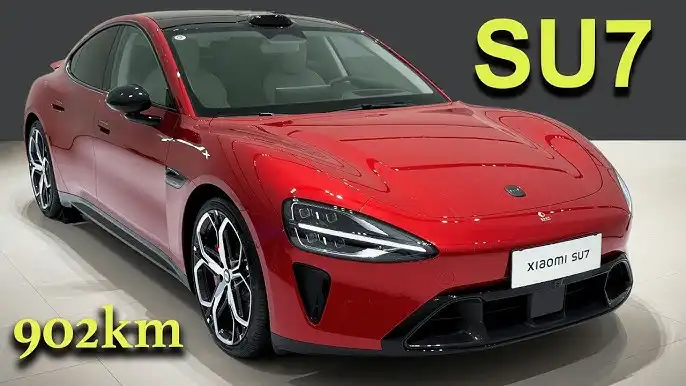
Xiaomi’s second car launched with a decade of smartphone-industry iteration speed applied to a sedan. Here’s what actually changed in the 2026 SU7 refresh — the chassis, the sensors, the door handles that got redesigned for a reason — and what each change tells you about where Xiaomi thinks the EV market is heading.
Transparency: I have not driven or tested the Xiaomi SU7. This is a documentation-based breakdown of specifications Xiaomi has published and independent reporting on the March 2026 refresh, written to explain what changed and why rather than to score or recommend the vehicle. China-market only at time of writing; European launch is planned for 2027.
What Actually Happened
Xiaomi’s original SU7 launched in China in March 2024 — the company’s first car, following its 2021 announcement that it was entering the automotive industry through its Xiaomi Auto division. It sold well immediately and later added an “Ultra” performance variant that set a lap record for four-door cars at the Nürburgring. In March 2026, not quite two years after the original went on sale, Xiaomi launched a mid-cycle refresh across the full SU7 lineup — Standard, Pro, and Max trims — introducing pre-orders that reportedly reached 15,000 units within 34 minutes.
That kind of rapid refresh cycle is standard practice in China’s EV market, where manufacturers routinely update models within a year or two of launch rather than waiting for a traditional multi-year cycle. The SU7 refresh is a useful case study in what that pace actually produces under the hood, rather than just a styling refresh.
A walkaround and interior look at the 2026 Xiaomi SU7 refresh, filmed shortly after launch. Independent production, not affiliated with Wangdoo or Xiaomi.
The Door Handles: A Fix With a Real Story Behind It
The most visually obvious change is also the one with the most serious backstory. The original SU7 used flush, fully electronic door handles — a common design choice on modern EVs for aerodynamics and aesthetics. That design drew serious safety scrutiny in China following incidents where occupants reportedly struggled to exit vehicles after collisions, when electronic systems lost power. The 2026 refresh replaces that design with handles that flip up and can be operated both electronically and manually, backed by a triple-redundant unlocking mechanism: even if the main and auxiliary batteries both lose power simultaneously, doors can still unlock via an independent backup power source. The front passenger door’s manual release mechanism is coloured bright red specifically for fast identification in an emergency.
This is a useful case study in how a single high-profile safety concern in one market can force a fast, structural redesign — not just a firmware patch — well ahead of a manufacturer’s next planned model cycle.
Sensors and Compute: What Was Optional Is Now Standard
Before the refresh, advanced driver-assistance hardware — LiDAR, 4D millimetre-wave radar, and Xiaomi’s most capable compute platform — was reserved for the top Max trim. The 2026 refresh makes all of it standard across every trim, including the entry-level Standard model. That hardware runs through Nvidia’s DRIVE AGX Thor-U compute platform, delivering 700 TOPS of processing power and feeding data from 11 high-definition cameras, LiDAR, 4D millimetre-wave radar, and 12 ultrasonic sensors into Xiaomi’s driver-assistance system, which the company calls HAD — Highly Automated Driving.
Standardising this hardware across the full lineup rather than gating it behind the most expensive trim is a meaningful shift in strategy. It suggests Xiaomi is treating advanced driver-assistance sensing as a baseline expectation for the EV category from here, not a premium upsell — a bet that mirrors the direction several other Chinese EV makers have taken on ADAS hardware over the same period.
| Trim | Motor Output | Battery | CLTC Range |
|---|---|---|---|
| Standard | 235kW (320hp) | 73kWh LFP | 720km |
| Pro | 235kW (320hp) | 96.3kWh LFP | 902km |
| Max | 508kW (680hp) | 101.7kWh NMC | 835km |
CLTC range figures reflect China’s testing standard, which typically produces higher numbers than EPA or WLTP ratings for the same vehicle.
The Chassis and Braking Changes
Xiaomi calls the underlying structural update the “Dragon Chassis,” built around a front double-wishbone suspension paired with a rear five-link setup. Pro and Max trims add an optional dual-chamber air suspension with Continuous Damping Control, which adjusts damping in real time based on road conditions. All trims now use four-piston fixed brake calipers with a staggered tyre setup — 245mm front, 265mm rear — for additional grip.
Structurally, the refreshed body uses a reported 2,200MPa embedded roll cage and a 1,500MPa anti-scratch battery beam with a protective coating, alongside the increase from nine to eleven airbags. Xiaomi also added an “owner management mode” that lets the primary owner set power and top-speed restrictions — a feature aimed specifically at scenarios like lending the car out or using it for a chauffeur or ride-sharing service. None of this addresses charging convenience directly, though that’s a separate problem an emerging category of hardware — the autonomous EV charging robots we covered recently — is specifically trying to solve.
What This Refresh Tells You About Xiaomi’s Trajectory
Xiaomi entered the auto industry in 2021 as, by its own admission, a smartphone company with no car-manufacturing history — the same company behind the 17T Pro’s silicon-carbon battery and Dimensity 9500 chip we broke down separately. The scale of what followed is worth stating plainly: over 600,000 vehicles sold across roughly two years, an R&D facility opened in Munich staffed with engineers pulled from BMW, Porsche, and Lamborghini, and a stated plan to enter European markets starting in 2027. The SU7 refresh is a data point in that broader trajectory rather than an isolated product update — it’s Xiaomi applying the same fast-iteration discipline that built its smartphone business to a category where that pace is far less common among established manufacturers.
Frequently Asked Questions
Is the 2026 Xiaomi SU7 available outside China?
Not yet. As of this writing, the SU7 and its 2026 refresh remain China-exclusive. Xiaomi has stated plans to begin entering European markets starting in 2027, and has opened an R&D facility in Munich to support that expansion, but no confirmed international sales date has been announced.
Why were the door handles redesigned?
The original SU7’s fully electronic, flush door handles faced safety scrutiny in China following reported incidents where occupants had difficulty exiting the vehicle after a collision if electronic systems lost power. The 2026 refresh introduces handles that work both electronically and manually, along with a triple-redundant unlocking system designed to function even if both the main and auxiliary batteries fail simultaneously.
What’s the difference between the Standard, Pro, and Max trims?
The Standard and Pro trims share the same 235kW motor output but differ in battery size and range — the Pro’s larger 96.3kWh battery delivers a CLTC-rated 902km versus 720km for the Standard. The Max trim uses a more powerful 508kW motor and a different battery chemistry, rated at 835km CLTC range. All three trims now include the same standard driver-assistance sensor suite, which was previously Max-exclusive.
Does the SU7 refresh include the same advanced driver-assistance features across every trim?
Yes — this is one of the most significant changes in the refresh. LiDAR, 4D millimetre-wave radar, and the Nvidia Thor-U compute platform delivering 700 TOPS were previously reserved for the top Max trim, and are now standard across the Standard, Pro, and Max trims alike.
What is CLTC range, and how does it compare to EPA or WLTP figures?
CLTC (China Light-Duty Vehicle Test Cycle) is China’s official range-testing standard. It generally produces higher range figures than the EPA standard used in the US or the WLTP standard used in Europe, because its test cycle involves less aggressive driving conditions. A vehicle’s real-world range under EPA or WLTP testing is typically meaningfully lower than its CLTC-rated figure for the same battery pack.
Sources
- Xiaomi Auto — official SU7 2026 product and specification announcements
- CarNewsChina — 2026 SU7 refresh launch coverage, pricing, and pre-order figures
- ArenaEV — trim-level specification breakdown
- Jinyu Autos — safety system and structural detail
- Wikipedia — Xiaomi SU7 production timeline and platform history