Xiaomi 17T Pro: Complete Technical Specification Analysis

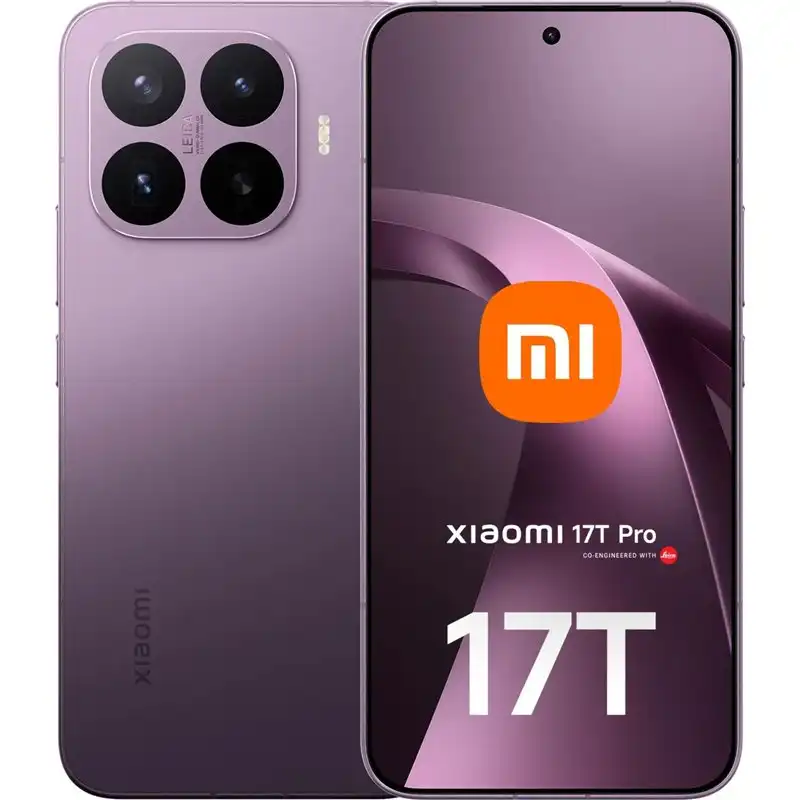
Display, chip, camera, battery and build — a documentation-based breakdown of what’s inside Xiaomi’s latest T-series flagship, and what each spec translates to in practice.
Transparency: I have not tested the Xiaomi 17T Pro. This is a documentation-based breakdown of the specifications Xiaomi has published, written to explain what each spec means rather than to score or recommend the device.
Xiaomi’s 17T Pro landed in May 2026 as the latest entry in the company’s T-series, sitting between the mainline Xiaomi 17 lineup and the more affordable Redmi range. On paper it’s a dense spec sheet — a new MediaTek chip, a Leica-branded triple camera, and the largest battery Xiaomi has put in a phone to date. Here’s what each part of that sheet actually means once you get past the marketing labels.
An independent hands-on review of the Xiaomi 17T Pro, published at launch. Independent production, not affiliated with Wangdoo or Xiaomi.
Display: What “1.5K” and Eye-Care Actually Cover
The 17T Pro carries a 6.83-inch AMOLED panel at 2772×1280, a resolution Xiaomi markets as “1.5K” — a step below the “2K” panels found on some higher-end flagships, but still dense enough at 447 pixels per inch that individual pixels aren’t visible at normal viewing distance. It runs up to 144Hz refresh, 100% DCI-P3 colour coverage, and a peak brightness of 3500 nits for outdoor visibility.
The more distinctive part is Xiaomi’s “Vision Care” branding, which bundles a set of TÜV Rheinland certifications: circadian-friendly tuning, hardware-level low blue light, flicker-free operation, and an “intelligent eye care” designation. In practice these describe how the display manages brightness and colour temperature over time and in low light, dimming down to a claimed 1-nit minimum for night use while using DC dimming at high refresh rates to reduce flicker. The panel uses Gorilla Glass 7i rather than a higher-tier Victus-class glass, which is a cost-driven choice typical of the T-series’ positioning below Xiaomi’s numbered flagship line.
Processor: Reading the Dimensity 9500’s Core Layout
Performance comes from MediaTek’s Dimensity 9500, built on a 3nm process. Rather than a simple “octa-core” label, Xiaomi lists a three-tier core structure: one C1-Ultra core clocked up to 4.21GHz for peak single-thread tasks, three C1-Premium cores up to 3.5GHz for sustained heavy workloads, and four C1-Pro efficiency cores up to 2.7GHz for everyday, low-power tasks. Graphics run on an Arm Mali G1-Ultra GPU, with a dedicated NPU 990 handling on-device AI processing such as the Gemini-linked features built into HyperOS.
Worth knowing
A “big.LITTLE”-style tiered core layout like this exists so the phone can idle on efficiency cores for routine tasks — messaging, scrolling, standby — and only wake the higher-power cores for gaming or heavy computation, which is what most of a battery-life spec actually depends on rather than peak benchmark numbers.
RAM is LPDDR5X, paired with UFS 4.1 storage across 256GB, 512GB, and 1TB configurations, all fixed at 12GB of RAM with no expandable storage option. LPDDR5X is a mobile-specific memory standard — a different technology entirely from the High-Bandwidth Memory we covered in our SK Hynix explainer, which is built for AI data centre chips rather than phones, but the two share the same underlying goal: moving data to the processor fast enough that it never becomes the bottleneck.
Camera: The Triple Leica System
The rear system pairs three Leica-tuned lenses on a shared “Summilux” optical design: a 23mm 50MP main camera (Light Fusion 950 sensor, ƒ/1.67, OIS), a 115mm 50MP periscope telephoto (ƒ/3.0, OIS, 5x native optical zoom), and a 15mm 12MP ultra-wide (ƒ/2.2, 120° field of view). Xiaomi’s own numbers put the telephoto’s practical reach at up to 10x before quality loss becomes noticeable, and up to 120x through its AI Ultra Zoom processing.
Rear video tops out at 8K30, with 4K available at up to 120fps and a dedicated Log recording mode for colour grading. The 32MP front camera supports 4K HDR10+ selfie video. None of these figures indicate real-world image quality on their own — sensor size, processing, and lens coatings all factor into that — but they set the ceiling for what the hardware is capable of capturing.
Battery and Charging: What Silicon-Carbon Changes
The 7000mAh cell is built with a silicon-carbon anode rather than the traditional graphite used in most phone batteries. Silicon-carbon chemistry packs more energy into the same physical volume, which is how Xiaomi fits a larger-capacity cell into a phone that isn’t dramatically thicker than its predecessor. The trade-off historically has been battery longevity, which Xiaomi addresses by rating the cell to retain at least 80% of its original capacity after 1,600 charge cycles.
Charging is rated at 100W wired and 50W wireless, with support for the PPS fast-charging standard and 22.5W reverse wired charging for topping up accessories. Wireless charging at the full 50W rate requires one of Xiaomi’s own HyperCharge chargers rather than a generic Qi pad.
Build and Durability
The 17T Pro uses an aluminium alloy frame with a standard glass rear panel, at 162.2mm × 77.5mm × 8.25mm and 219g. It carries an IP68 rating, meaning it’s certified dust-tight and rated for submersion in up to 1.5 metres of fresh water for 30 minutes under specific lab conditions — a standard that reflects controlled testing rather than a guarantee against damage from pool, sea, or pressurised water exposure in daily use.
Software Updates: The Part That Outlasts the Spec Sheet
Xiaomi has committed to five major Android version updates for the 17T Pro — taking it from Android 16 through Android 17, 18, 19, 20, and 21 — alongside six years of security patches running until 2032. That commitment matters more than almost any single hardware spec on this page. A phone’s processor and camera are fixed the day you buy it, but the length of its software support window determines how long it stays secure and usable well after the specs stop looking new. Six years of security patches is a meaningfully longer commitment than the T-series has historically carried, and it puts the 17T Pro’s support window closer to what Xiaomi promises on its numbered flagship line.
Where the Dimensity 9500 Actually Sits
Numbers on a spec sheet mean more with context. The Dimensity 9500 isn’t exclusive to Xiaomi — the same chipset powers the Vivo X300 series and the Oppo Find X9 series, which puts the 17T Pro in direct silicon-for-silicon competition with two of its closest rivals rather than relying on unique hardware to stand out. In Xiaomi’s own AnTuTu benchmark testing, the chip scores above 3,570,000 — a figure that sits comfortably in current flagship territory, though AnTuTu scores are best read as a rough performance indicator rather than a precise measure of real-world speed, since actual app and game performance depends heavily on thermal management and software optimisation as well as raw chip power.
What it actually costs
The Xiaomi 17T Pro launched in Europe at €899.90 for the base 12GB + 256GB configuration, positioning it below Xiaomi’s numbered flagship line while still commanding a genuine premium-tier price. Regional pricing varies, and promotional discounts at launch are common for Xiaomi devices, so treat this as a starting reference point rather than a fixed figure.
Connectivity and Software
Networking covers Wi-Fi 7, Bluetooth 6.0, dual-band GPS with support for GLONASS, Beidou, Galileo, NavIC and QZSS positioning systems, NFC, and an IR blaster. The phone ships on Xiaomi’s HyperOS 3, layered over Android, with Google’s Gemini integrated for on-device AI features including circle-to-search and conversational assistance — availability of specific AI features varies by region and requires an internet connection.
| Category | Spec |
|---|---|
| Display | 6.83″ AMOLED, 2772×1280, 144Hz, 3500 nits peak |
| Chip | MediaTek Dimensity 9500 (3nm), Mali G1-Ultra GPU, NPU 990 |
| RAM / Storage | 12GB LPDDR5X / 256GB, 512GB, or 1TB UFS 4.1 |
| Rear cameras | 50MP main (ƒ/1.67) · 50MP 5x periscope telephoto (ƒ/3.0) · 12MP ultra-wide (ƒ/2.2) |
| Battery | 7000mAh silicon-carbon, 100W wired / 50W wireless charging |
| Build | Aluminium frame, glass rear, Gorilla Glass 7i front, IP68 |
| OS | HyperOS 3 on Android, Gemini integration |
My Take — Mr Wangdoo
The spec sheet that stands out most here is the battery chemistry, not the chip. A 7000mAh cell in a phone that’s barely thicker than last year’s model is a notable materials-engineering story, and it’s the kind of change that matters more day-to-day than another few hundred points on a benchmark. I haven’t put the device through its paces myself, so take the real-world battery life and thermal behaviour as things worth checking against independent testing rather than the spec sheet alone.
Frequently Asked Questions
How long will the Xiaomi 17T Pro receive software updates?
Xiaomi has committed to five major Android version updates and six years of security patches, running through 2032. That’s a longer support commitment than earlier T-series phones typically carried, and it means the phone should remain reasonably current from a security standpoint well beyond the point where its hardware specs start to feel dated.
What’s the difference between the Xiaomi 17T and 17T Pro?
The Pro model steps up to the Dimensity 9500 chip (versus the Dimensity 8500 Ultra on the standard 17T), a larger 7000mAh battery versus 6500mAh, a bigger 6.83-inch display versus 6.59 inches, and an aluminium frame in place of the standard model’s plastic mid-frame.
Does 100W wired charging fully charge the phone quickly?
Xiaomi hasn’t published an official full-charge time for the 17T Pro specifically. Independent lab testing of the 100W HyperCharge standard on Xiaomi’s related 17-series phones has shown charging speed varying through the cycle — fast in the first 15-30 minutes, then tapering — so actual full-charge time depends on which charger is used and real-world conditions rather than a single fixed number.
Is UFS 4.1 storage expandable?
No. The 17T Pro’s storage is fixed at time of purchase across the 256GB, 512GB, and 1TB tiers, with no microSD expansion slot.
Sources
- Xiaomi Global — official Xiaomi 17T Pro product and specification pages
- MediaTek — Dimensity 9500 chipset technical materials
- Notebookcheck — Xiaomi 17T Pro European launch coverage, pricing, and software update commitment