Xiaomi 17 Pro Max (2026): Dual-Screen Flagship Still Dominates Creator Space

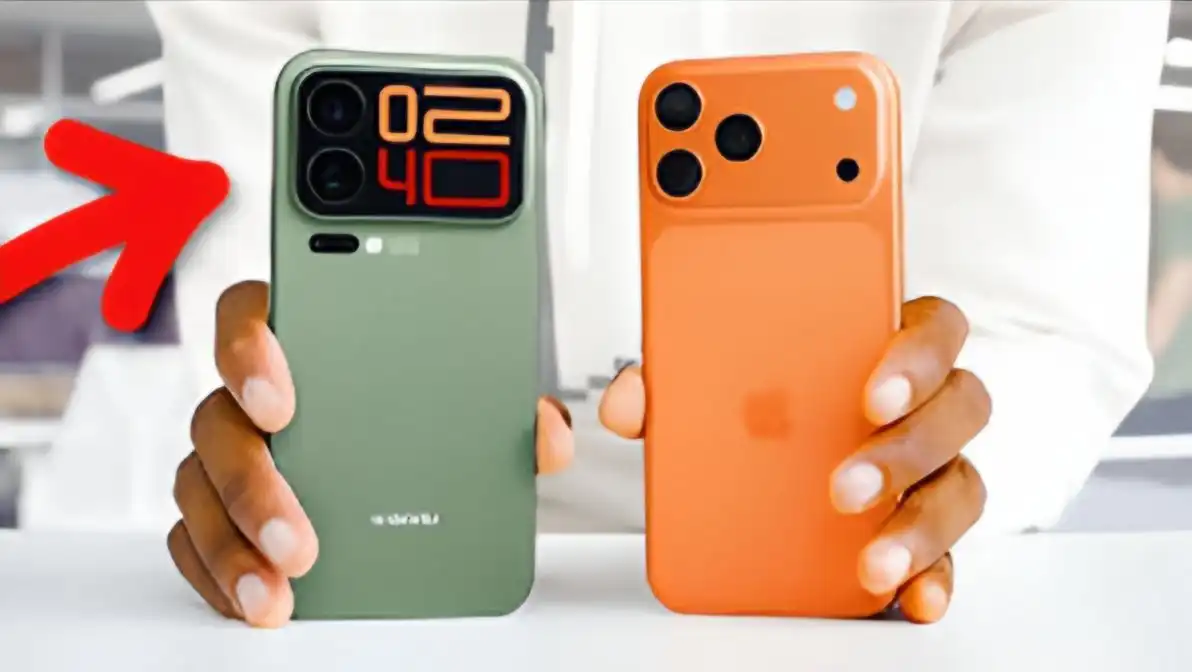
Xiaomi 17 Pro Max Explained: Dual Screen, Leica Cameras, and Why Americans Are Searching for a Phone They Can’t Officially Buy
The Xiaomi 17 Pro Max launched in China in September 2025 with a secondary rear display, triple 50MP Leica cameras, and a 7,500mAh battery. It was never officially released in the United States. Here is what it actually offers, what the independent tests found, and what US buyers should know.
The Xiaomi 17 Pro Max is a China-exclusive model. It was never officially released in the United States, the UK, or most Western markets. Xiaomi’s global launch covered the base Xiaomi 17 and Xiaomi 17 Ultra only. Grey market imports exist but carry significant practical risks — covered in full below.
The Xiaomi 17 Pro Max is a 2025 Android flagship featuring a 6.9-inch LTPO AMOLED display with a secondary 2.9-inch AMOLED rear screen for vlogging and selfies, triple 50MP Leica-tuned cameras, the Snapdragon 8 Elite Gen 5 chipset, a 7,500mAh silicon-carbon battery with 100W wired and 50W wireless charging, Android 16 with HyperOS 3, IP68 water resistance, and Wi-Fi 7. GSMArena’s lab recorded a 20 hours 50 minutes active use score — tested with the rear display switched off. It was not officially released outside China.
Xiaomi 17 Pro Max official introduction video. All rights respective owner.
Design and Build — What Makes It Distinctive
The Xiaomi 17 Pro Max’s most immediately noticeable feature is the circular camera module housing three 50MP Leica lenses on the rear. Alongside the camera module sits a 2.9-inch AMOLED secondary display — the feature that most distinguishes this phone from any rival flagship in 2025.
Build quality is firmly flagship: aluminium frame, Dragon Crystal Glass 3 front panel, IP68 dust and water resistance rated to 6 metres for 30 minutes. At 219g and 8mm thick it is noticeably heavier than some 2026 rivals, though the weight distributes reasonably evenly. Available in Black, White, Purple, and Green.
| Specification | Detail |
|---|---|
| Dimensions | 162.9 × 77.6 × 8.0 mm |
| Weight | 219g |
| Frame | Aluminium |
| Front Glass | Xiaomi Dragon Crystal Glass 3 |
| IP Rating | IP68 — dust tight and water resistant (6m / 30 min) |
| SIM | Dual Nano-SIM |
| Colours | Black · White · Purple · Green |
The Rear Display — What It Actually Does
The secondary rear display is 2.9 inches, LTPO AMOLED, 120Hz, with a 596 × 976 pixel resolution and 3,500 nits peak brightness — the same panel technology as the front display, just smaller. GSMArena’s hands-on noted Xiaomi has not cut corners on the secondary panel’s specifications, which supports the same HDR standards as the front.
The practical use cases for the rear display are specific. According to GSMArena’s review, the most useful application is as a camera viewfinder for selfie photos and videos — you can launch a full camera app on the secondary screen, switch between all three rear cameras, and adjust settings while the subject sees themselves in the frame in real time. For vloggers, this replaces the need for a flip-screen or a separate monitor.
Real-camera selfies using the main Leica sensors. Vlogging preview so you can see your own framing while recording. Widget support — clock, music controls, weather. Notification glances without unlocking the phone. QR code display. The rear display draws additional power during active use — GSMArena’s 20h50m battery test was conducted with it switched off, so real-world runtime with the rear display in active use will be lower than the headline figure.
Display — Main Panel Specifications
The front panel is a 6.9-inch LTPO AMOLED running at 1200 × 2608 pixels, equating to 416 ppi, with a 120Hz adaptive refresh rate and 3,500 nits peak brightness. It supports 12-bit colour depth, 2160Hz PWM dimming, Dolby Vision, HDR10+, and HDR Vivid. GSMArena’s display tests confirmed both panels perform well, with manual mode brightness measured at slightly over 600 nits and auto mode boosting to over 1,000 nits on a 75% white surface.
| Display | Specification |
|---|---|
| Front Panel | 6.9-inch LTPO AMOLED · 1200 × 2608 px · 416 ppi · 120Hz adaptive · 3,500 nits peak |
| Rear Panel | 2.9-inch LTPO AMOLED · 596 × 976 px · 120Hz · 3,500 nits peak |
| Colour Depth | 12-bit · 68 billion colours |
| PWM Dimming | 2160Hz |
| HDR Support | Dolby Vision · HDR10+ · HDR Vivid |
| Anti-Glare | No anti-glare coating on front panel |
Performance — Snapdragon 8 Elite Gen 5
The Qualcomm Snapdragon 8 Elite Gen 5 (SM8850-AC) is a 3nm chip with an octa-core Oryon V3 CPU configuration — two high-performance cores at 4.6 GHz and six efficiency cores at 3.62 GHz — paired with the Adreno 840 GPU. GSMArena noted the Xiaomi 17 Series was the first phones in the world to launch with this chipset.
RAM configurations are 12GB or 16GB LPDDR5X. Storage is 512GB or 1TB via UFS 4.1 — the fastest consumer storage standard available in 2025. The phone launched running Android 16 with HyperOS 3. Real-world performance is described across multiple independent reviews as seamless for all tasks including gaming and 8K video editing.
| Specification | Detail |
|---|---|
| Chipset | Qualcomm SM8850-AC Snapdragon 8 Elite Gen 5 (3nm) |
| CPU | Octa-core — 2×4.6 GHz Oryon V3 + 6×3.62 GHz Oryon V3 |
| GPU | Adreno 840 |
| RAM | 12GB or 16GB LPDDR5X |
| Storage | 512GB or 1TB UFS 4.1 (no microSD) |
| OS at Launch | Android 16 · HyperOS 3 |
| Connectivity | 5G · Wi-Fi 7 · Bluetooth 5.4 · NFC · UWB · Infrared · USB-C 3.2 |
| Audio | Stereo speakers · Dolby Atmos |
| Fingerprint | Under-display ultrasonic |
Camera System — Triple 50MP Leica
All three rear cameras are 50MP and co-engineered with Leica, covering wide, ultrawide, and periscope telephoto focal lengths. The main sensor is the Light Fusion 950L — a custom 1/1.28-inch chip with Leica Summilux optics at f/1.67 aperture. This is one of the larger main sensors in any 2025 flagship outside the Ultra/Pro Max tier.
DXOMARK published a full camera test in January 2026, describing the phone as making Xiaomi’s “ambition to rival the iPhone 17 Pro Max clear not only in name, but also in imaging performance.” GSMArena’s full review noted that daylight performance is strong across all three lenses with Leica’s Authentic and Vibrant colour science modes providing genuine photographic character. The review was candid about the telephoto’s limits — GSMArena specifically stated it “fails to impress even at native 5x zoom” and lags behind the Xiaomi 15 Ultra’s telephoto in sharpness and detail.
“The most notable upgrade in this year’s camera system is the selfie. Xiaomi is finally replacing the old 32MP camera with a seemingly much better 50MP shooter with autofocus — a well overdue update.”
Video Capabilities
| Mode | Specification |
|---|---|
| 8K | 8K @ 30fps · HDR |
| 4K | 4K @ 30/60/120fps · HDR10+ · 10-bit Dolby Vision · 10-bit LOG |
| Slow-Motion | 1080p @ 960fps · 720p @ 1920fps |
| Stabilisation | Gyro-EIS across all modes |
| Colour Profiles | Leica Authentic and Vibrant modes |
| Front Camera Video | 4K @ 30/60fps · 1080p @ 30/60fps · HDR10+ · gyro-EIS |
Battery — What the Lab Tests Actually Found
The 7,500mAh silicon-carbon battery is one of the largest in any mainstream 2025 flagship. GSMArena’s lab recorded an active use score of 20 hours and 50 minutes, which the publication noted puts it among the best results they had recorded at the time — second only to the Oppo Find X9 Pro in their recent tests.
GSMArena explicitly stated their battery tests were conducted with the rear display switched off. Real-world use with the rear display active — which is the point of having it — will result in lower runtime than the 20h50m headline figure. How much lower depends on how frequently the rear screen is used. Independent tests from Xiaomi Planet also found that a competing video streaming test placed the Xiaomi 17 Pro Max only marginally ahead of the iPhone 17 Pro Max in real-world conditions despite having 60% more battery capacity — suggesting software optimisation is still a factor.
Charging performance is strong. GSMArena measured 0–100% in 39 minutes using Xiaomi’s 100W HyperCharge adapter, with 45% reached in 15 minutes and 82% in 30 minutes. 50W wireless charging is supported with Xiaomi’s compatible wireless charger. Reverse wireless charging is 22.5W. The 100W HyperCharge adapter is bundled in the Chinese market box — the European grey market box may not include one.
| Battery Specification | Detail |
|---|---|
| Capacity | 7,500mAh silicon-carbon |
| Wired Charging | 100W — PD3.0 · QC3+ · USB PD+PPS · Xiaomi HyperCharge |
| Wireless Charging | 50W (Xiaomi proprietary wireless charger required) |
| Reverse Wireless | 22.5W |
| 0–100% time | 39 minutes (GSMArena lab, Xiaomi 100W adapter) |
| GSMArena Active Use Score | 20h 50min (rear display OFF during test) |
| Video Playback | 29 hours (GSMArena lab) |
| Charger in Box | Yes (China) — European grey market boxes may vary |
How It Compares to Available Rivals
Specifications sourced from GSMArena and manufacturer pages. Prices are approximate at time of publication.
| Feature | Xiaomi 17 Pro Max | Samsung Galaxy S26 Ultra | iPhone 17 Pro Max |
|---|---|---|---|
| Main Camera | 50MP Light Fusion 950L · f/1.67 · 1/1.28″ | 200MP f/1.7 | 48MP f/1.78 |
| Telephoto | 50MP · 5× periscope · f/2.6 · 1/1.95″ | 50MP · 5× periscope · f/2.9 | 48MP · 5× periscope |
| Battery | 7,500mAh | 5,000mAh | ~4,685mAh |
| Wired Charging | 100W | 60W | ~27W |
| Wireless Charging | 50W | 25W | 25W |
| Rear Display | ✓ 2.9″ AMOLED 120Hz | ✗ No | ✗ No |
| 4K/120fps Video | ✓ Yes + 8K@30fps | ⚠ 4K/60fps max (8K@30fps) | ✓ Yes |
| Wi-Fi | Wi-Fi 7 | Wi-Fi 7 | Wi-Fi 7 |
| IP Rating | IP68 | IP68 | IP68 |
| US Availability | ✗ China only — no official US release | ✓ Full US retail | ✓ Full US retail |
| Approx. Price | ~€720 grey market Europe | ~€1,399 | ~€1,299 |
US Availability — The Full Picture
This is the most searched question about the Xiaomi 17 Pro Max and deserves a thorough answer.
Xiaomi’s global launch in late 2025 covered the base Xiaomi 17 and Xiaomi 17 Ultra. The Pro and Pro Max were launched only in China and select Asian markets. The device was never submitted to the FCC for US market approval and has never appeared on Xiaomi’s US website or been made available through American carriers.
Grey market units are available from importers at approximately $970–$1,100 depending on configuration. Before purchasing, buyers should be aware of four specific issues. First — no official US warranty. Xiaomi does not provide warranty coverage for units not sold through authorised regional channels, and repairs or replacements will be unsupported. Second — 5G band compatibility. Chinese models may lack certain US 5G and LTE frequency bands used by American carriers. Buyers should check the specific model’s band list against their carrier’s network frequencies before purchasing. Third — software. Units ship with HyperOS in Chinese. A global ROM can be flashed, but this process voids warranty and carries technical risk if done incorrectly. Fourth — Google services are not pre-installed on Chinese models and require manual setup. None of these issues are insurmountable — but together they represent meaningful added complexity and risk compared to buying a locally supported device.
If you are in the United States and want comparable features with official support, three options are worth considering. The Samsung Galaxy S26 Ultra is fully available through US carriers and retail, at a higher price (~$1,299) but with full warranty and band support. The Google Pixel 10 Pro XL offers strong camera performance with full US availability and software support. The Xiaomi 17 Ultra — Xiaomi’s globally released flagship for 2025 — is available through Xiaomi’s international channels and covers most of the same camera DNA as the Pro Max with official global support.
Who Is the Xiaomi 17 Pro Max Designed For?
My Take — Mr Wangdoo
Wangdoo has not tested this phone. What follows is editorial analysis based on GSMArena’s lab data, DXOMARK’s camera test, and independent published reviews.
The Xiaomi 17 Pro Max makes the strongest case for the rear display concept since Xiaomi first tried it on the Xiaomi 11 Ultra. On the 11 Ultra, the secondary screen felt like a proof of concept. On the 17 Pro Max, GSMArena’s reviewers describe it as genuinely useful — particularly for real-camera selfies and vlogging framing. That is a meaningful shift from novelty to utility.
The battery headline is compelling but the caveat matters: 7,500mAh and 20h50m active use sounds dominant until you know the test was run with the rear display off. For a phone whose main selling point is the rear display, that is a significant asterisk. The Xiaomi Planet comparison — showing the 17 Pro Max barely ahead of the iPhone 17 Pro Max in a video streaming test despite nearly 60% more battery capacity — suggests the software efficiency story is more complicated than the hardware story.
The telephoto is the honest weak spot. GSMArena’s direct comparison against the Xiaomi 15 Ultra’s telephoto is damning — a generation-old phone’s zoom lens outperforms the newer model in sharpness and detail. At €720, that is easier to accept. At any higher price, it would be harder to justify.
Frequently Asked Questions
Can I buy the Xiaomi 17 Pro Max in the United States?
Not officially. The Xiaomi 17 Pro Max was a China-exclusive launch and was never submitted for FCC approval or made available through US retail or carriers. Grey market importers sell it at approximately $970–$1,100, but buyers should be aware of: no official US warranty, potential 5G band compatibility issues, Chinese software requiring manual global ROM installation, and no pre-installed Google services. For most US buyers, the Samsung Galaxy S26 Ultra, Google Pixel 10 Pro XL, or internationally available Xiaomi 17 Ultra are more practical alternatives with full local support.
What is the rear display actually used for?
The 2.9-inch AMOLED secondary rear display is used primarily as a camera viewfinder — allowing subjects to see themselves in the frame when you shoot with the main Leica cameras, which is particularly useful for selfies and vlogging. It also supports widgets (clock, music controls, weather), notification previews without unlocking the phone, and QR code display. GSMArena’s review describes the vlogging viewfinder use case as the most practically useful application. Note that using the rear display actively will reduce battery life below the 20h50m headline figure, which was measured with the rear display switched off.
Is the 7,500mAh battery as good as it sounds?
GSMArena recorded 20 hours 50 minutes of active use — one of the best results they had measured at the time of testing, second only to the Oppo Find X9 Pro. However, this test was conducted with the rear display turned off. Real-world use with the rear display active will be lower. An independent video streaming test by Xiaomi Planet found the phone only marginally ahead of the iPhone 17 Pro Max in a sustained streaming test, suggesting software efficiency is not as dominant as the raw capacity would imply. Charging is genuinely fast — 39 minutes from 0–100% with Xiaomi’s 100W adapter, confirmed by GSMArena’s lab.
How does the camera compare to the Samsung Galaxy S26 Ultra?
The main sensor comparison is complex — the Xiaomi 17 Pro Max has a 50MP 1/1.28″ sensor with Leica Summilux optics at f/1.67, while the Galaxy S26 Ultra has a 200MP sensor at f/1.7. In terms of telephoto, the Galaxy S26 Ultra has a 50MP 5× periscope at f/2.9, while the Xiaomi 17 Pro Max has a 50MP 5× periscope at f/2.6 with a larger 1/1.95″ sensor. GSMArena’s review noted the 17 Pro Max telephoto underperforms even relative to older Xiaomi models in sharpness and detail. For battery, charging, and the rear display, the Xiaomi 17 Pro Max has meaningful advantages. For camera versatility and especially global availability, the Galaxy S26 Ultra is the more practical choice for most buyers.
Does it support 8K video?
Yes — 8K at 30fps with HDR, confirmed in GSMArena’s specification database. The phone also supports 4K at up to 120fps with HDR10+, 10-bit Dolby Vision, and 10-bit LOG recording for colour grading. Slow-motion goes to 1080p at 960fps and 720p at 1920fps. All video modes use gyro-EIS stabilisation. The front camera supports 4K at 30/60fps with HDR10+.
Is this phone available in the UK or Europe officially?
No — the Xiaomi 17 Pro Max was not part of Xiaomi’s official European launch. European buyers can access it through grey market importers at approximately €720, but the same caveats apply as for US buyers: no official warranty, potential band compatibility issues depending on the specific Chinese model variant, and Chinese software. The Xiaomi 17 Ultra is the globally launched flagship option from Xiaomi for European buyers who want official support.
What is the launch date and price?
The Xiaomi 17 Pro Max launched in China in September 2025 alongside the Xiaomi 17 and Xiaomi 17 Ultra. Chinese retail pricing at launch was approximately ¥5,999–¥6,999 depending on configuration (512GB 12GB RAM to 1TB 16GB RAM). European grey market pricing at time of writing is approximately €720. There is no official MSRP for the US or European markets as the phone was never released in those regions.
- GSMArena — Xiaomi 17 Pro Max hands-on review — design, display, camera hardware, full specifications (October 13, 2025)
- GSMArena — Xiaomi 17 Pro Max full review — camera performance, battery test, lab results (October 30, 2025)
- GSMArena — Xiaomi 17 Pro Max battery life and charging test results — 20h50m active use, 39-minute charge (October 29, 2025)
- DXOMARK — Xiaomi 17 Pro Max camera test — full sensor and performance analysis (January 29, 2026)
- Digital Camera World — Xiaomi 17 Series — Dynamic Back Display explained, camera hardware breakdown (September 30, 2025)
- Xiaomi Planet — Xiaomi 17 Pro Max battery test — independent streaming endurance test vs iPhone 17 Pro Max (October 2025)