
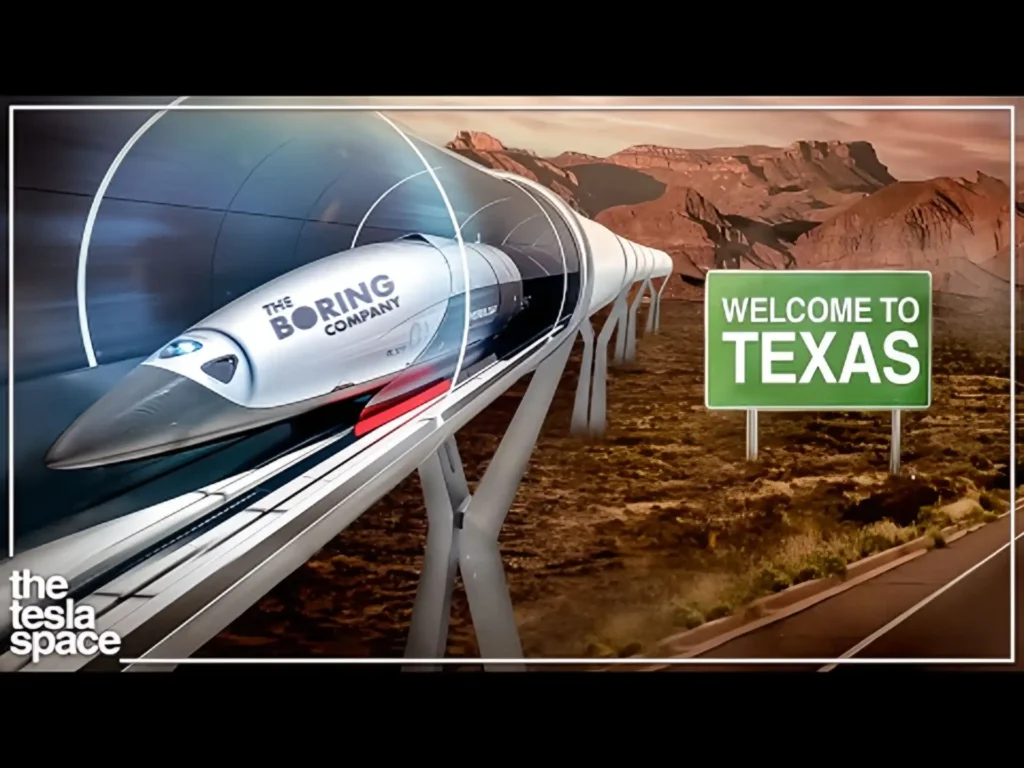
When Elon Musk founded The Boring Company in 2017, many assumed it was a joke—another eccentric idea from a billionaire known for rockets, electric cars, and ambitious visions. But the company quickly evolved into a serious infrastructure startup with a bold mission: eliminate traffic by building a network of low‑cost, high‑speed tunnels beneath cities. Today, The Boring Company (TBC) stands as one of the most intriguing players in the future‑mobility landscape, blending tunnel technology, transportation innovation, and smart‑city infrastructure into a single disruptive package.

According to publicly available data, The Boring Company was founded as a SpaceX subsidiary in 2017 and spun off as an independent corporation in 2018. It has since built multiple test tunnels and one operational public system: the Las Vegas Convention Center Loop, a 1.7‑mile underground transport system that opened in 2021. A segment connecting to Resorts World is already open, with tunnels to Encore and Westgate nearing completion, and a citywide expansion planned to reach 68 milesWikipedia.
This article explores why The Boring Company may truly be a game changer, how its technology works, and why its approach to urban transportation could reshape the future of mobility.
A Vision Born From Gridlock
Elon Musk has long expressed frustration with traffic, especially in Los Angeles. In 2016, he famously tweeted that he was “going to build a tunnel boring machine and just start digging.” Months later, he did exactly that.
Musk argued that cities are constrained by two‑dimensional road networks, and the only way to expand capacity is to go three‑dimensional—either up (flying cars) or down (tunnels). Tunnels, he said, are safer, quieter, weather‑proof, and invisible. This idea became the foundation of The Boring Company’s mission: solve traffic by building a 3D network of underground tunnels.
The company’s early employees came from SpaceX and other engineering backgrounds, and by 2018, TBC had completed its first test tunnel in Hawthorne, California.
Engineering the Future: Prufrock and the Race for Faster Tunneling
Traditional tunnel boring machines (TBMs) are slow and expensive. Musk often joked that a snail moves faster than a TBM. To solve this, The Boring Company developed Prufrock, a next‑generation tunneling machine designed to dramatically increase speed and reduce cost.
Prufrock’s design philosophy includes:
- Surface‑launch tunneling: No need for massive launch pits.
- Continuous mining: Digging without stopping.
- Rapid deployment: Machines can be set up and removed quickly.
- High‑speed boring: Aiming for one mile per week.
If Prufrock reaches its full potential, it could make tunnel construction 10x faster and significantly cheaper, unlocking new possibilities for urban infrastructure, utility routing, and high‑speed underground transport.
The Las Vegas Loop: Proof of Concept
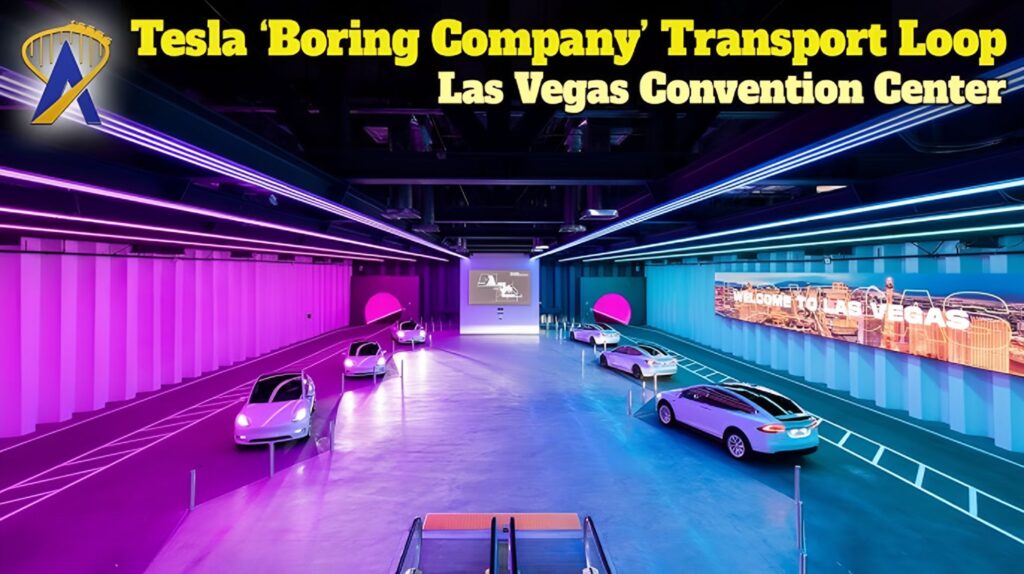
The Boring Company’s most visible achievement is the Las Vegas Convention Center Loop, a three‑station system spanning 1.7 miles. It uses Tesla vehicles to shuttle passengers between stations in minutes, bypassing surface‑level congestion.
Key features include:
- Point‑to‑point travel
- Dedicated underground routes
- High throughput potential
- Scalable station design
A segment connecting to Resorts World is already open, and tunnels to Encore and Westgate are being finalized. The long‑term plan is a citywide Loop covering 68 miles and dozens of stations—an unprecedented privately built transit network.
This project demonstrates that TBC can build functional tunnels quickly and at a fraction of traditional costs, making it a compelling alternative for cities seeking traffic solutions, sustainable transport, and next‑gen mobility systems.
Why Tunnels? The Case for Going Underground
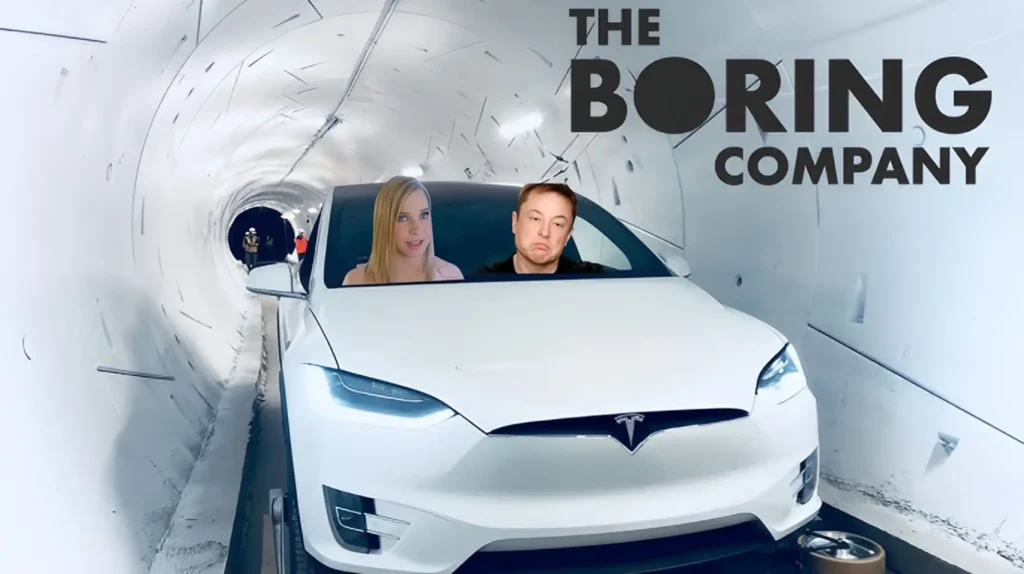
The Boring Company argues that tunnels offer several advantages over surface‑level or elevated transport:
- No weather impact
- No visual pollution
- No noise pollution
- Virtually unlimited layers
- Reduced land acquisition costs
Unlike elevated rail or road systems, tunnels do not disrupt city aesthetics or require demolishing existing structures. They also avoid conflicts with pedestrians, cyclists, and surface traffic.
In a world where cities are becoming denser and more congested, underground networks may be the only scalable long‑term solution.
A New Model for Urban Transportation
The Boring Company’s approach differs from traditional public transit in several ways:
1. Point‑to‑Point Routing
Instead of large trains stopping at every station, TBC envisions small vehicles traveling directly to a passenger’s destination.
2. Modular Stations
Stations can be as small as a few parking spaces, allowing rapid deployment.
3. Private Funding
Unlike most transit systems, TBC aims to build tunnels with private capital, reducing the burden on taxpayers.
4. Scalable Networks
Multiple layers of tunnels can be stacked vertically, creating a 3D mobility grid.
This model blends the convenience of ride‑hailing with the efficiency of mass transit—an appealing hybrid for modern cities.
Challenges and Criticisms
Not all proposed projects have succeeded. Several U.S. cities announced interest but later paused or canceled plans due to regulatory, political, or logistical issues.
Common criticisms include:
- Using cars instead of high‑capacity trains
- Uncertain long‑term throughput
- Regulatory hurdles
- Competition from established transit systems
Supporters counter that TBC’s system is still evolving, and early versions should not be judged as final products.
Why The Boring Company Could Be a True Game Changer
If The Boring Company succeeds in making tunneling dramatically cheaper and faster, the implications are enormous:
- Urban congestion could drop significantly
- Cities could expand underground utilities
- Freight and logistics could move below the surface
- Emergency response routes could be built underground
- New forms of high‑speed transport could emerge
The real breakthrough isn’t just the tunnels—it’s the scalability. A city with dozens or hundreds of tunnels could operate like a digital network, routing vehicles dynamically and eliminating bottlenecks.
Conclusion
The Boring Company is still young, but its ambitions are enormous. With Elon Musk’s vision, Prufrock’s tunneling technology, and the success of the Las Vegas Loop, the company is positioning itself as a major force in the future of urban mobility, smart‑city infrastructure, and transportation technology.
If it succeeds, it won’t just reduce traffic—it could fundamentally reshape how cities are built.