Nissan Lists Liquid Battery Cooling as New on the 2026 LEAF

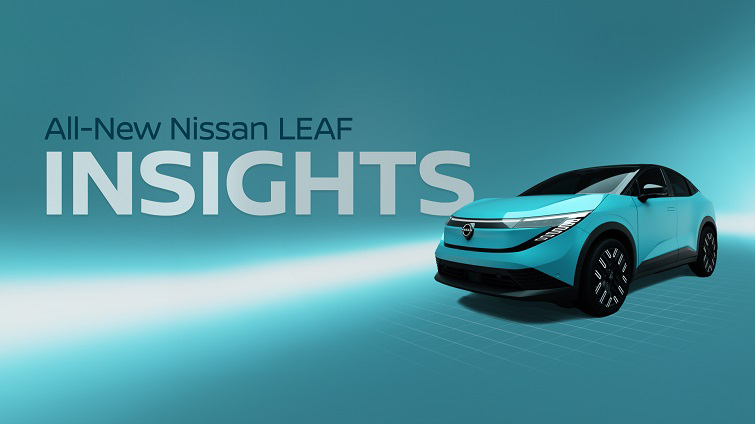
Nissan unveiled the third-generation LEAF in Nashville, describing a car completely reimagined and built on almost 700,000 global sales across more than fifteen years.
The most revealing part of that release is not the range figure. It is the list of things Nissan labels as firsts.
What Nissan calls a first
Nissan’s release splits these into two lists. The first covers features new to any Nissan.
| Powertrain | 3-in-1 unit integrating motor, inverter and reducer |
| Charging | NACS port with Plug & Charge, for North American vehicles |
| Lighting | 3D holographic tail lamps |
| Roof | Available dimming panoramic roof with heat shielding |
The second list covers firsts for the LEAF itself, and it is the more interesting one.
| Battery | Liquid cooled lithium-ion, up to 75 kWh usable |
| Displays | Available dual 14.3-inch screens |
| Software | Available Google built-in including Google Maps; wireless Apple CarPlay and Android Auto |
| Body | Flush door handles; available 19-inch wheels |
| Cabin | Available 64-colour ambient lighting; available Bose Personal Plus audio |
| Cameras | 3D Intelligent Around View Monitor, Invisible Hood View, Front Wide View |
On the first row: Nissan lists liquid cooling as new to the LEAF for 2026. The LEAF has been on sale since 2010, so by Nissan’s own account the first two generations did not have it.
The headline specifications
| Battery | 75 kWh usable, liquid-cooled lithium-ion |
| Motor | 214 horsepower |
| Range | Up to 303 miles — Nissan-estimated for the S+ grade, not an EPA rating |
| Charging | Up to 150 kW; 10–80% in 35 minutes on a compatible Level 3 charger |
| Ports | Two — J1772 on the driver’s side, NACS on the passenger side, giving access to over 20,000 Tesla Superchargers |
| Drag coefficient | 0.26, down from 0.29 on the previous LEAF |
| Cargo | Up to 55.5 cubic feet behind the second row |
| Driver assistance | ProPILOT Assist and Safety Shield 360 standard on all grades |
| Grades | S+, SV+, PLATINUM+ |
| Assembly | Nissan’s Tochigi plant in Japan, alongside the Ariya, for US and Canadian markets |
| Testing | Over 1,500 days in the US alone, from southwestern deserts to Fairbanks, Alaska |
Not published by Nissan in these releases: US pricing, European specifications, and EPA range certification. Figures for those circulate elsewhere but are not included here, because this article is built only on what Nissan itself states.
Two ports, and why that matters
The dual-port arrangement is the most practically useful thing on the car, and something newer EV platforms have handled inconsistently. A J1772 connector on one front fender handles home charging and most Level 2 public chargers. A NACS port on the other opens the Tesla Supercharger network.
Most manufacturers adopting NACS fitted a single port and shipped an adapter for everything else, which means carrying a dongle and hoping it is in the boot when you need it. Nissan fitted both.
The LEAF is also the first Nissan with Plug & Charge: plug into a compatible charger and the session starts without an app or a payment card.
The cold-weather engineering
This section of Nissan’s release is more detailed than most, and it addresses the complaint that defined the original LEAF. That car used a passively cooled battery, which degraded in heat and charged poorly in cold.
| Thermal management | Liquid cooling, replacing the original LEAF’s passive system |
| Physical protection | Resin cover sealing the pack from cold air, snow and slush |
| Heat recovery | Waste heat captured from the drive motor and on-board charger, redirected to warm the battery |
| Cabin heating | Energy-efficient heat pump, standard |
| Pre-conditioning | Available battery heater the driver can engage before charging in cold weather |
Cold-weather charging is a practical difference between EVs in northern European conditions, and one that rarely appears in the headline specifications quoted for the models already on sale here.
Design details worth knowing
The drag coefficient drop from 0.29 to 0.26 comes from specific choices: motorised flush front door handles, a first on a Nissan production car, with rear handles concealed in the C-pillar; flush-mounted window glass; and a liftgate spoiler mounted at 45 degrees.
The dimming panoramic roof is the unusual one. Multi-layer glass shifts from transparent to nearly opaque when a current is applied, blocking light and heat on demand. Nissan calls it a segment first and notes it adds headroom over a conventional moonroof, since there is no sliding panel to store.
There is also a piece of design in-joke: a repeated motif of two rectangles paired with three, appearing in the lights, wheels and cabin. Two-three, pronounced ni-san.
On the range figure: the 303-mile number is Nissan’s own estimate for the S+ grade specifically, not an EPA rating, and higher grades with larger wheels will return less. Nissan also footnotes that charging time varies with power source, ambient temperature, battery condition and age.
What Nissan has not said
The releases cover the US and Canadian car. Nissan states the LEAF will reach US dealerships in the autumn “with other markets to follow,” but publishes no European specifications, no pricing anywhere, and no EPA certification.
Anyone in Ireland or the rest of Europe reading the numbers above should treat them as the US car only. Nissan has not confirmed that the European LEAF shares the 75 kWh pack, the 303-mile estimate, or the dual-port arrangement — and the NACS port is explicitly described as a North American fitment.
My Take — Mr Wangdoo
The two lists of firsts are the part I keep returning to. A nameplate that has been on sale since 2010, across nearly 700,000 cars, is only now getting liquid battery cooling. Dual 14.3-inch screens, flush door handles, 19-inch wheels and ambient lighting all appear as new in a third-generation car.
Read one way, that is a company that kept the LEAF cheap by not spending on it, and has now spent. Read another, it is a list of features common elsewhere for years, presented as news.
The engineering I would single out is the unglamorous kind. Capturing waste heat from the motor and on-board charger to warm the battery solves a specific problem rather than adding a specification line. Two physical charge ports rather than an adapter is the same category of decision.
What Nissan has not published is the part I would want most: a price, a European specification, and an EPA figure rather than an in-house estimate. Until those exist, the honest summary is that the specification finally matches what the LEAF should always have been — and nobody outside Nissan has verified any of it.
Common questions
What is the range of the 2026 Nissan LEAF?
Nissan estimates up to 303 miles for the S+ grade. This is a Nissan estimate rather than an EPA rating, and applies to that grade specifically. Higher grades on larger wheels will return less.
Can it use Tesla Superchargers?
Yes. The LEAF has two charge ports — a J1772 connector for home and Level 2 charging, and a native NACS port giving access to more than 20,000 Tesla Superchargers without an adapter.
How fast does it charge?
Up to 150 kW, with Nissan quoting 10% to 80% in 35 minutes on a compatible Level 3 charger. Nissan footnotes that charging time varies with power source, ambient temperature, battery temperature, condition, age and accessory use.
Is the European LEAF the same car?
Nissan has not said. These releases cover the US and Canadian market only, stating the car will reach US dealerships in the autumn with other markets to follow. The NACS charge port is described specifically as a North American fitment. European specifications, battery options and pricing are not published in these releases.
Where is it built?
Nissan states the LEAF for the US and Canadian markets is assembled at its Tochigi plant in Japan, alongside the Ariya.
What is Plug & Charge?
A protocol letting the car authenticate and pay at a compatible public charger automatically, without opening an app or using a payment card. The 2026 LEAF is the first Nissan to support it. Nissan notes subscription and activation are required.
Sources
- Nissan — “The iconic EV reimagined: Nissan unveils all-new third-generation LEAF,” official US press release, including the lists of Nissan and LEAF firsts. usa.nissannews.com
- Nissan — “Effortlessly electric: All-new 2026 Nissan LEAF is the EV for everyone,” official US press release including footnotes. usa.nissannews.com
- Nissan — 2026 Nissan LEAF press kit. usa.nissannews.com
- Nissan — “Introducing the All-New Nissan LEAF,” official unveiling video, linked from Nissan’s press release. youtu.be