SOND AI Dreambuds Explained: What These 12-Signal Sleep Earbuds Actually Do While You Sleep

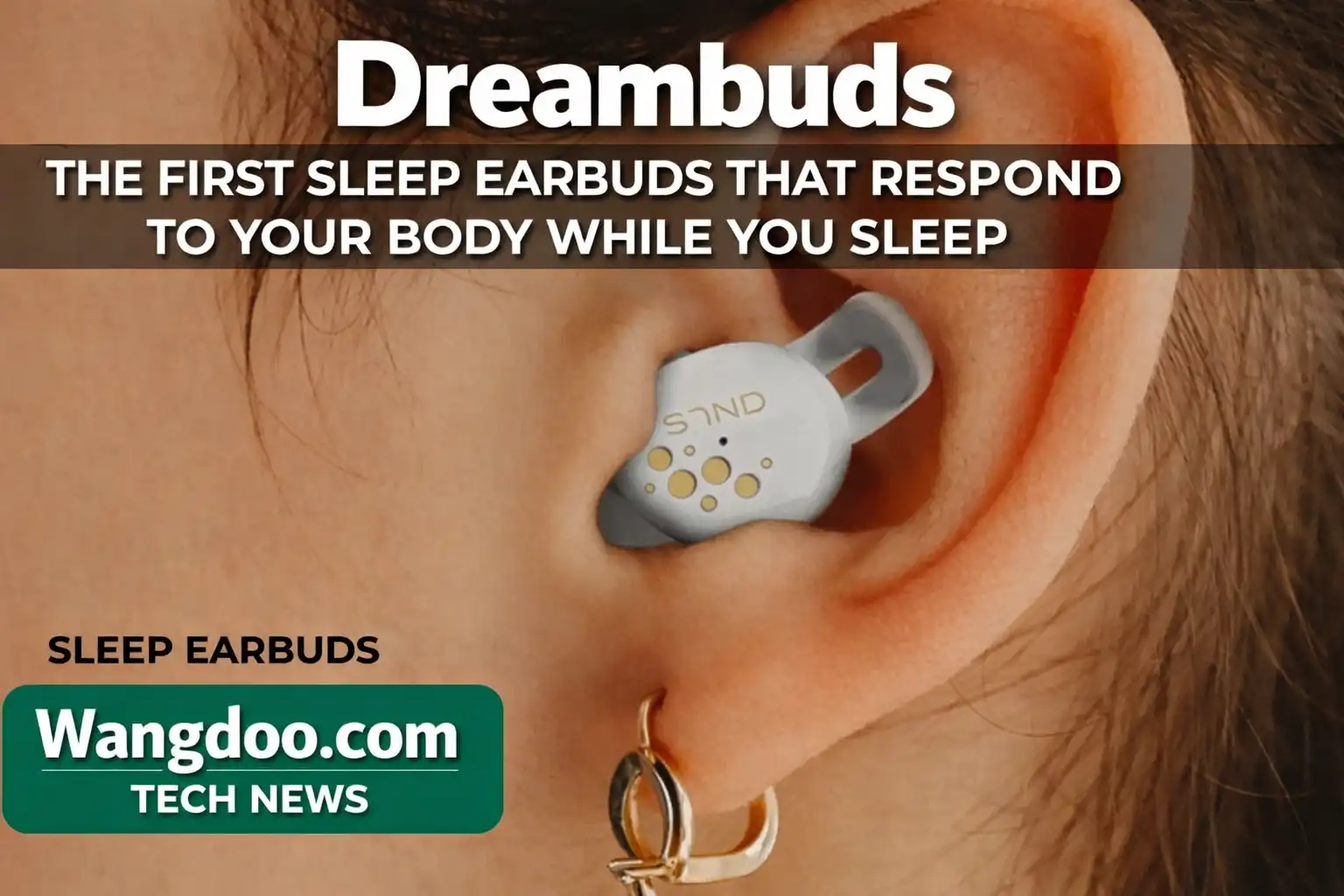
SOND Dreambuds Explained: Are These Really the First Sleep Earbuds That Actually Do Something While You Sleep?
Sleep earbuds have been around for years. But SOND’s Dreambuds claim to do something genuinely different — not just play sounds, but actively intervene in your sleep in real time. We break down what that actually means, what the 12-signal claim involves, and what the Kickstarter page leaves out.
Most sleep earbuds do one thing: play sounds. White noise, rain, ocean waves, sleep stories — pick your flavour, stick the buds in, hope for the best. That’s been the category for years. Bose Sleepbuds, Soundcore Sleep A20, Ozlo Sleepbuds — all of them are essentially very comfortable noise-masking devices with a sleep-themed app bolted on.
SOND is making a different claim entirely. Their Dreambuds, which launched on Kickstarter in late May 2026, aren’t just playing sounds while you sleep. They’re reading your body throughout the night and changing what they play based on what they detect. As SOND puts it on their Kickstarter page: “Oura and Apple track sleep. Dreambuds respond at 2 AM.” That’s a fundamentally different idea, and it either represents a genuine leap forward in sleep technology or very compelling marketing. Possibly both.
So what’s actually going on inside these things? And does the technology hold up to scrutiny?
SOND Dreambuds are in-ear sleep earbuds that track 12 physiological signals overnight and use a cloud-based AI coach to adjust audio in real time based on what your body is doing. The campaign price is $449 (retail $650). Mass production is targeted for Q2 2026. They are not yet available at retail.
Official SOND Dreambuds product video — via SOND YouTube channel. All rights SOND. Source: YouTube.
Who Built This and Why the Background Matters
Before getting into the technology, the founding team is worth understanding — it’s directly relevant to whether these claims hold up. SOND was co-founded by Yadid Ayzenberg and Amir Lazarovich, both MIT graduates who met on campus about 14 years ago. Ayzenberg’s background is unusually specific for this kind of product. He previously founded The Sync Project, a startup that mapped music to physiological signals including heart rate and heart rate variability. Bose acquired that company, and Ayzenberg went on to serve as Bose’s Head of Sleep Products, leading the development of Bose Sleepbuds 2.
When Bose decided to exit the sleep wearables business entirely, Ayzenberg saw the opening. The sensors needed to pack real biometric capability into an earbud-sized form factor had finally caught up with the idea he’d been working toward. So he and Lazarovich — who came from a senior software engineering role at Google — founded SOND in February 2022 and spent several years building in stealth before going public with Dreambuds in May 2026.
The $7 million in seed funding came from the MIT-affiliated E14 Fund, Crosslink Capital, Ubiquity Ventures, Alumni Ventures, Meach Cove Capital, and John Abele — co-founder of medical device giant Boston Scientific. That last name is significant. Abele built a career in medically rigorous hardware. He doesn’t typically back lifestyle gadget startups unless the underlying sensor work is serious.
What the 12 Signals Actually Are
The “12-signal” framing is the marketing hook, but it’s worth understanding what those signals represent because they’re not all equal in complexity or clinical relevance. Based on SOND’s official materials and independent reporting, the confirmed signals include: respiration rate, heart rate, heart rate variability (HRV), cardiorespiratory coupling, sleep staging, body position, snoring detection, and seismocardiography (SCG). SOND hasn’t published a complete numbered list of all 12 — the remaining entries are described as additional derived biometric markers.
SCG — seismocardiography — is the signal worth paying attention to. It measures the mechanical vibrations of the chest wall produced by the beating heart — think of it as feeling your heartbeat from the inside, through vibration rather than electrical signal. It’s a metric you almost never see in consumer wearables. Capturing it reliably from inside the ear canal, rather than from a chest strap or clinical EEG, is technically ambitious. SOND specifically notes their sensors track “real bio-mechanical signals, not optical signals” — a direct contrast with the PPG light-based sensors used in most smartwatches and fitness rings.
The signal SOND considers most clinically meaningful is cardiorespiratory coupling — the relationship between your breathing rhythm and your heart rate. When these two signals synchronise, it’s a strong marker of restorative sleep. When they’re out of phase, it often indicates stress, disrupted sleep, or poor recovery. Very few consumer devices even attempt to measure this. The fact that SOND is tracking it from inside the ear canal during natural sleep is the technical achievement the company is built around.
Most sleep trackers are like a security camera — they record everything overnight and hand you the footage in the morning. You can review it, learn from it, maybe change your habits. SOND Dreambuds are trying to be more like a security guard who’s watching the feed live and can respond in the moment — turning down the audio when you’re in deep sleep, switching to a breathing exercise if your heart rate spikes at 2am, nudging you back toward sleep without waking you fully. The recording still happens, but it’s no longer the point.
The Closed-Loop Idea — What Makes This Different
“Closed-loop” is the phrase SOND uses most, borrowed from engineering and medical device design. It describes a system where the output continuously feeds back into the input to adjust behaviour. A thermostat is a simple closed-loop system — it measures temperature and adjusts heating until the target is reached. A modern pacemaker is a sophisticated one — it measures cardiac rhythm and delivers precisely timed impulses to correct it.
SOND’s version works like this: the earbuds capture physiological signals continuously, stream that data to a cloud-based AI coach in real time, and the AI selects or generates an audio program — a breathing guide, a soundscape, binaural beats, a sleep story — based on what your body is currently doing. As your state changes, the audio changes. The system learns over time which interventions work for you specifically, building a personal model.
Every other consumer sleep earbud on the market right now operates open-loop. They play preset audio and track sleep passively. The tracking and audio are separate systems that don’t talk to each other in real time. That’s the genuine technical distinction.
One important design detail: the AI coach never speaks to you unless you initiate it with a double-tap gesture. It won’t randomly talk to you at 3am. Context matters too — Lazarovich confirmed that if you activate it before bedtime it asks “Are you ready to wind down?” but if you activate it after waking it asks “How was your night?” The system is designed to be unobtrusive.
The Charging Case Is Not an Afterthought
One of the more interesting design decisions SOND made is building meaningful hardware into the charging case itself. Rather than a standard charging pod, the Dreambuds case includes Wi-Fi, Bluetooth, an OLED display, physical buttons, and a built-in speaker. The speaker means that if you fall asleep before putting the earbuds in, your alarm will still go off from the case. The OLED display and physical buttons mean you can control your sleep session without picking up a phone at all.
That connects directly to Ayzenberg’s core thesis — that phones are counterproductive for sleep, and any sleep product that requires you to look at your phone to operate is working against itself. The case is a bedside controller for the whole system. It adds cost and complexity, but the reasoning is coherent.
How Dreambuds Compare to What’s Already Out There
| Product | Real-time intervention | Biometric signals | Phone-free operation | Price |
|---|---|---|---|---|
| SOND Dreambuds | Yes — AI adjusts audio live | 12 signals incl. SCG + cardiorespiratory coupling | Yes — case has OLED, buttons, speaker | $449 campaign / $650 retail |
| Ozlo Sleepbuds | No — preset audio only | Basic motion and heart rate | Requires phone app | ~$249–$299 |
| Soundcore Sleep A20 | No — noise masking only | Passive, morning report only | Requires phone app | ~$80–$120 |
| Oura Ring 4 | No — tracking and readiness score only | Comprehensive incl. HRV and SpO2 | Partial — app required for full use | $350 + $6/month subscription |
What the Campaign Page Doesn’t Tell You
The campaign headline prominently says “No subscription fees.” That’s true for the free Core tier, which includes noise masking, basic biometric tracking, and nightly sleep reports. However, SOND’s official product page lists a separate “Concierge plan” that unlocks personalised AI coaching, the full 500+ track audio library, and dream journaling. The pricing for the Concierge plan has not been publicly confirmed. The long-term cost of ownership is therefore unclear.
Beyond the subscription ambiguity, a few other things are worth noting. First, the closed-loop intervention hasn’t been independently verified in clinical trials. SOND has run their own comfort studies and beta tests, and the team is credible, but peer-reviewed evidence showing that real-time audio intervention improves measured sleep outcomes compared to standard noise masking hasn’t been published yet. The theory is scientifically grounded — adaptive audio based on physiological state is a real field — but consumer-scale evidence is still outstanding.
Second, the system is cloud-dependent. The AI coach runs remotely, not on-device, which means a consistent internet connection is required for full functionality. It also means the product’s feature set is tied to SOND’s continued operation as a company. That’s a real risk with any first-generation, cloud-dependent hardware product from a startup.
Third, wearing earbuds all night is genuinely uncomfortable for many people, especially side sleepers. SOND has specifically addressed this — citing a patent-pending full-silicone design with no hard surfaces or metal against the skin. They’ve tested for side-sleeper comfort in their betas. But comfort is intensely personal, and no amount of engineering fully solves it for every ear shape and sleep style.
Is the Technology Genuinely New?
The closed-loop approach — simultaneously sensing physiological signals and using them to adjust audio interventions in real time while you sleep — is genuinely new in a consumer earbud form factor. No product currently shipping does this. Whether the execution delivers on the promise is a question only long-term independent testing can fully answer.
The individual components aren’t new in isolation. HRV tracking exists in smartwatches, adaptive audio exists in hearing aids, sleep staging exists in smart rings. What SOND has done is combine them inside an earbud and made the output of the sensing directly drive the audio — in real time, overnight, without requiring a phone. That specific combination, at this form factor, at consumer price points, hasn’t existed before.
The “12 signals” number is partly marketing positioning — no competitor counts their signals that way — but the underlying capability it points to is real. Cardiorespiratory coupling measurement from inside the ear canal during natural sleep would be a meaningful technical achievement if it delivers accurate readings at scale. That “if” is doing a lot of work until independent reviewers get units in hand.
Who Is This Product Actually For
If you genuinely struggle with sleep — not occasional bad nights, but chronic difficulty falling asleep, staying asleep, or waking unrested — and you’ve exhausted the standard approaches, Dreambuds represent something meaningfully new. The founding team is unusually credible for a first-generation product, the investor list is serious, and the core concept is scientifically coherent.
If you sleep reasonably well and are looking for a marginal upgrade, or if cloud-dependent hardware is a concern, or if wearing earbuds all night sounds uncomfortable — this is unlikely to be the right fit at $449 plus an unconfirmed subscription cost.
Independent reviews from real users don’t yet exist — mass production is still scheduled for Q2 2026. The campaign price of $449 is discounted from the $650 retail price, though the long-term subscription picture remains unclear. First-generation hardware from a new company always carries uncertainty that only time and user data can resolve.
Frequently Asked Questions
What are the 12 physiological signals SOND Dreambuds track?
Confirmed signals based on SOND’s official materials and independent reporting include: respiration rate, heart rate, heart rate variability (HRV), cardiorespiratory coupling, sleep staging, body position, snoring detection, and seismocardiography (SCG). SOND hasn’t published a complete numbered list of all 12 — the remaining entries are described as additional derived biometric markers. The company notably emphasises that their sensors measure bio-mechanical signals rather than optical ones, distinguishing the approach from standard PPG sensors used in most wearables.
Do SOND Dreambuds require a subscription?
The campaign page states no subscription fees, and a free Core tier does exist covering noise masking, basic biometric tracking, and nightly sleep reports. However, SOND’s official product page lists a separate “Concierge plan” for advanced features including personalised AI coaching, the full 500+ audio library, and dream journaling. Pricing for the Concierge plan has not been publicly confirmed. The “no subscription” claim applies to the basic tier only.
How are Dreambuds different from Ozlo Sleepbuds?
Ozlo Sleepbuds are a passive audio device — they play preset sounds and track sleep passively but don’t change their behaviour based on real-time biometric readings. SOND Dreambuds are designed as a closed-loop system: sensors read your physiological state continuously, that data goes to an AI coach in real time, and the AI adjusts what audio plays based on what your body is doing right now. That real-time feedback loop is the core difference.
When will SOND Dreambuds ship?
SOND is targeting mass production in Q2 2026 following the crowdfunding campaign. The company completed comfort studies and beta testing prior to the campaign launch, which is a stronger position than many hardware products at this stage. Hardware shipping timelines frequently slip, and Q2 2026 should be treated as a target rather than a guarantee.
Are SOND Dreambuds comfortable for side sleepers?
SOND specifically addresses side-sleeper comfort in their campaign materials, citing a patent-pending full-silicone design with no hard surfaces or metal in contact with skin. The company ran comfort betas before going public. Whether this holds up for all ear shapes and all-night side sleeping is something independent user reviews will confirm once the product ships — comfort is the hardest thing to evaluate remotely.
Does the AI coach talk to you while you’re sleeping?
No. The AI coach only responds when you activate it with a double-tap gesture. It will never speak to you proactively during sleep. The system adjusts audio in the background based on your biometrics, but the conversational coaching only happens when you choose to engage it. Context-aware responses also apply: activating before bed triggers a wind-down prompt, while activating after waking triggers a sleep review.
- SOND Official — Dreambuds product page
- Kickstarter — SOND Dreambuds campaign page
- DMR News — SOND Launches Dreambuds Earbuds That Actively Intervene To Improve Sleep
- Masters of Longevity — SOND Dreambuds: Turn Sleep Tracking Into Real-Time Coaching
