New Rivian R2 electric SUV. Explained

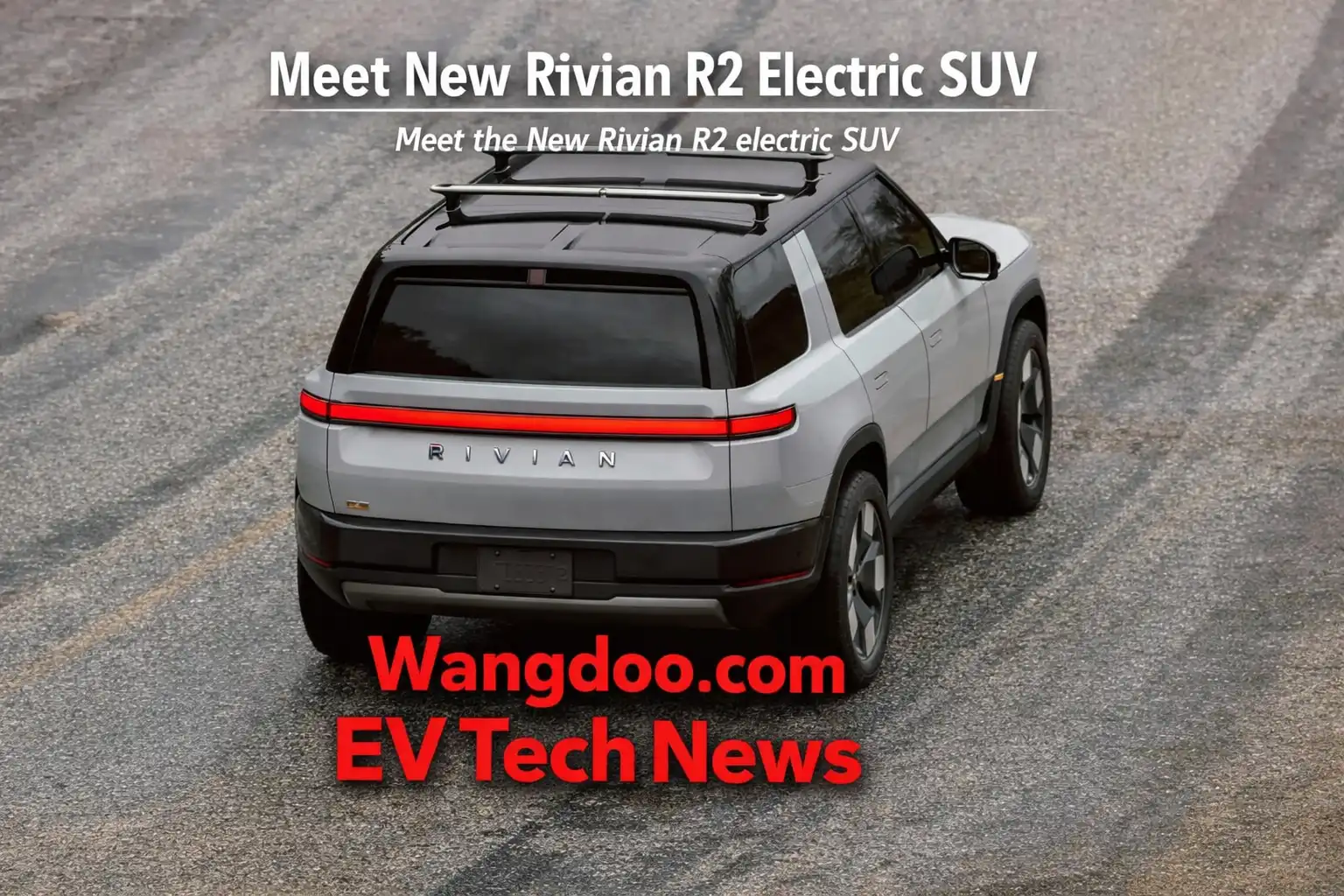
What Is the Rivian R2? The Most Important American EV Launch Since the Model Y, Explained
Rivian just started delivering its R2 electric SUV on June 9, 2026 — the vehicle the entire company’s survival depends on. It is faster than a Porsche Macan Turbo, matches Tesla Model Y efficiency despite being around 530 lbs heavier, and is priced from $45,000. Here is what it actually is, what makes it different, and why it matters globally even if you can’t buy one yet.
Rivian is one of the most interesting companies in the electric vehicle industry — and also one of the most precarious. Since launching in 2021 with two vehicles that cost upwards of $70,000, the American EV startup has burned through billions of dollars building a loyal following among adventure-focused buyers while losing money on nearly every vehicle it sold. The R1T truck and R1S SUV were excellent products. They just couldn’t scale a business on their own.
The R2 is the vehicle that changes that equation. Or it doesn’t, and Rivian faces a very difficult future. There is no middle ground here — this is genuinely Rivian’s make-or-break product, and the company knows it. Customer deliveries began on June 9, 2026, two days ago, after more than two years of anticipation.
For buyers outside the United States who cannot yet order one, the R2 still matters — because it is the clearest indicator yet of where the mid-size electric SUV market is heading, and because Rivian has confirmed it is coming to international markets, even if the timeline is unclear.
The Rivian R2 is a five-seat mid-size electric SUV — roughly the same size as a Tesla Model Y or Volkswagen ID.4, but designed with genuine off-road capability, a boxier and more utilitarian shape, and a focus on adventure use alongside daily driving. It is Rivian’s first affordable vehicle, starting at $45,000 for the base trim (arriving 2027) versus the $70,000–$100,000 average of its previous R1 lineup. The Performance trim available now starts at $57,990. It is built in Normal, Illinois, runs on a brand new platform designed specifically for this vehicle, and is the first Rivian designed to eventually reach global markets.
Rivian’s official R2 launch video — March 2026. Rivian official channel. All rights respective owner.
Who Is Rivian and Why Does This Vehicle Matter So Much
Rivian was founded in 2009 by RJ Scaringe, an MIT mechanical engineering PhD who had one clear goal: build electric vehicles that were genuinely capable outdoors, not just efficient commuters. The company spent over a decade in stealth before launching the R1T electric pickup truck and R1S electric SUV in 2021 — and both were immediately recognised as the best-built, most capable electric adventure vehicles ever made.
The problem was the price. At an average selling price near $90,000, the R1 lineup was excellent but out of reach for most buyers. Rivian needed to scale. Scaling requires a higher-volume, lower-price vehicle. The R2 is that vehicle.
The stakes are existential. Rivian has been losing money consistently since going public in 2021. The company achieved gross margin positivity on the R1 in 2024, but at $90,000 average selling prices, the volume ceiling is real. CEO RJ Scaringe committed publicly to gross-margin positivity on every R2 configuration, across a price range spanning approximately $45,000 to $58,000. That is a fundamentally different engineering and manufacturing challenge — and it is why the R2 was built from the ground up on an all-new platform rather than being a scaled-down version of the R1.
The clearest comparison is Tesla’s trajectory. Tesla launched with the Roadster and Model S — expensive, impressive vehicles that proved the technology worked and built the brand. But it was the Model 3 and Model Y — the affordable, high-volume products — that actually turned Tesla into a mainstream automaker. Popular tech reviewer Marques Brownlee described the R2 as “Rivian’s Model Y moment” — the point where Rivian stops being a niche brand for wealthy adventure enthusiasts and starts becoming a company that ordinary buyers can consider. Whether the R2 delivers on that promise is what 2026 and 2027 will determine.
The Four Trims — What Is Available When and What It Costs
This is the most confusing part of the R2 story and the part most coverage handles poorly. There are four trims launching across an 18-month window — and the most expensive one is launching first. Here is the full breakdown confirmed from Rivian’s official announcement:
| Trim | Price | When Available | Power | Range | Drive |
|---|---|---|---|---|---|
| Performance (Launch Package) | $57,990 | Now — June 2026 | 656 hp / 609 lb-ft | 330 miles EPA | Dual-motor AWD |
| Premium | $53,990 | Late 2026 | 450 hp / 537 lb-ft | 330 miles EPA | Dual-motor AWD |
| Standard Long Range | $48,490 | First half 2027 | 350 hp / 355 lb-ft | 345 miles EPA | Single-motor RWD |
| Standard | ~$45,000 | Late 2027 | Single motor | 275+ miles | Single-motor RWD |
This is standard automotive industry practice and Rivian is being transparent about it. Launching the most expensive, most profitable trim first maximises revenue per vehicle in the early production months while manufacturing ramps up. The $45,000 base model — the price point Rivian originally promised at the vehicle’s 2024 reveal — is real, but it won’t arrive until late 2027. Buyers who want the promised affordable Rivian need to wait approximately 18 months. This is not a bait-and-switch — it is how almost every major vehicle launch works. But it is worth understanding clearly before getting excited about the headline price.
What Makes It Different From the Tesla Model Y
The Tesla Model Y is the world’s best-selling electric vehicle and the obvious point of comparison for any mid-size electric SUV. The R2 is genuinely competitive with it in some areas and clearly superior in others — while being genuinely inferior in a few as well. Here is the honest comparison based on the Performance trims of both vehicles, which are priced almost identically at $57,990 (R2) and $57,490 (Model Y).
| Category | Rivian R2 Performance | Tesla Model Y Performance | Winner |
|---|---|---|---|
| Price (Performance) | $57,990 | $57,490 | Tie |
| 0–60 mph | 3.6 seconds | 3.3 seconds | Tesla |
| EPA Range | 330 miles | 306 miles | Rivian +24 miles |
| Efficiency | 105 MPGe / 32 kWh/100mi | 105 MPGe / 32 kWh/100mi | Dead tie |
| Ground clearance | 9.6 inches | 6.6 inches | Rivian +3 inches |
| Towing capacity | 4,400 lbs | 3,500 lbs | Rivian +900 lbs |
| Cargo volume | 90.1 cu ft total | ~74 cu ft total | Rivian +16 cu ft |
| Charging (10–80%) | ~29 minutes | ~28 minutes | Tie |
| Charging network | NACS — Tesla Supercharger access | NACS — Tesla Supercharger | Tie |
| Autonomy / driver assist | Autonomy+ (Level 2, LiDAR coming) | FSD Supervised (Level 2, vision-only) | Tesla ahead today |
| Off-road capability | 25° approach, 26° departure, dedicated modes | Not designed for off-road use | Rivian by far |
| Brand politics | No controversy | Elon Musk association affecting sales | Rivian |
The efficiency comparison is the most striking technical result. According to EPA certification data analysed by Electrek, the R2 Performance weighs approximately 4,998 lbs — around 530 lbs heavier than the Model Y Performance (4,466 lbs per Car and Driver) — and has a significantly boxier, less aerodynamic shape. Yet it achieves identical combined efficiency of 105 MPGe and 32 kWh per 100 miles, while going 24 miles further on the same energy. That is a genuine engineering achievement and the clearest signal that Rivian’s new platform is a serious piece of work.
“The R2 is an excellent starting point for Rivian’s second age — it fully delivers on its promise of a dutiful daily EV equipped for weekend excursions.”
The Off-Road Angle — Why It Matters Even for Urban Buyers
Most mid-size electric SUVs have ground clearance between 6 and 7 inches. The Rivian R2 has 9.6 inches — confirmed best-in-class for this vehicle segment. It also has a 25-degree approach angle, 26-degree departure angle, and nearly 20 inches of water fording capability. These are numbers that rival dedicated off-road vehicles, not commuter crossovers.
In practice, this translates to genuine capability on dirt roads, gravel tracks, snow, and mild trail driving — the kind of weekend capability that most compact SUV buyers claim they want but most vehicles cannot actually deliver. The R1S could handle serious mountain trails. The R2 is not at that level, but it is significantly more capable outdoors than the Model Y, the Volkswagen ID.4, or the Hyundai Ioniq 5.
For buyers who live in areas with rough roads, snowy winters, or who genuinely use their SUV for outdoor recreation, that ground clearance and those approach angles are real practical advantages — not just marketing numbers.
The Technology Inside — Autonomy+, LiDAR, and What’s Coming
The R2 Performance with Launch Package includes lifetime access to Autonomy+ — Rivian’s hands-free driver assistance system, which works across 3.5 million miles of roads in the US and Canada. This is a Level 2 system: hands-off on supported highways, but eyes must remain on the road. For buyers who opt for later trims without the Launch Package, Autonomy+ is available as an optional subscription.
The more interesting technology is what is coming. Rivian confirmed that a forward-facing LiDAR unit will be added to future R2 builds — not retrofittable to Launch Edition vehicles. LiDAR is a more precise sensor approach than Tesla’s vision-only Full Self-Driving system, and Rivian’s intention is to use it to eventually enable hands-off, eyes-off driving on highway sections. The LiDAR-equipped R2 is expected in early 2027, which means buyers who specifically want advanced autonomy capability should wait rather than purchase the Launch Edition now.
Additional features on the Performance with Launch Package: semi-active suspension, 21-inch Sport wheels, heated and ventilated front seats, heated rear seats, heated steering wheel, 12-way power driver and passenger seats, birch wood interior accents, and a tow package rated at 4,400 lbs.
The Global Availability Situation — Honest Update
The Rivian R2 is currently US-only. Canada, which was originally planned for a 2026 launch, has been pushed back to 2027. Europe’s Rivian website has had all specific dates removed and now shows only a “Coming to Europe” sign-up page — meaning no confirmed European launch date exists as of June 2026. Rivian has explicitly stated it is prioritising a successful high-volume US launch before tackling international logistics and regulatory compliance. The R2 was designed as Rivian’s first genuinely global-sized vehicle — at 15 inches shorter than the R1S, it fits European parking infrastructure. But “designed for global markets” and “available in global markets” are different things. International readers should sign up to Rivian’s notification list and monitor developments through 2027.
My Take — Mr Wangdoo
The most interesting thing about the Rivian R2 is not the vehicle itself — impressive as it is. It is the efficiency story. Building an electric SUV that weighs nearly 800 lbs more than the market leader, has a boxier shape, more ground clearance, and higher towing capacity — and then matching the market leader’s efficiency exactly while going further on the same charge — that is not incremental engineering. That is Rivian demonstrating that the new platform they spent several years building is genuinely world-class.
The second interesting thing is the brand politics angle that nobody in the automotive press wants to say too directly. Tesla sales in 2025 fell significantly in markets where Elon Musk’s political activities generated controversy. In Europe, Tesla sales dropped by double-digit percentages in multiple markets while the broader EV market grew. Rivian arrives with none of that baggage — an American EV brand with no political controversy, a founder who stays out of political discourse, and a product that is competitive at the same price point. For buyers who want an American-built EV but have reservations about Tesla right now, the R2 is the first credible alternative.
The honest concern is manufacturing. Rivian plans to deliver 25,000 R2 units in 2026 — a number that sounds large but is modest for a vehicle this important. The company has struggled with production ramp challenges before. The R2 platform is new, the factory in Normal has been retooled, and scaling from pilot production to high volume is where automotive startups most often stumble. The product is excellent. Whether Rivian can build it fast enough, reliably enough, and profitably enough to actually transform the company — that is the question 2026 and 2027 will answer.
Frequently Asked Questions
What is the Rivian R2 and who makes it?
The Rivian R2 is a five-seat mid-size electric SUV built by Rivian — an American electric vehicle company founded in 2009 and headquartered in Irvine, California, with its manufacturing facility in Normal, Illinois. Rivian previously made only large, expensive adventure vehicles: the R1T electric pickup truck and R1S electric SUV, both priced around $70,000–$100,000. The R2 is their first vehicle designed for mainstream buyers, starting at $45,000 for the base trim. First customer deliveries began on June 9, 2026.
How much does the Rivian R2 cost and when can I get one?
There are four trims rolling out across 18 months. The R2 Performance with Launch Package ($57,990) is available now from June 2026. The R2 Premium ($53,990) arrives late 2026. The R2 Standard Long Range ($48,490) arrives in the first half of 2027. The base R2 Standard ($45,000 approximate) arrives late 2027. All prices are before taxes and fees. The R2 is currently available only in the United States. Canada has been pushed to 2027, and no European launch date has been confirmed.
How does it compare to the Tesla Model Y?
At the Performance trim level they are priced essentially identically — $57,990 vs $57,490. The R2 wins on range (330 vs 306 miles EPA), ground clearance (9.6 vs 6.6 inches), towing (4,400 vs 3,500 lbs), and cargo space (90.1 vs 75.5 cubic feet). The Model Y wins on 0–60 acceleration (3.3 vs 3.6 seconds) and currently has the more mature autonomous driving system. Both achieve identical efficiency: 105 MPGe combined and 32 kWh per 100 miles — remarkable given the R2 is nearly 800 lbs heavier. For off-road use, the R2 is significantly more capable. For pure on-road urban driving, the Model Y is arguably more practical and has a larger charging network outside North America.
Can the Rivian R2 actually go off-road?
Yes — genuinely, not just as a marketing claim. The R2 has 9.6 inches of ground clearance (best in class for mid-size electric SUVs), a 25-degree approach angle, a 26-degree departure angle, and approximately 19.7 inches of water fording capability. It has dedicated off-road driving modes and was validated in Alaskan tundra and Arizona desert conditions. It is not in the same league as the R1S for serious trail driving, but it is significantly more capable off-road than the Tesla Model Y, Volkswagen ID.4, Hyundai Ioniq 5, or any other mainstream electric crossover at this price point.
What is Autonomy+ and does it come with every R2?
Autonomy+ is Rivian’s hands-free driver assistance system — a Level 2 system that allows hands-off driving on supported highway sections while requiring the driver to keep eyes on the road. It works across 3.5 million miles of roads in the US and Canada. Lifetime Autonomy+ access is included with the R2 Performance with Launch Package ($57,990) only. For all other trims, it is an optional add-on subscription. A forward-facing LiDAR sensor — intended to eventually enable more advanced autonomy — will be added to future R2 builds starting in early 2027, but will not be retrofittable to Launch Edition vehicles purchased now.
Is the Rivian R2 coming to Europe, the UK, or Australia?
Not yet — and no confirmed date exists. Canada’s launch has been pushed from 2026 to 2027. Rivian’s European website as of June 2026 shows only a “Coming to Europe” sign-up page with no date. Rivian has stated it is prioritising its US launch before expanding internationally. The R2 was designed with global market dimensions in mind — at 185.9 inches long it fits European parking infrastructure better than the R1S — but regulatory approvals, right-hand-drive variants, and international logistics take time. International buyers interested in the R2 should sign up for Rivian’s notification list at rivian.com and expect more clarity in 2027.
Why is Rivian launching the most expensive trim first?
Standard automotive industry practice. Launching the highest-trim, highest-margin configuration first maximises revenue per vehicle during the production ramp phase, when manufacturing volumes are still relatively low and costs per unit are higher. The $45,000 base price that Rivian originally promised at the vehicle’s March 2024 reveal is real — it just does not arrive until late 2027. Buyers specifically waiting for the affordable version need to wait approximately 18 months from the June 2026 launch. This is not unusual — Tesla launched the Model 3 with its most expensive configurations first and the base model came later. It is worth understanding before assuming you can buy one at $45,000 today.
First drive review of the Rivian R2 Performance — independent reviewer. All rights respective owner.
- Rivian Official Press Release — Rivian Introduces R2 Lineup — full trims, pricing, specs, and availability timeline (March 11, 2026)
- Rivian Official Delivery Announcement — Rivian begins R2 public customer deliveries — June 9, 2026 (BusinessWire via Yahoo Finance)
- Electrek — Rivian R2 matches Tesla Model Y efficiency despite bigger, heavier body — EPA data analysis (May 29, 2026)
- Top Gear — Rivian R2 first drive review — performance, off-road, interior assessment (June 9, 2026)
- Autoblog — Rivian R2 Performance vs Tesla Model Y — detailed head-to-head comparison (April 9, 2026)
- InsideEVs — Rivian R2 vs Tesla Model Y — range, price, specs and trim comparison (March 12, 2026)
- Motor1 — 2026 Rivian R2 — price, trims and availability detailed (March 12, 2026)
- Rivian Wave — Rivian R2 international availability — Canada pushed to 2027, European date removed (March 17, 2026)