SpaceX Is Going Public: Everything to Know About the SPCX IPO

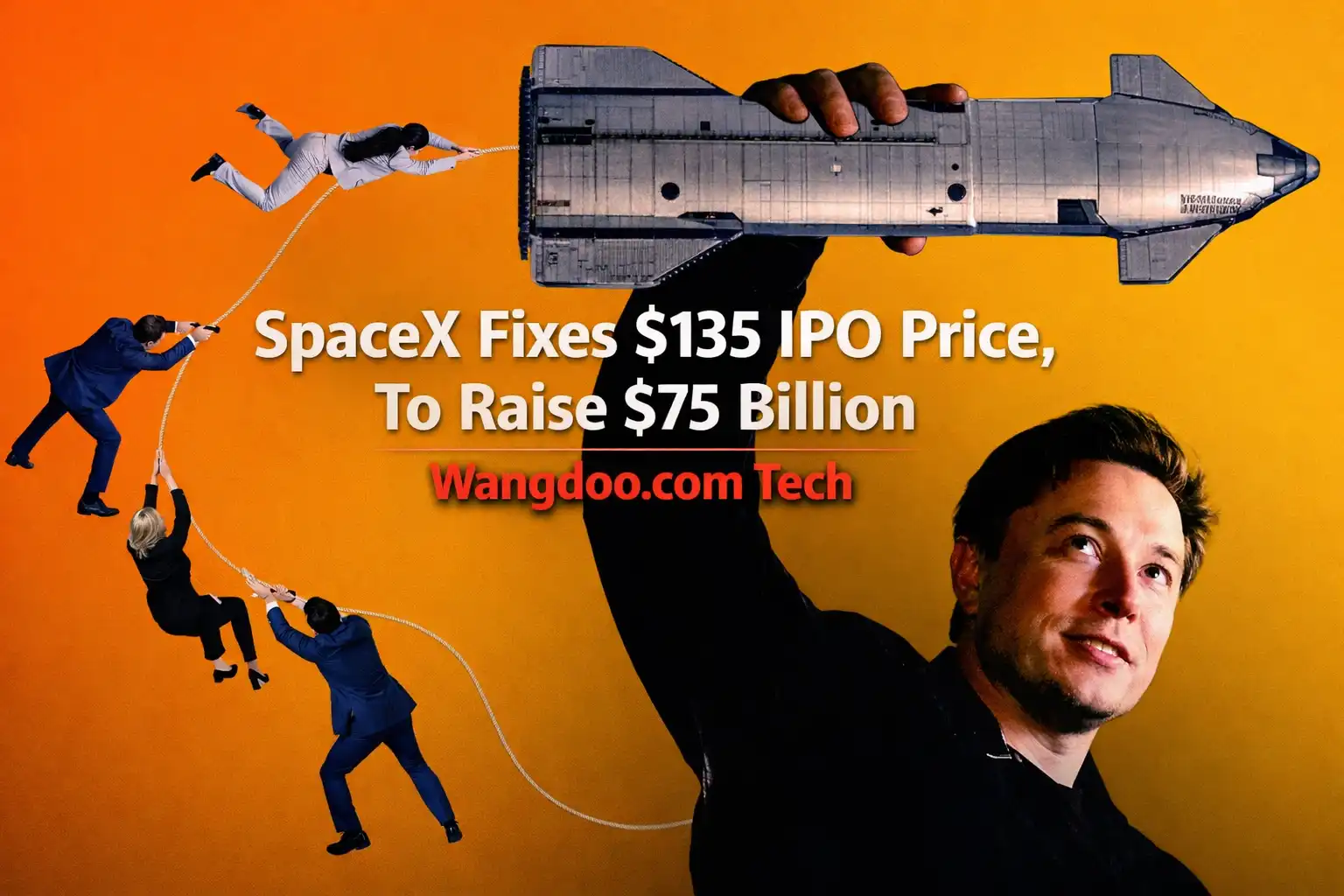
SpaceX Is Going Public. Here’s Everything You Need to Know About the SPCX IPO.
The roadshow is live. Share price confirmed at $135. Trading on Nasdaq expected June 12, 2026. Here’s what the S-1 actually reveals — the good, the losses, and the fine print most explainers skip.
SpaceX has been the most valuable private company in the world for years. Everyone knew an IPO was coming eventually. And now it’s here — S-1 filed May 20, formal marketing started June 4, institutional investor roadshow running from June 8, pricing expected June 11, and trading expected June 12 under the ticker SPCX on the Nasdaq. The confirmed share price is $135 — a fixed price announced before the roadshow, breaking with decades of Wall Street convention. At that price, SpaceX is valued at $1.77 trillion. Saudi Aramco’s $29.4 billion record from 2020 won’t even be close.
But the headline numbers tell only part of the story. The S-1 — the formal registration document SpaceX filed with the SEC — is the first time the world has had audited, certified financials on a company that’s operated in near-total privacy for 24 years. And it reveals a company that is three very different businesses stitched together, with one profitable engine subsidising two expensive bets.
SpaceX confirmed a fixed IPO price of $135/share on June 4, 2026 — valuing the company at $1.77 trillion and raising $75 billion, the largest IPO in history. The roadshow started June 4. Trading expected June 12 under SPCX on Nasdaq. Starlink is the only profitable business — $11.4 billion revenue, 63% EBITDA margins, 10.3 million subscribers in 164 countries. xAI posted $6.35 billion in losses in 2025. Elon Musk holds 85.1% of voting power through dual-class shares. Buying SPCX is a bet on Musk’s vision, not a vote on it. Also note: Anthropic confidentially filed its own IPO prospectus on June 2 — the AI IPO window is wide open.
SpaceX took the highly unusual step of announcing a fixed price of $135 per share before the roadshow even started — the opposite of how major IPOs normally work. Typically, companies announce a price range and gauge demand during the roadshow before fixing the final number. By going in with a fixed price, Musk is signalling confidence that demand will exceed supply at that level. At $135/share, SpaceX’s $1.77 trillion valuation puts it above Tesla (currently ~$1.6 trillion) and makes it the seventh most valuable US company by market cap — before a single share has traded publicly.
On June 11 — the day before trading begins — SpaceX will host 1,500 retail investors at a dedicated IPO event. Participants from the US, UK, EU, Australia, Canada, Japan, and South Korea are invited. SpaceX CFO Bret Johnsen said: “Retail is going to be a critical part of this and a bigger part than any IPO in history.” Up to 30% of shares are being allocated directly via Robinhood, Fidelity, and Charles Schwab — the first time retail has been included at this scale in capital markets history.
Bloomberg ETF IQ covers the 2026 IPO boom: SpaceX, OpenAI, and Anthropic. Published June 1, 2026. Source: Bloomberg on YouTube.
What SpaceX Actually Is in 2026
Most people know SpaceX as the rocket company. Falcon 9, Starship, NASA contracts, Elon Musk’s Mars ambitions. That’s real — SpaceX operates the world’s most active launch programme and has genuinely revolutionised reusable rocketry. But launch is now a minority of the business.
There are three businesses inside SpaceX’s S-1, and they have completely different financial profiles.
Business 1: Starlink — The Cash Engine
Starlink is the real story. SpaceX’s satellite internet service generated $11.4 billion in revenue in 2025 — 61% of total company revenue — at a remarkable 63% EBITDA margin. It has 10.3 million subscribers across 164 countries, supported by over 9,600 deployed satellites. This is the only part of SpaceX that generates meaningful positive cash flow — roughly $4.4 billion in operating profit in 2025. Everything else runs on Starlink money. By Q1 2026, Starlink’s share of total revenue had risen further to 69%, meaning the profitable segment is carrying an even heavier load.
Business 2: Launch — The Heritage
Falcon 9 and Falcon Heavy launches remain a core revenue stream, serving NASA, commercial satellite operators, and national security customers. Over 95% of SpaceX’s revenue comes from the private sector — Musk has been emphatic about this to counter narratives of government dependency. Starship, the next-generation fully reusable rocket, completed its V3 maiden flight ahead of the IPO. It’s the foundation of the Mars ambition and the orbital data centre vision — but it’s not yet generating revenue at scale. The rocket launch segment lost $657 million in 2025.
Business 3: xAI — The Loss Engine
In February 2026, Musk merged xAI — his Grok AI chatbot operation — into SpaceX at a combined valuation of $1.25 trillion. xAI was valued at approximately $80 billion in the transaction. The AI division posted a deficit of $6.35 billion in 2025 and burned another $2.5 billion in Q1 2026 alone — consuming 60% of SpaceX’s $20 billion capital expenditure in 2025. The S-1 amendment also disclosed that xAI purchased $269 million worth of Tesla Megapacks in April 2026 — an unusual related-party transaction worth flagging.
You’re not buying SpaceX the rocket company. You’re buying Starlink — a profitable satellite internet business — at a venture-capital multiple, with a massive side bet on Starship commercialisation and xAI becoming a dominant AI platform. The $1.77 trillion valuation only makes sense if you believe all three bets pay off. If Starlink were valued like a normal telecom, the company would be worth a fraction of the asking price. The premium is entirely speculative upside on Starship and AI. That’s not necessarily wrong — but you should know what you’re actually buying.
The Anthropic Deal — And the Bigger IPO Picture
Buried in the S-1 is one of the most interesting disclosures: SpaceX signed Cloud Services Agreements with Anthropic in May 2026 for access to its Colossus and Colossus II AI compute infrastructure at $1.25 billion per month through May 2029. That’s roughly $15 billion per year — up to $45 billion over the full contract term. Either party can terminate on 90 days’ notice, so this is a large, revocable purchase order, not locked-in revenue.
Notably, Anthropic itself filed its IPO prospectus confidentially with the SEC on June 2, 2026 — one day before SpaceX’s roadshow began. OpenAI is preparing to file its own prospectus in the coming weeks. The three largest AI companies in the world are all heading for public markets within weeks of each other. The AI IPO window of 2026 is the biggest capital markets story since the dot-com era.
“You are buying a world-class satellite ISP at a venture multiple, and the premium above it is a bet on Starship, orbital data centres, and Grok, inside a company where Musk holds ten votes for your one.”
The Governance Problem
SpaceX has a dual-class share structure. Class A shares — the ones available to the public — carry one vote each. Class B shares, held by insiders, carry ten votes each. Musk holds 93.6% of Class B shares and 12.3% of Class A shares, giving him 85.1% of combined voting power post-IPO.
This means that regardless of what public investors think about any decision Musk makes, they have almost no ability to influence it. SpaceX qualifies as a “controlled company” under Nasdaq rules and opts out of independent board requirements. Musk will serve simultaneously as CEO, CTO, and Chairman post-IPO.
There’s also the compensation package. Musk is eligible for up to one billion additional shares — but only if SpaceX reaches a $7.5 trillion valuation and establishes a permanent human colony on Mars with at least one million inhabitants.
| Metric | Figure | Source |
|---|---|---|
| IPO Filing Date | May 20, 2026 (S-1) + June 1 amendment (S-1/A) | SEC filing |
| Confirmed Share Price | $135 per share — fixed pre-roadshow | SEC S-1/A + CNBC, June 4, 2026 |
| Roadshow Start | June 4 (formal marketing) + June 8 (institutional investor pitches) | Reuters / CNBC |
| Pricing Date | June 11, 2026 | Reuters / CNBC |
| Expected Trading Date | June 12, 2026 | Reuters / CNBC |
| Ticker / Exchange | SPCX / Nasdaq + Nasdaq Texas | S-1 filing |
| Confirmed Valuation | $1.77 trillion (above Tesla at ~$1.6T) | SEC S-1/A + Fortune, June 4, 2026 |
| Target Raise | $75 billion (555.6M shares at $135) | SEC S-1/A filing |
| 2025 Revenue | $18.67 billion (+33% YoY) | S-1 filing |
| 2025 Net Loss (GAAP) | $4.94 billion | S-1 filing |
| Starlink Revenue 2025 | $11.4 billion (61% of total; 69% by Q1 2026) | S-1 filing |
| Starlink EBITDA Margin | 63% | S-1 filing |
| Starlink Subscribers | 10.3 million in 164 countries | S-1 filing |
| Musk Voting Power Post-IPO | 85.1% | S-1 filing |
| Anthropic Compute Deal | $1.25B/month through May 2029 (terminable 90 days) | S-1 filing |
| Accumulated Deficit | $41.3 billion since founding | S-1 filing |
| xAI Tesla Megapack purchase | $269M in April 2026 | S-1/A amendment, June 1, 2026 |
| Lead Underwriters | Goldman Sachs (lead-left), Morgan Stanley, BofA, Citi, JPMorgan, Barclays, Deutsche Bank, Wells Fargo, UBS, RBC — 21 banks total | S-1/A filing |
The Nasdaq-100 Fast-Entry Rule — This Matters
Once SPCX starts trading, it will qualify for Nasdaq’s fast-entry rule — automatically joining the Nasdaq-100 index after only 15 days of trading. This triggers “forced buying”: every ETF and index fund that tracks the Nasdaq-100 will be required to buy SPCX shares, regardless of what they think of the valuation. That’s trillions of dollars in passive money with no choice in the matter. It’s likely to create significant upward price pressure in the first weeks of trading — and potentially creates an overhang when that mechanical demand subsides.
My Take
SpaceX is a genuinely extraordinary company. What it has achieved in rocketry — Falcon 9’s reusability, the launch cadence, Starship’s development pace — is historically significant. Starlink is a real, profitable, fast-growing business that has changed internet access in remote and conflict-affected regions. None of that is hype.
The $1.77 trillion valuation is pricing in a future that doesn’t yet exist. At 94 times trailing revenue, SPCX is priced higher than Tesla was at its own IPO. Starlink at a fair telecom multiple might be worth $200–300 billion. The remaining $1.4–1.5 trillion is a bet on Starship commercialisation, orbital AI data centres, and xAI becoming a major AI platform. When challenged on the price-to-sales ratio exceeding 50x, Musk responded on X with three words: “You shall see.”
The fixed pre-roadshow pricing is a fascinating signal. It either means demand from testing-the-waters meetings was so strong that Musk saw no reason to leave money on the table with a range — or it’s a power move designed to project confidence regardless of where demand actually sits. Given that the roadshow only started today, we’ll know which interpretation is correct by June 11.
The governance structure remains the thing that would make me personally cautious. Buying SPCX is not an investment in SpaceX — it’s an investment in whatever Elon Musk decides to do with SpaceX. The $269 million Tesla Megapack purchase by xAI, disclosed quietly in the S-1 amendment, is exactly the kind of related-party transaction that happens when the same person controls multiple companies with minimal board oversight. None of this means SPCX won’t go up. But understanding what you’re actually buying — and what you’re not — seems worth doing before June 12.
This article is analysis and commentary only. Wangdoo.com is a tech publication, not a financial adviser. Nothing in this article constitutes a recommendation to buy or sell any security. Do your own research and speak to a qualified financial adviser before making investment decisions.
Frequently Asked Questions
What is the SpaceX IPO share price?
SpaceX confirmed a fixed IPO price of $135 per share in an amended SEC filing on June 4, 2026. This is highly unusual — most companies only fix the price after the roadshow ends. At $135/share, selling 555.6 million Class A shares, SpaceX will raise approximately $75 billion and be valued at $1.77 trillion. The price is confirmed but technically final pricing occurs June 11. Trading begins June 12.
When does the SpaceX IPO roadshow start?
Formal marketing started June 4, 2026. The institutional investor roadshow — where SpaceX executives pitch to major funds — runs from June 8. Pricing is set for June 11, with trading on Nasdaq under ticker SPCX beginning June 12. The roadshow is running faster than originally planned due to strong demand from pre-marketing meetings ahead of the official launch.
What is SpaceX’s IPO valuation?
At the confirmed $135/share price, SpaceX is valued at approximately $1.77 trillion — above Tesla’s current market cap of ~$1.6 trillion and making it the seventh most valuable publicly traded US company. This assumes the EchoStar spectrum and Cursor transactions close. It would be the largest IPO in history, raising $75 billion — more than 2.5 times Saudi Aramco’s previous record of $29.4 billion.
What is the SpaceX stock ticker?
SpaceX will trade under the ticker symbol SPCX on the Nasdaq. It has applied to dually list on both the Nasdaq and the newly created Nasdaq Texas exchange. Only Class A shares will be publicly traded — representing approximately 5% of total shares outstanding.
Is SpaceX profitable?
Starlink is highly profitable — $4.4 billion operating income in 2025 at a 63% EBITDA margin. However, at the consolidated GAAP level, SpaceX posted a net loss of $4.94 billion in 2025 and $4.28 billion in Q1 2026 alone. The losses are driven by xAI ($6.35 billion deficit in 2025) and rocket launch (-$657 million in 2025). SpaceX has an accumulated deficit of $41.3 billion since founding.
How much of SpaceX does Elon Musk own?
Musk owns approximately 42% of SpaceX’s equity but controls 85.1% of voting power through a dual-class share structure. He holds 93.6% of Class B shares (10 votes each) and 12.3% of Class A shares (1 vote each). Public investors receive Class A shares only. SpaceX qualifies as a “controlled company” under Nasdaq rules, opting out of independent board requirements.
What is the Anthropic deal in the SpaceX S-1?
SpaceX signed Cloud Services Agreements with Anthropic in May 2026 for access to its Colossus AI compute infrastructure at $1.25 billion per month through May 2029 — roughly $45 billion over the full term. Either party can terminate with 90 days’ notice, so this is not locked-in recurring revenue. Anthropic itself filed its own IPO prospectus confidentially on June 2, 2026 — one day before SpaceX’s roadshow began.
Will SpaceX join the Nasdaq-100?
Yes — under Nasdaq’s fast-entry rule, SPCX will automatically join the Nasdaq-100 after only 15 days of trading. This triggers forced buying from every ETF and index fund tracking the Nasdaq-100, creating significant mechanical demand regardless of valuation views. This is one reason some analysts expect strong early price performance independent of fundamental analysis.
- SpaceX SEC S-1/A Amendment — Form S-1/A Amendment No. 1, June 1, 2026 — confirms $135 price
- CNBC — SpaceX sets fixed $135 IPO price for roadshow, breaks Wall Street norms (June 3–4, 2026)
- Fortune — SpaceX reveals $135 share price and $1.77 trillion valuation (June 3, 2026)
- Yahoo Finance / Reuters — SpaceX sets IPO price at $135 ahead of roadshow
- Morningstar — SpaceX’s IPO Filing: Big Spending, Big Losses
- CNBC — SpaceX sets aside 5% of IPO shares for employees and friends (June 1, 2026)
- VC Corner — SpaceX SPCX IPO S-1 Full Teardown
- Bloomberg — 2026 IPO Boom: SpaceX, OpenAI and Anthropic — Bloomberg ETF IQ (June 1, 2026)
- CNBC — SpaceX is heavily reliant on Starlink for growth and profit (May 21, 2026)
