Which EV Has the Best Real-World Battery Life in 2026? Not Just the Biggest Number

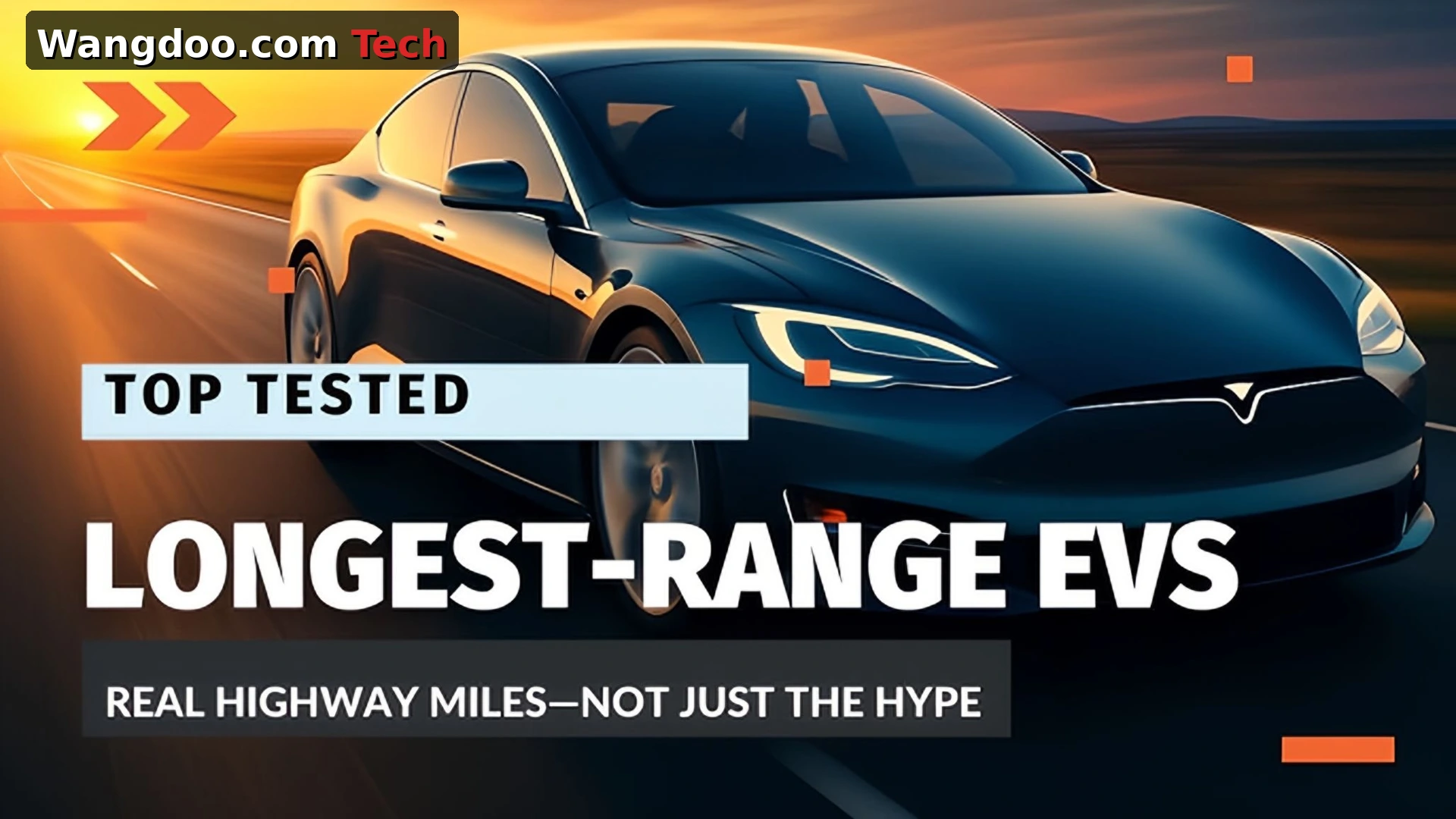
Which EV Has the Best Real-World Battery Life in 2026? — The Honest Global Guide
Range anxiety is still the number one reason people hesitate before switching to electric. But in 2026, the question has changed. It’s no longer “does this EV have enough range?” — 42 different electric cars now exceed 300 miles. The real question is: which EV has the best actual range after three years of ownership, in cold weather, at motorway speeds, with a real family in the car? The official numbers — EPA in the US, WLTP in Europe — are tested in ideal conditions. Real-world range can be 15–25% lower. Battery degradation means that 400-mile car becomes a 350-mile car within a few years. This guide cuts through the marketing figures and gives you the honest picture — which EVs are genuinely worth buying for long-range driving in 2026, and what the numbers actually mean.
📋 In This Guide
EPA vs WLTP — Why the Numbers Are Different
Before comparing any range figures, you need to understand that the US and Europe use completely different testing standards — and the gap between them is significant. Comparing an EPA figure to a WLTP figure is like comparing miles to kilometres: the units look similar but measure different things.
📹 Best Electric Cars 2026 — real-world range, expert reviews and verified data across 7 EVs from budget to premium. Published February 2026.
EPA Range (United States)
The US Environmental Protection Agency test uses a two-cycle test covering city and highway driving. It is generally considered more conservative and closer to real-world driving than WLTP. If a car gets 400 miles EPA, expect 340–380 miles in real-world mixed driving — a 5–15% shortfall.
WLTP Range (Europe)
The Worldwide Harmonised Light Vehicle Test Procedure is used across Europe, the UK, and most of the world outside the US. WLTP tests typically produce figures 10–20% higher than EPA for the same vehicle. A car rated 500 miles WLTP is roughly equivalent to 400–430 miles EPA.
Real-World Range
Neither test fully reflects real-world driving. Motorway speeds, air conditioning, heating in cold weather, passenger weight, and driving style all reduce range significantly. Independent tests by InsideEVs, Edmunds, and Norwegian Automobile Federation consistently show real-world range running 15–25% below official figures.
Cold Weather Impact
Both EPA and WLTP tests are conducted at around 23°C. In winter temperatures of 0°C or below, lithium-ion batteries deliver significantly less range — typically 20–40% less than the official figure. The Norwegian Automobile Federation’s annual winter range test at −31°C is the most demanding independent range benchmark available.
Real-World Range — What to Actually Expect
The biggest gap between EV marketing and EV reality is range. Manufacturers quote the best possible figure — ideal temperature, optimal speed, specific wheel configuration. Independent testers consistently find real-world results fall short. Here is what the data actually shows.
Speed Is the Biggest Factor
Range figures are tested at a mix of city and motorway speeds. At a steady 70 mph (113 km/h) on a motorway — which is how most long-distance drivers actually use their car — aerodynamic drag increases significantly. A car rated 400 miles EPA may deliver only 280–320 miles at constant motorway speed. Planning a motorway road trip? Assume 65–70% of the EPA figure as your reliable motorway range per charge.
Temperature Is the Second Biggest Factor
Lithium-ion batteries lose capacity in cold weather because the chemical reactions inside the cells slow down. At 0°C (32°F), most EVs lose 15–25% of their rated range. At −10°C, losses of 30–40% are common. At −20°C and below, some older battery chemistries deliver barely half their rated range. Modern thermal management systems in vehicles like the Lucid Air, BMW i3, and Hyundai Ioniq 6 significantly reduce cold weather losses compared to older EVs.
Top Range EVs — US Market (EPA Figures)
All figures below are official EPA-rated range for the 2026 model year, sourced from official manufacturer press releases, EPA documentation, and independent verification by Cars.com, US News, and Autoblog. Prices are verified US MSRP as of May 2026 excluding destination and taxes.
🥇 Lucid Air Grand Touring
512 mi 🇺🇸 EPAThe undisputed range champion. 512 miles on 19-inch wheels — 112 miles more than the next sedan. 819hp, 0–60 in 3.0 seconds, 200 miles added in 12 minutes on a 350kW charger. The only EV breaking the 500-mile barrier.
From $114,900🥈 Chevrolet Silverado EV (WT 4WD)
493 mi 🇺🇸 EPAAchieves massive range through brute-force battery size. The Max Range battery pack is nearly double the size of a standard sedan pack. Requires the Work Truck 4WT or LT trim to hit the 493-mile figure — lower trims get significantly less.
From $75,000+🥉 Cadillac Escalade IQ
460 mi 🇺🇸 EPAOne of the largest consumer battery packs available. Full-size luxury SUV with 200kWh+ capacity. Edmunds’ real-world test recorded over 400 miles — one of the strongest real-world vs official correlations in the segment.
From $130,000+Lucid Gravity Grand Touring
450 mi 🇺🇸 EPALongest-range 3-row electric SUV sold in America. 828hp, 0–60 in 3.4 seconds with room for 7 adults. Real-world Edmunds highway test fell short of 450 miles — expect ~380–400 miles at motorway speeds.
From $98,900Tesla Model S (Long Range)
410 mi 🇺🇸 EPAThe most mature long-range sedan on the market. Launched 2012, continuously refined. Supercharger network access is a genuine practical advantage. Being discontinued after 2026 to streamline Tesla’s production towards Cybercab and humanoid robots.
From $74,990Mercedes-Benz EQS 450+
390 mi 🇺🇸 EPAMercedes bumped the battery for 2026, and the real-world result is notable: a 400-mile independent test exceeded the EPA figure — one of the few EVs where real-world performance beats official ratings. Exceptional thermal management.
From $110,000+Top Range EVs — European Market (WLTP Figures)
European buyers use WLTP figures, which run approximately 10–20% higher than EPA for the same vehicle. The following are verified WLTP figures from official manufacturer sources and independent European media including Electrifying.com, Honest John, and BMW Group’s official press releases.
🥇 BMW i3 Neue Klasse (50 xDrive)
559 mi WLTP 🇪🇺 WLTPThe most significant EV announcement in Europe in 2026. Built on BMW’s all-new Neue Klasse platform with next-generation cylindrical battery cells. 469hp, 400kW charging (249 miles in 10 minutes), production starting Munich August 2026, UK deliveries autumn 2026. Estimated ~440 miles EPA equivalent.
~£55,000 est. · ~$50,000–55,000 est.🥈 Mercedes-Benz CLA Electric
492 mi WLTP 🇪🇺 WLTPMercedes’ most affordable EV is also its longest-range European model. 118kWh battery, strong aerodynamics, 4.5 miles per kWh efficiency. Electrifying.com rated it £112,620 in top spec — the CLA range extends down to more accessible entry price points.
From ~£47,000🥉 Audi A6 e-tron (Performance)
463 mi WLTP 🇪🇺 WLTP100kWh battery, 381hp, 4.5 miles per kWh efficiency — one of the most efficient EVs in its class. Built on Volkswagen Group’s PPE platform shared with the Porsche Macan EV. Strong real-world efficiency credentials from multiple European road tests.
From ~£74,000Volkswagen ID.7 Pro S
435 mi WLTP 🇪🇺 WLTPThe most affordable route to 400+ miles WLTP from a mainstream manufacturer. 91kWh battery, strong real-world efficiency, practical estate (Tourer) and saloon variants. A genuine value proposition in the long-range EV space.
From ~£52,000Mercedes-Benz EQS 450+
575 mi WLTP 🇪🇺 WLTPThe longest WLTP range of any currently available production EV in Europe at 575 miles — ahead of the Lucid Air’s WLTP equivalent. 107.8kWh battery, exceptional aerodynamics (Cd 0.20), 390 miles EPA in the US. Available now in both markets.
From ~£112,620Tesla Model 3 Long Range AWD
390 mi WLTP 🌍 Both MarketsThe benchmark for value-per-mile in the long-range segment. Supercharger network access, consistent OTA improvements, strong real-world results across independent European tests. The best starting point for most buyers who don’t need the absolute maximum range.
From ~£45,000 / $42,990Battery Degradation — How Much Range Will You Lose Over Time?
The range figure on day one is not the range figure you will have in year five. All lithium-ion batteries degrade over time — the question is how much, and which EVs hold up best over the long term. This is arguably more important than the headline range figure for most buyers.
Years 1–2: Initial Drop
Most EVs lose a noticeable chunk of capacity in the first 1–2 years of ownership. This is normal chemistry — cells settle after initial use cycles. Tesla, Hyundai-Kia, and Mercedes consistently show the smallest drops in this phase based on Recurrent and Geotab fleet data.
Years 3–7: The Curve Flattens
After the initial drop, degradation slows significantly. Most well-cared-for packs from Tesla, Hyundai–Kia, Mercedes and BMW typically retain 85–90% of original usable capacity after 5–7 years. A 400-mile car at purchase becomes a 340–360-mile car — still very usable.
What Accelerates Degradation
Frequent DC fast charging, regularly charging to 100% and leaving it sitting full, operating in extreme heat without thermal management, and repeated high-speed runs at high state of charge all accelerate degradation. The fix: charge to 80% daily, use DC fast charging sparingly.
Best Degradation Resistance
LFP (lithium iron phosphate) batteries — used in some Tesla Model 3 variants — are more resistant to degradation and can be safely charged to 100% daily. NMC (nickel manganese cobalt) batteries offer higher energy density and longer range but require more careful charging habits to minimise degradation.
Cold Weather Performance — The Test That Actually Matters
For UK, Irish, and Northern European buyers, cold weather range is more important than the headline EPA or WLTP figure. The Norwegian Automobile Federation (NAF) runs the most demanding independent cold weather range test available — conducted at −31°C with heating running, which represents genuine worst-case winter conditions.
The Lucid Air Grand Touring’s Norwegian cold weather result was 520 km (323 miles) at −31°C — beating the next competitor by nearly 100 kilometres in the same test. This is directly cited in The Weekly Driver’s verified buyer’s guide. For context, 323 miles in those conditions represents 63% of its EPA rated range — one of the strongest cold weather retention rates in the segment.
| EV | Official Range | Real-World Motorway Est. | Cold Weather Est. (0°C) | Thermal Management |
|---|---|---|---|---|
| Lucid Air Grand Touring | 512 mi EPA | ~350–380 mi | ~340–360 mi | ✓ Active liquid |
| Mercedes EQS 450+ | 390 mi EPA / 575 mi WLTP | ~320–350 mi | ~300–330 mi | ✓ Active liquid |
| BMW i3 (Neue Klasse) | 440 mi EPA est. / 559 mi WLTP | ~370–400 mi est. | ~330–360 mi est. | ✓ Active + heat pump |
| Tesla Model S LR | 410 mi EPA | ~310–340 mi | ~290–320 mi | ✓ Active liquid |
| Tesla Model 3 LR AWD | 358 mi EPA / 390 mi WLTP | ~280–310 mi | ~270–300 mi | ✓ Active + heat pump |
| Hyundai Ioniq 6 LR AWD | 316 mi EPA | ~250–270 mi | ~240–260 mi | ✓ Active + heat pump |
Charging Speed — Because Range Isn’t the Whole Story
A car with 400 miles of range that charges slowly can be less practical on a road trip than a car with 300 miles of range that charges in 15 minutes. Charging speed — measured in kW — determines how long you spend at a service station. The formula is simple: the higher the kW rating, the less time charging.
Quick Picks by Budget
Full Comparison — 2026’s Longest Range EVs at a Glance
| EV | Range (Official) | Standard | Est. Real-World | Peak Charge | Market | Price From |
|---|---|---|---|---|---|---|
| Lucid Air Grand Touring | 512 mi | EPA | ~350–380 mi | 350kW | US/Select | $114,900 |
| Mercedes-Benz EQS 450+ | 575 mi / 390 mi | WLTP/EPA | ~320–360 mi | 200kW | Global | £112,620+ |
| BMW i3 Neue Klasse * | 559 mi | WLTP | ~420–450 mi est. | 400kW | EU/UK (Autumn 2026) | ~£55,000 est. |
| Chevy Silverado EV (Max) | 493 mi | EPA | ~360–390 mi | 350kW | US | $75,000+ |
| Cadillac Escalade IQ | 460 mi | EPA | ~380–410 mi | 350kW | US | $130,000+ |
| Mercedes-Benz CLA Electric | 492 mi | WLTP | ~370–400 mi est. | 320kW est. | EU/UK | ~£47,000+ |
| Lucid Gravity GT | 450 mi | EPA | ~370–400 mi | 350kW | US | $98,900 |
| Audi A6 e-tron Performance | 463 mi | WLTP | ~370–400 mi | 270kW | EU/UK | ~£74,000 |
| Tesla Model S LR | 410 mi | EPA | ~310–340 mi | 250kW | Global | $74,990 |
| Lucid Air Touring | 431 mi | EPA | ~340–370 mi | 350kW | US/Select | $79,900 |
| VW ID.7 Pro S | 435 mi | WLTP | ~340–370 mi | 200kW | EU/UK | ~£52,000 |
| Tesla Model 3 LR AWD | 390 mi / 358 mi | WLTP/EPA | ~280–310 mi | 250kW | Global | ~£45,000 |
* BMW i3 not yet available — autumn 2026 deliveries expected. Real-world estimates based on Wangdoo analysis of published test data. All ranges and prices verified May 2026. Real-world range is estimated — actual results vary by speed, temperature, payload, and driving style.
🔋 Wangdoo Verdict — The Honest Answer
For maximum range with money no object: Lucid Air Grand Touring at 512 miles EPA — nothing comes close in the US market. For European buyers who need something available today: Mercedes-Benz EQS at 575 miles WLTP leads the available market, though its price reflects its flagship status. The most exciting development of 2026 is the BMW i3 Neue Klasse at 559 miles WLTP with 400kW charging — arriving autumn 2026 at a far more accessible estimated price point than either Lucid or Mercedes. For most buyers, the Tesla Model 3 Long Range remains the most rational choice: proven platform, Supercharger access, strong real-world range, and a price that doesn’t require a six-figure budget. The best battery life is not the biggest number on a brochure — it’s the one you can still rely on in three years, in January, on the motorway, at 70mph.
Frequently Asked Questions
Which EV has the longest range in 2026?
What is the difference between EPA and WLTP range?
How much range do EVs actually lose over time?
How much does cold weather affect EV range?
Is charging speed more important than range?
What is the best EV for real-world long-distance driving in the UK?
Sources & References
- Lucid Motors — Air Grand Touring official specs (512 miles EPA, $114,900)
- The Weekly Driver — 2026 Lucid Air Grand Touring buyer’s guide (verified specs, Norwegian cold test data)
- StockTitan / Lucid PRNewswire — 2026 Lucid Air official press release, July 22, 2025
- BMW Group official — BMW i3 Neue Klasse reveal (559 miles WLTP, 400kW charging, production August 2026)
- Electrifying.com — BMW i3 Neue Klasse review (Electrifying Car of the Year 2026 — iX3)
- Electrek — “New BMW i3 EV: road trip monster with 440 miles of range,” March 18, 2026
- Autoblog — “The Longest Range EVs You Can Buy in 2026,” March 23, 2026
- US News — “Electric Cars With the Longest Range in 2026,” April 2026
- BGR — “This Is The Longest-Range Electric Vehicle You Can Buy in 2026,” May 2026
- Electrifying.com — “The Longest Range Electric Cars in 2026,” April 14, 2026
- Recharged.com — “Best EV Battery Life 2026: Longest Range & Longevity Guide”
- Jalopnik — “These Are The Longest Range EVs Of 2026,” March 1, 2026
- InsideEVs — “Which Electric Cars Have The Longest Driving Range?” (updated May 2026)
- Honest John — “New 2026 BMW i3: Electric 3 Series Price, Specs & Range,” March 2026