DJI Avata 360 — Above It All, See It All

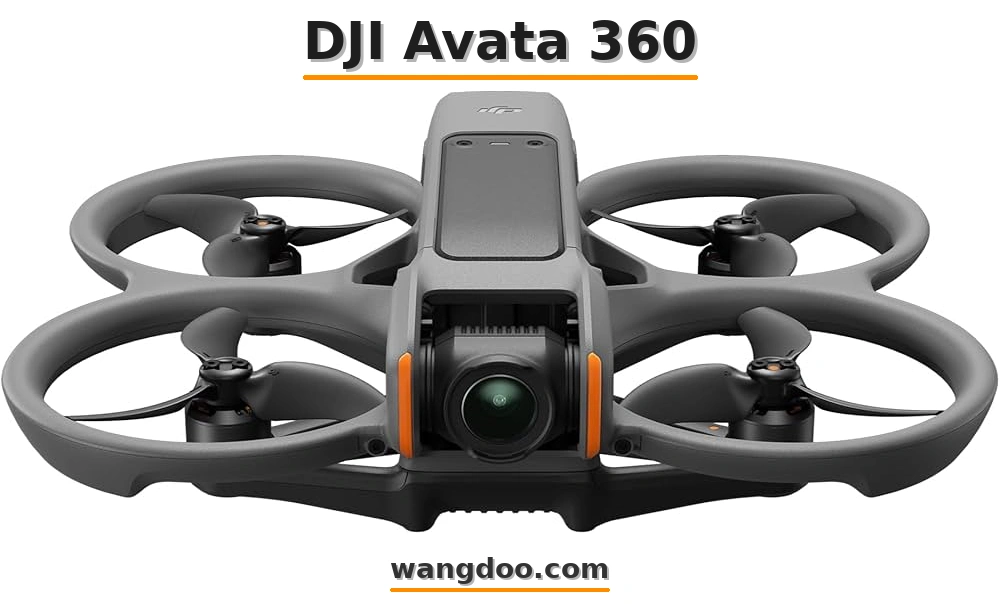
DJI Avata 360:
Above It All.
See It All.
DJI’s first 360° FPV drone shoots 8K/60fps spherical video and 120MP stills from the sky — so you capture everything and choose the shot later. Here’s the full breakdown, including what the glowing reviews don’t tell you.
The Drone That Changed How Aerial Filmmaking Works
There is a moment every drone pilot knows well — that split-second panic in the air when you realise the shot you wanted was just slightly to the left, or behind you, or directly overhead, and it is already gone. DJI’s answer to that problem has arrived in the form of the Avata 360, a drone that simply captures everything and lets you decide the shot later.
Officially launched on 26 March 2026, the Avata 360 is DJI’s first drone to combine a native 360° camera system with full FPV flight capability. It is a bold move — and based on hands-on reviews from TechRadar, T3, and DroneXL, it largely delivers. The premise is revolutionary. The execution is close to flawless. But there are some honest caveats that the marketing materials don’t mention — and we’ll cover those too.
► DJI Avata 360 — official launch video and first look footage
ConceptWhat Makes It Different: Shoot First, Frame Later
The premise of the Avata 360 is elegantly simple. The drone shoots 8K/60fps HDR 360° video and 120MP stills, meaning pilots no longer need to carefully frame every shot mid-flight. Instead, they capture the entire environment and reframe in post — choosing angles, movements, and perspectives after the fact using DJI Studio or DJI Fly’s GyroFrame tool.
One drone. Two completely different workflows. 360° spherical capture for total freedom in post, or classic forward-facing 4K/60fps for traditional FPV filmmaking. Nothing else on the market offers both.
This “shoot first, frame later” workflow isn’t new to ground-based 360 cameras — but bringing it to an FPV drone at this quality level and price point is what makes the Avata 360 genuinely significant. Like the Antigravity A1 — the only other major 360° drone on the market — the Avata 360 uses a dual-lens setup for full spherical capture. But DJI adds a crucial twist: a Single Lens mode that switches the drone into classic Avata-style forward-facing 4K/60fps filming. The A1 cannot do this natively. One drone. Two complete workflows.
Camera SystemDual 1/1.1-Inch Sensors — The Numbers That Matter
The Avata 360’s camera module uses two 1/1.1-inch square CMOS sensors, each with 64 megapixels and a 200-degree field of view at 7.8mm equivalent, f/1.9. The sensors overlap by 20 degrees to ensure seamless stitching in 360° mode. Together they produce full spherical 8K/60fps HDR video in 10-bit D-Log M — a colour profile that gives videographers serious latitude in post-production. The Antigravity A1 is limited to 8-bit, which is a meaningful gap for anyone doing professional colour grading.
8K/60fps 360° Video
10-bit HDR spherical video in D-Log M. Reframe to any angle, movement, or perspective in post — from a single flight pass.
120MP 360° Stills
14,420 × 7,760px spherical images. Choose your frame after the flight, not during it. Also supports 64MP single-lens ultra-wide stills.
Single Lens 4K/60fps
Switch to traditional forward-facing FPV filmmaking at 4K/60fps. Available in 4:3 or 16:9 — a mode the Antigravity A1 cannot match natively.
Replaceable Front Lens
User-replaceable lens element without sending the drone for service. Lens kit: €25 with tools, €21 without — a practical detail for working creators.
Larger Sensors Than A1
1/1.1″ per camera vs the Antigravity A1’s 1/1.28″ sensors — a genuine advantage for low-light performance and dynamic range.
42GB Internal + microSD
42GB built-in storage with a microSD slot on the side. Wi-Fi 6 high-speed transfer moves 1GB of footage to the DJI Fly app in approximately 10 seconds.
Full Verified Specifications
| Specification | Detail |
|---|---|
| Launch date | 26 March 2026 (global); 30 March 2026 (US, third-party only) |
| Weight | 455g — requires registration in UK (CAA), EU, and FAA (US) Above 250g |
| Dimensions | 246 × 199 × 55.5mm (L × W × H) — non-folding |
| Camera sensors | Dual 1/1.1″ square CMOS, 64MP each, f/1.9, 200° FoV, 7.8mm equivalent |
| 360° video | 8K/60fps HDR, 10-bit D-Log M colour profile |
| 360° stills | 120MP (14,420 × 7,760px); also 30MP option |
| Single lens video | 4K/60fps (4:3 or 16:9) or 2.7K |
| Single lens stills | 64MP ultra-wide |
| Transmission | O4+ — up to 20km range, 1080p/60fps live feed, low latency |
| Flight time (rated) | Up to 23 minutes per battery |
| Flight time (real-world) | 15–18 minutes (based on reviewer testing) Note |
| Max speed (Normal) | 43km/h (27mph) |
| Max speed (Sport) | 64km/h (40mph) |
| Max flight distance | 13.5km |
| Obstacle sensing | Omnidirectional (vision + LiDAR + infrared), nightscape capable New |
| LiDAR | Dual forward-facing LiDAR sensors for low-light obstacle detection |
| Propeller guards | Integrated — cinewhoop-style full cage |
| Battery | 38.6Wh intelligent flight battery |
| Internal storage | 42GB + microSD card slot |
| Transfer speed | Wi-Fi 6 — ~1GB in 10 seconds to DJI Fly app |
| Compatible controllers | RC 2, RC-N2, RC-N3, RC Motion 3, FPV Remote Controller 3 |
| Compatible goggles | DJI Goggles 3, DJI Goggles N3 |
| UK class marking | UK1 (enables A1 Open Category flying) New |
| US availability | Amazon & B&H Photo — not on DJI’s official US site Restricted |
| UK price (drone only) | £409 |
| UK price (with RC 2) | £639 |
| UK price (Fly More Combo) | £829 (3 batteries, charging hub, sling bag) |
| US price (with RC 2) | $719 (Amazon / B&H) |
Flying the Avata 360: FPV Done Right
The Avata 360 behaves like a proper FPV drone. You fly it with goggles and motion controllers for that immersive, almost VR-like experience — every tilt of your head and movement of your hand translates into motion in the air. For newcomers, that sensation alone can feel transformative. Less like piloting a device, more like being inside it.
The O4+ transmission system is the silent hero of the flight experience. With a rated range of 20km and a rock-solid 1080p/60fps live feed, it eliminates the signal anxiety that has plagued other FPV setups. TechRadar’s hands-on testing found it “remarkably stable” even in challenging conditions. In Sport Mode — which disables the safety sensors — it reaches 64km/h (40mph), making it a nimble and responsive flier.
Beginners are well served too. Nightscape omnidirectional obstacle sensing combines vision, forward-facing LiDAR, and infrared sensors to detect hazards from every direction, even in low light. The integrated propeller cage protects the drone from bumps and makes it far more forgiving for less experienced pilots than traditional open-prop designs.
The intelligent flight tools make complex shots genuinely accessible: ActiveTrack 360° keeps subjects locked in frame through busy environments, Spotlight Free replicates pro-level camera movement without manual control, and GyroFrame in DJI Fly lets you adjust 360° footage to an ideal angle and export directly from your phone. A Virtual Gimbal tool enables infinite rotation and tilt reframing from a single shot.
Stitch lines: Early reviewers noted visible stitch lines where the two lens images join. DJI quickly released a firmware update that significantly improved this — but perfectionists should expect some stitching artefacts in challenging lighting, particularly at close range to subjects.
Wobble in footage: The Avata 360 is a cinewhoop — air passes through the prop guards in a way that creates characteristic wobble. With no physical gimbal (electronic stabilisation only), this cannot be entirely eliminated. RockSteady helps significantly, but fast directional changes will produce some shake visible in footage.
Real-world flight time: DJI rates the battery at 23 minutes. TechRadar’s reviewer put real-world use closer to 15 minutes based on testing, with significant variation by wind and flight style. Plan your sessions accordingly. The Fly More Combo with three batteries gives you roughly 45–54 minutes total flight time.
Weight class: At 455g, the Avata 360 is above the 250g threshold. In the UK you’ll need a CAA Operator ID and Flyer ID. In the US, FAA registration is required. Check your local regulations before flying.
DJI’s Most Aggressive Pricing Move Yet
The Avata 360’s pricing is arguably its most powerful statement. When the Antigravity A1 launched in late 2025 at $1,599 for its standard bundle, it had no competition. DJI has changed that comprehensively — the Avata 360’s most expensive UK bundle (£829) undercuts the A1’s standalone price, while offering more in the box.
- Drone unit + 1 battery
- For those with existing DJI controllers
- Compatible with RC 2, RC-N2, RC-N3
- Compatible with Goggles 3, Goggles N3
- Drone + DJI RC 2 touchscreen controller
- 1 intelligent flight battery
- Ready to fly out of the box
- Best starting bundle for most buyers
- Drone + DJI RC 2
- 3 batteries (up to ~54 min total)
- Two-way charging hub (100W/65W)
- Sling bag + spare propellers + landing pad
- Drone + DJI Goggles N3
- DJI RC Motion 3 controller
- 3 batteries + hub + bag
- Full immersive FPV experience
Avata 360 vs Antigravity A1 — The Real Comparison
| Specification | DJI Avata 360 | Insta360 Antigravity A1 |
|---|---|---|
| Price (full bundle) | £829 / ~$979 | $1,599 |
| Sensor size | 2× 1/1.1″ CMOS | 2× 1/1.28″ CMOS |
| 360° video | 8K/60fps, 10-bit | 8K/30fps, 8-bit |
| Single lens mode | Yes — 4K/60fps | No (not native) |
| Weight | 455g | Sub-250g |
| Max flight time | 23 min (rated) | 39 min (high-cap battery) |
| Transmission | O4+ (20km, very stable) | Insta360 Link (shorter range) |
| Ecosystem | Full DJI (RC 2, Goggles N3, Motion 3) | Standalone product |
| US official availability | Amazon/B&H only | Official US availability |
| Lens replacement | User-replaceable (€25) | Service required |
The competitive impact is stark. The Avata 360 wins on camera quality, pricing, ecosystem depth, and creative flexibility. The Antigravity A1 wins on weight class (sub-250g regulatory advantages in many markets) and longer maximum flight time with its high-capacity battery. For most creators, the Avata 360 is the stronger proposition at a dramatically lower price.
SummaryPros & Cons
- 8K/60fps 360° video — 30fps faster than the A1
- 10-bit D-Log M — significant editing advantage over 8-bit A1
- Single Lens 4K/60fps mode — one drone, two workflows
- Larger 1/1.1″ sensors than the Antigravity A1
- O4+ transmission — rock solid at range
- Omnidirectional obstacle sensing including nightscape LiDAR
- User-replaceable lens (€25) — no service visit needed
- Full DJI ecosystem compatibility — huge upgrade advantage
- Dramatically cheaper than the Antigravity A1
- Intelligent tools: ActiveTrack 360°, GyroFrame, Virtual Gimbal
- 455g — above 250g threshold, requires registration
- Real-world flight time closer to 15–18 min than 23
- No physical gimbal — electronic stabilisation only
- Stitch lines visible (improved by firmware, not eliminated)
- Cinewhoop wobble in footage on fast directional changes
- Not on DJI’s official US website (Amazon/B&H only)
- Post-production workflow is complex for beginners
- Cannot fold — bigger carry footprint than the Avata 2
The best-value 360° drone on the market — by a considerable margin.
The Avata 360 is exactly what it promises to be. DJI has taken a category that Insta360 created with the Antigravity A1, improved on almost every key specification, and priced it dramatically lower. That’s a rare combination in consumer tech and it’s why this drone is worth your serious attention.
Yes, the real-world battery life is shorter than the headline figure. Yes, stitch lines exist (even if firmware has significantly reduced them). And yes, editing 8K 360° footage requires a capable machine and patience. These are honest caveats worth knowing before you buy — but none of them change the fundamental verdict: for aerial content creators, the sky just got a great deal more accessible.
DJI Avata 360 FAQ
Sources & References
- Official DJI Avata 360 — Official Product Page
- TechRadar DJI Avata 360 Review — Part 360, Part FPV, All Brilliant, March 2026
- T3 DJI Avata 360 Review — Best-Value 360 Drone Right Now, April 2026
- Heliguy Top 10 Features of the DJI Avata 360, March 2026
- The Drone Girl DJI Avata 360 — Specs, Costs and Details You Need to Know, March 2026
- DroneXL DJI Avata 360 In-Depth Review: Full Specs, Pros and Cons, March 2026
- RedShark DJI Avata 360: 8K 360-Degree FPV Drone — Specs, Pricing and Availability, March 2026
- DroneDJ DJI Avata 360 US Availability — April 2026