Apple’s New Siri Will Be Powered by Google Gemini

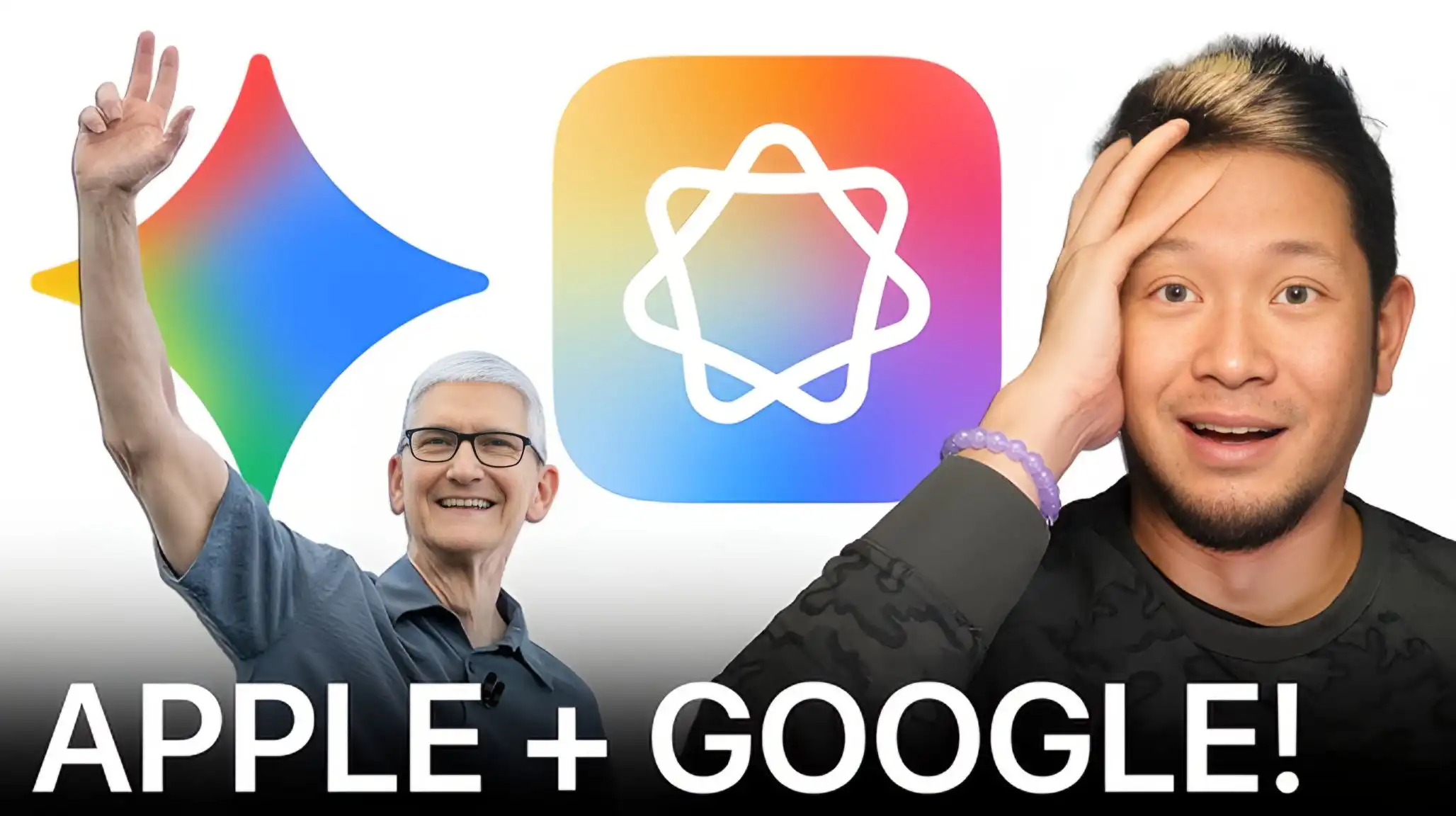
Apple’s Google Gemini Deal Explained: What It Means for Siri, iPhone Users, and the Future of Apple Intelligence
On January 12, 2026, Apple and Google confirmed a multi-year collaboration to rebuild Siri on Google’s Gemini AI models. Here is what is confirmed in the official joint statement, what is reported but unverified, and what iPhone users should realistically expect — updated as of WWDC 2026, June 8.
Apple’s WWDC 2026 keynote is taking place today, June 8, 2026 at 10:00 a.m. Pacific Time. The Gemini-powered Siri overhaul and iOS 27 are expected to be unveiled at this event. This article will be updated once Apple makes official announcements. Pre-keynote information is sourced from confirmed reporting — treat feature lists as pre-announcement expectations until Apple confirms them on stage.
“Apple and Google have entered into a multi-year collaboration under which the next generation of Apple Foundation Models will be based on Google’s Gemini models and cloud technology. These models will help power future Apple Intelligence features, including a more personalized Siri coming this year. After careful evaluation, Apple determined that Google’s AI technology provides the most capable foundation for Apple Foundation Models and is excited about the innovative new experiences it will unlock for Apple users. Apple Intelligence will continue to run on Apple devices and Private Cloud Compute, while maintaining Apple’s industry-leading privacy standards.”
— Official joint statement, blog.google, January 12, 2026
Apple–Google Gemini Siri partnership explained — video report. All rights respective owner.
What Is Confirmed vs What Is Still Reported
A significant amount has been written about this deal since January 2026, and not all of it distinguishes between what Apple and Google officially confirmed versus what has been reported by journalists citing unnamed sources. The distinction matters — particularly on privacy and financial terms.
- Multi-year Apple–Google collaboration announced January 12, 2026
- Next-gen Apple Foundation Models built on Gemini technology
- Google named as Apple’s “preferred cloud provider”
- Apple Intelligence stays on Apple devices and Private Cloud Compute
- Apple evaluated multiple AI providers before choosing Google
- Deal is non-exclusive — ChatGPT integration remains in place
- Google confirmed at Cloud Next 2026 (April 22) that Gemini-powered Siri is on track for 2026
- WWDC 2026 keynote is June 8, 2026 — iOS 27 expected today
- ~$1B/year cost — Bloomberg/Gurman reporting; neither company confirmed
- 1.2 trillion parameter custom Gemini model — reported, not confirmed
- Whether Gemini runs on Google’s servers or entirely within Apple’s PCC
- Exact iOS 26.5 vs iOS 27 rollout schedule for specific features
- Long-term fate of the OpenAI/ChatGPT integration
- Google confirmation it will not receive Apple user data — stated by Google publicly but architecture not independently audited
- Antitrust implications — both companies face ongoing investigations
Why Apple Made This Decision
Apple’s problem was not a lack of AI investment. The company built its M-series Neural Engine chips, developed Private Cloud Compute infrastructure, and acquired multiple AI companies over the past decade. The specific problem was frontier model scale — building and maintaining a large language model competitive with Gemini, GPT-4, or Claude requires the kind of sustained cloud infrastructure investment that Apple, with its hardware-first culture, had not prioritised in time.
According to CNBC’s reporting on the announcement, Apple evaluated proposals from multiple AI providers — including OpenAI and Anthropic — before selecting Google. The official statement says Apple “determined that Google’s AI technology provides the most capable foundation for Apple Foundation Models after careful evaluation.” The deal builds on an existing commercial relationship: Google has paid Apple approximately $20 billion annually to be the default search engine on iOS, according to testimony in the Google antitrust case.
“After careful evaluation, we determined that Google’s technology provides the most capable foundation for Apple Foundation Models and we’re excited about the innovative new experiences it will unlock for our users.”
Bloomberg’s Mark Gurman has reported Apple’s total capital expenditure on AI infrastructure is a fraction of what Alphabet, Microsoft, and Amazon are spending. Alphabet has committed over $75 billion in AI infrastructure spending for 2026 alone. For Apple, licensing was a rational near-term decision — though one that carries strategic dependency on a direct competitor in the smartphone market.
How the Privacy Architecture Is Designed to Work
The most sensitive question around this deal is what happens to user data. Apple’s brand identity is built on privacy, and Google’s core revenue model is advertising powered by user data. Those two things create a genuine trust problem, even if the technical architecture is sound.
Apple’s official position — stated in the joint statement — is that “Apple Intelligence will continue to run on Apple devices and Private Cloud Compute, while maintaining Apple’s industry-leading privacy standards.” Google publicly stated it will not receive Apple user data.
The Verge’s reporting, citing Morningstar analyst William Kerwin, suggests the arrangement will work similarly to Apple’s existing model handoffs — with Apple likely using Gemini instances within its own servers and Private Cloud Compute nodes rather than routing queries to Google’s standard cloud infrastructure. A June 2026 ACM conference paper reportedly confirmed Apple’s three core PCC privacy claims after independent analysis — though this has not been independently verified by Wangdoo.
Apple’s privacy protections rest on contractual guarantees and architectural choices that third parties cannot fully and independently audit. Private Cloud Compute has been open to security researcher review since 2024 — more transparency than most cloud AI systems — but the specific Gemini licensing and data handling terms are not public. The architecture is designed to prevent Google from accessing user data, but the design and the implementation are two different things. Until independent auditors examine the live system, treat the privacy architecture as Apple’s stated intent rather than independently verified fact.
How We Got Here: A Timeline
What Changes for iPhone Users — Based on Pre-WWDC Reporting
Apple has not yet officially confirmed the full iOS 27 feature list — that confirmation is expected from today’s WWDC keynote. The following is based on pre-keynote reporting from Bloomberg, MacRumors, AppleInsider, and 9to5Mac. Treat these as informed expectations rather than confirmed specifications until Apple announces them officially.
A Rebuilt Siri App
Multiple outlets report Siri will become a standalone app rather than a system overlay, with a chatbot-style conversational interface and a system-wide “Search or Ask” gesture. Bloomberg’s Mark Gurman reports a redesigned Dynamic Island integration and a new visual design for the assistant.
Personal Context Access
The new Siri is described across multiple sources as gaining the ability to draw on a user’s actual data — emails, messages, calendar, photos, contacts, files — to answer questions that require personal context rather than generic web search. MacRumors cited a demonstration example of a user asking Siri about their mother’s flight and lunch reservation based on information in the Mail and Messages apps.
On-Screen Awareness
Siri is expected to understand what is currently on the user’s screen and act on it directly — pulling a flight number from an email, sending a photo to a contact, or surfacing information from another app without requiring manual switching.
Conversational Context
Current Siri treats each query independently. The rebuilt version is expected to maintain conversational context — so a follow-up like “What about the one on Thursday?” correctly references the prior topic without requiring the user to restate it.
Apple has previewed these specific capabilities before — at WWDC 2024 — and subsequently delayed them twice. Pre-keynote reports are from credible outlets with strong Apple track records, but they are still pre-announcement. The actual feature set, hardware requirements, and rollout timeline will only be confirmed once Apple presents at WWDC today and ships developer betas.
The Deal at a Glance
| Detail | What We Know | Status |
|---|---|---|
| Announcement date | January 12, 2026 | Confirmed |
| Deal structure | Multi-year — Apple Foundation Models based on Gemini | Confirmed |
| Annual cost | ~$1 billion/year (Bloomberg/Gurman) | Reported |
| Model size | ~1.2 trillion parameters (multiple reports) | Reported |
| Exclusivity | Non-exclusive — ChatGPT integration remains | Confirmed |
| Privacy approach | Apple Intelligence stays on Apple devices / Private Cloud Compute | Confirmed |
| User data to Google | Google publicly stated it will not receive Apple user data | Reported |
| Infrastructure detail | Whether Gemini runs on Google servers or Apple’s PCC | Unclear |
| Phase 1 rollout | iOS 26.5 — some features (reported May 2026) | Reported |
| Full launch | iOS 27 — autumn 2026 alongside iPhone 18 | Reported |
| WWDC announcement | June 8, 2026 — keynote underway at time of publishing | Confirmed |
What Google Gets From This Deal
Strategically, this deal is arguably more significant for Google than for Apple. Gemini now powers the AI layer on both dominant mobile operating systems — Android natively, and iOS through this partnership. That is reach into approximately two billion active Apple devices, without those users downloading or switching to a Google product.
The deal also strengthens Google’s position against OpenAI and Anthropic — both reportedly evaluated and not selected by Apple. And it comes at a moment when Google surpassed Apple in market capitalisation for the first time since 2019, according to Bloomberg reporting.
The antitrust context is relevant. A 2024 US court ruling found Google held an illegal search monopoly. In September 2025, a judge ruled against forcing Google to divest Chrome. The Apple AI deal — like the existing search default deal — is the kind of arrangement that regulators in the US and EU are likely to scrutinise as both investigations continue.
My Take — Mr Wangdoo
The Apple–Gemini deal is the most significant structural change to Siri since it launched in 2011. It is also one of the more honest admissions Apple has made in years — that building a frontier AI model from scratch is a different kind of infrastructure challenge than building the world’s best chips or supply chain, and that being three years behind on model capability is not a gap you can sprint through.
The privacy architecture is the part that deserves the most careful ongoing scrutiny. Apple’s positioning — we use Gemini’s intelligence but Google never touches your data — is architecturally coherent. Private Cloud Compute is a meaningful technical approach that genuinely differs from standard cloud routing. But “architecturally coherent” and “independently verified at scale” are different things. The open security researcher access to PCC is more transparency than most comparable systems offer. Whether that translates to reliable real-world privacy protection is a question that will only be answered through sustained independent analysis after iOS 27 ships.
The feature promises are real concerns. Apple showed on-screen awareness and personal context Siri at WWDC 2024. It delayed both. It is showing them again today. The technology behind them is now substantially more capable — Gemini is a meaningfully better foundation than what Apple had in 2024. Whether the implementation is as smooth as the demonstration will be the question that reviewers answer in October and November when iOS 27 is in the hands of millions of people.
Frequently Asked Questions
What exactly did Apple and Google announce on January 12, 2026?
Apple and Google jointly announced a multi-year collaboration in which the next generation of Apple Foundation Models — the AI underlying Siri and Apple Intelligence — will be built on Google’s Gemini models and cloud technology. The joint statement confirmed Google as Apple’s preferred cloud provider, that the deal is non-exclusive (ChatGPT integration remains), and that Apple Intelligence will continue to run on Apple devices and Apple’s Private Cloud Compute infrastructure. Financial terms were not disclosed in the official statement.
Does this mean Google will be able to see my Siri queries?
Google publicly stated it will not receive Apple user data. Apple’s stated architecture routes queries through its own Private Cloud Compute infrastructure rather than directly to Google’s servers — meaning Google provides the model weights but does not receive the actual queries users make to Siri. However, the specific contractual and technical architecture has not been independently audited publicly. The Verge’s reporting, citing Morningstar analysts, suggests Apple will use Gemini instances within its own servers, which would be consistent with Apple’s privacy claims. Until the live system has been independently examined, the privacy protection rests on Apple’s and Google’s public statements and the PCC architecture.
How much is Apple paying Google?
Neither Apple nor Google disclosed financial terms in their official statement. Bloomberg’s Mark Gurman reported the cost at approximately $1 billion per year, with the total multi-year deal estimated at up to $5 billion by Deepwater Asset Management analyst Gene Munster. These are reported figures from credible sources but have not been officially confirmed by either company.
When will the new Siri arrive on my iPhone?
Some features are reportedly already rolling out in iOS 26.5 (May 2026). The full rebuilt Siri experience is expected with iOS 27 in autumn 2026, alongside the iPhone 18. The WWDC 2026 keynote on June 8 is expected to officially unveil iOS 27 and confirm the feature set and timeline. Given that Apple has delayed these features twice before, wait for official confirmation before expecting specific capabilities on a specific date.
Is ChatGPT still part of Apple Intelligence?
Yes. Apple confirmed the Google deal is non-exclusive and that the existing ChatGPT integration remains in place. Apple told CNBC at the time of the January announcement that it was not making any changes to its OpenAI agreement. How queries are divided between Gemini and ChatGPT going forward — and whether that balance shifts over time — has not been officially addressed.
Why did Apple choose Google over OpenAI or Anthropic?
Apple’s official statement says it “determined that Google’s technology provides the most capable foundation for Apple Foundation Models after careful evaluation.” Apple reportedly evaluated OpenAI and Anthropic alongside Google. The decision is broadly attributed to three factors: model capability at the frontier level, Google’s cloud infrastructure scale (which Apple needs for Private Cloud Compute at iPhone-scale), and the existing commercial relationship between the two companies. The specific evaluation criteria have not been published.
What iPhones will support the new Gemini-powered Siri?
Apple has not officially confirmed device requirements for the iOS 27 Siri features. Apple Intelligence in iOS 26 requires iPhone 15 Pro or later (A17 Pro chip or higher). Reports suggest the Gemini-powered features in iOS 27 will require iPhone 16 or later for the most advanced capabilities. TechTimes reported that iPhone 11 owners will be cut from iOS 27 entirely. Official hardware compatibility will be confirmed at WWDC today.
What does this mean for Siri on older iPhones?
The most advanced Gemini-powered Siri features will require recent iPhone hardware due to the Neural Engine requirements for on-device AI processing. Pre-reporting suggests iPhone 11 will not support iOS 27 at all. The exact cutoff for Siri’s AI features within iOS 27 has not been officially confirmed. Apple will announce device compatibility at WWDC.
- Apple & Google Official — Joint Statement — Apple and Google multi-year collaboration announcement (January 12, 2026)
- CNBC — Apple picks Google’s Gemini to run AI-powered Siri coming this year (January 12, 2026)
- Engadget — Apple’s Siri AI will be powered by Gemini (January 12, 2026)
- MacRumors — Google Gemini Partnership With Apple Will Go Beyond Siri Revamp (January 12, 2026)
- MacRumors — Google Confirms Gemini-Powered Siri Coming Later This Year (April 22, 2026)
- AppleInsider — Google Confirms Context-Aware Siri Built From Gemini Will Debut in 2026 (April 22, 2026)
- AppleInsider — iOS 27, macOS 27, Siri: What to expect at WWDC 2026 (June 5, 2026)
- TechTimes — WWDC 2026 Opens Monday: Gemini Powers Rebuilt Siri, iPhone 11 Faces iOS 27 Cut (June 6, 2026)